

By Shivam Das | October 14, 2026
A disputed price tag has become one of the most talked-about details in Kelly Clarkson’s public disagreement with Art of Play, a curiosity shop in Brooklyn. Clarkson says she pointed to a label for a “Singing Bird” priced at $15,000 and was treated as though she could not afford it. The store says the bird on its wall, nicknamed Molly, was not for sale, although its maker had a nearly identical piece that could be purchased for the same amount.
So, was the price tag fake? The public record does not establish that. Available reporting documents conflicting accounts, photographs of a label circulated online, and a store explanation about a similar bird. It does not conclusively prove who placed the label, what it referred to at the time of Clarkson’s visit, or exactly what was said in the shop.
What Kelly Clarkson says happened
On October 10, Clarkson posted on X that she had visited Art of Play intending to shop and felt that an employee looked at her as if she could not afford an item. She compared the experience to the famous “Pretty Woman” shopping scene and said she had been offered something comparable instead.
In a subsequent Instagram Stories response, Clarkson disputed the shop’s explanation that Molly was not for sale. She said she had pointed to a price tag beside a label reading “Singing Bird” and recalled being told the item cost $15,000. Her account is a first-person description of the interaction, but the disputed conversation is not independently audible in the released silent surveillance footage.
How Art of Play explains the $15,000 figure
Art of Play’s public statements say Molly is a one-of-a-kind singing and dancing automaton that is attached to the wall and used during the store’s magic shows. The shop says Molly herself was not for sale. It says the artist, Seattle-based automaton maker Bliss Kolb, had a nearly identical bird that he was willing to sell for $15,000.
The store also said it offered to show Clarkson another singing-bird automaton, made in Germany, priced at about $2,000. Clarkson has rejected the store’s description of the conversation. These are the parties’ competing accounts; neither should be presented as a proven transcript of what happened.
Kolb’s own website is an important reference point for understanding the work and its made-to-order nature. It is not, by itself, proof of what label was displayed at Art of Play on the day of Clarkson’s visit. See Bliss Kolb’s official website.
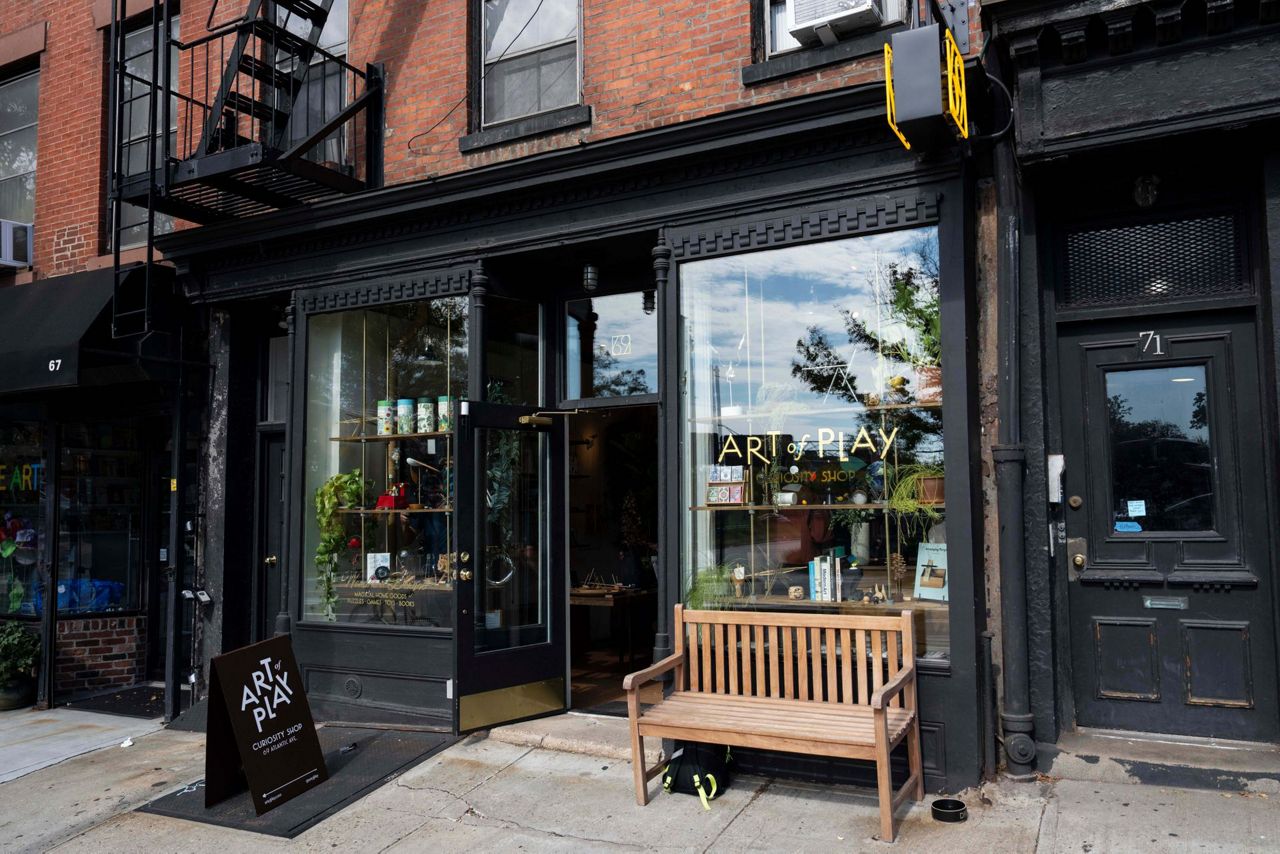
What the photos and silent CCTV can—and cannot—show
Images circulated online appear to show a $15,000 label associated with a singing-bird automaton. Other images of Molly do not show the same visible label. The photographs have been discussed in news coverage, but a photo alone does not establish when it was taken, whether the label was positioned next to Molly during Clarkson’s visit, or whether it referred to the exact bird on the wall or a similar commission.
Separately released security footage shows Clarkson inside the store for roughly five minutes, browsing and interacting with a staff member before leaving. Because the footage has no audio, it cannot confirm the exact words, tone, or intent of either person. It therefore cannot settle the central dispute over the conversation or the price tag.
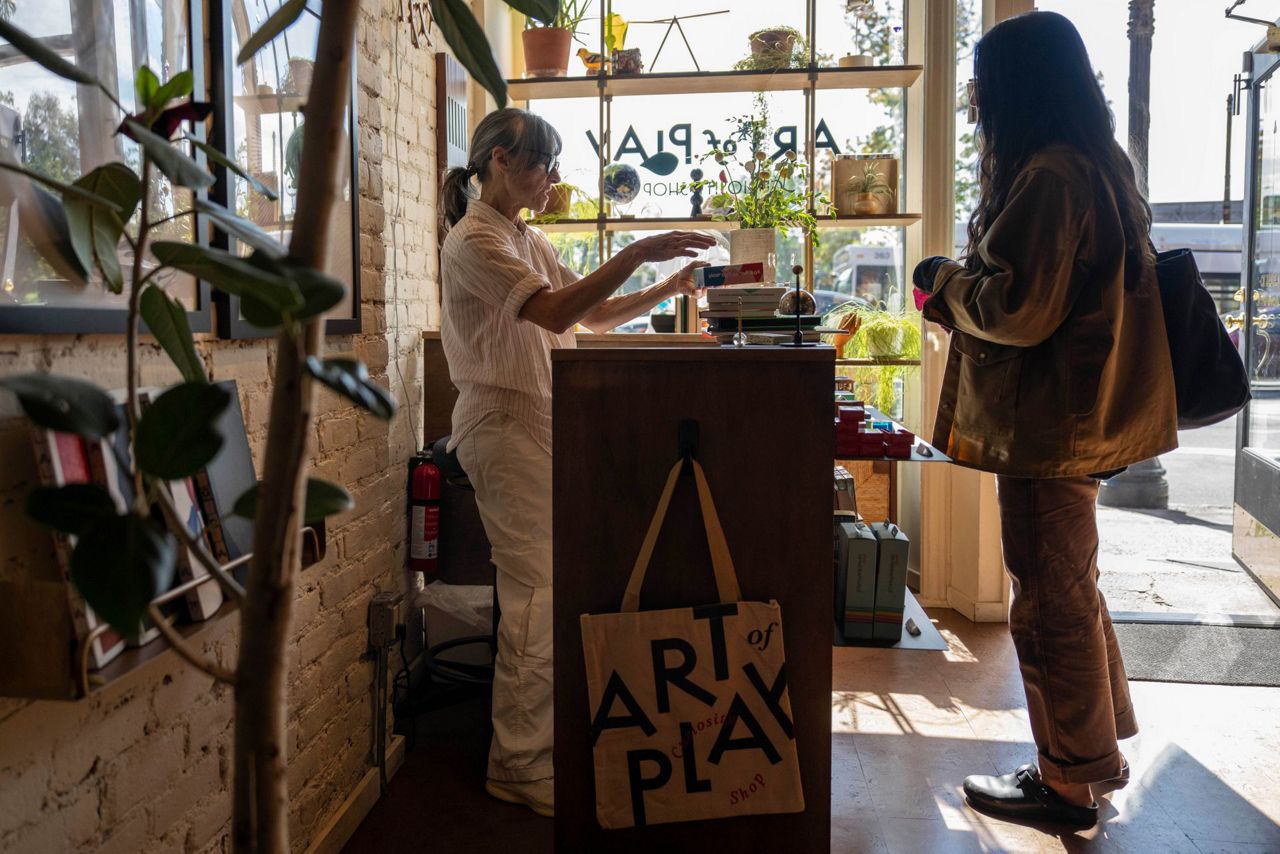
Why the “fake price tag” claim remains unproven
Calling the label “fake” implies that someone knowingly put up a false price or deliberately misrepresented the item. The reporting available as of October 14 does not establish that. There are several possibilities consistent with the public information: the label may have referred to a comparable automaton, it may have been displayed at a different time or in a different position, or the parties may have understood the item and its availability differently. Those are possibilities, not findings.
It is also important to separate the original $15,000 figure from the later publicity-driven price. On October 14, reports said co-owner Adam Rubin announced that Molly was now being offered for $15 million amid the controversy. That is an announced asking price, not evidence that the bird sold for that amount or that it reflects an independent appraisal.
How the dispute escalated online
Clarkson’s post reached a large audience, and the shop said it received a wave of negative reviews and hostile messages. The Associated Press reported that co-owner Adam Rubin described the impact on the small business as severe. That backlash is part of the story, but it does not decide whether Clarkson’s account or the store’s account of the in-person exchange is accurate.
The episode illustrates how quickly a customer-service complaint can become a public dispute when one side has a celebrity-sized audience. It also shows why viewers should be cautious about treating viral captions, cropped photographs, or silent video as a complete record of an interaction.
What we know so far
- Clarkson says she saw a $15,000 price tag and felt she was treated as if she could not afford the item.
- Art of Play says Molly was not for sale and that a nearly identical bird owned by the artist was available for $15,000.
- The store says it offered to show Clarkson a different bird priced at about $2,000; Clarkson disputes the store’s account of their conversation.
- Photos of a price label have circulated, but they do not conclusively establish what was displayed at the time of the visit.
- Silent surveillance footage does not contain the audio needed to verify the conversation.
- No reliable public evidence reviewed for this report proves that the label was deliberately fake.
Frequently asked questions
Was the $15,000 price tag fake?
That has not been proven. Clarkson says she pointed to a price tag, while Art of Play says Molly was not for sale and that $15,000 referred to a nearly identical bird available from the artist. The public evidence does not conclusively establish what the label meant or when it was displayed.
Was Molly actually for sale?
Art of Play says the bird on its wall was attached to the display and was not for sale. The store said the artist could sell a nearly identical automaton for $15,000. The store later reportedly announced a $15 million asking price for Molly following the publicity.
Does the CCTV prove what was said?
No. The released footage is silent. It shows parts of the visit but cannot verify the words or tone used during the interaction.
Did Molly sell for $15 million?
No sale at that price has been verified in the reporting reviewed here. The $15 million figure was reported as an asking price announced after the dispute attracted attention.
Sources and further reading
- Los Angeles Times: What each side says about the dispute
- Entertainment Weekly: The released surveillance footage
- Associated Press via Spectrum News NY1: The wider impact on the store
- TMZ: The reported $15 million asking price
- Bliss Kolb: Official artist website
Reporting note: This article distinguishes the parties’ claims from independently established facts. The “fake price tag” allegation remains unverified based on the public material reviewed for this report.
Related Vervado coverage: What the silent CCTV footage shows · How the reported price changed to $15 million · The store owner’s response


