

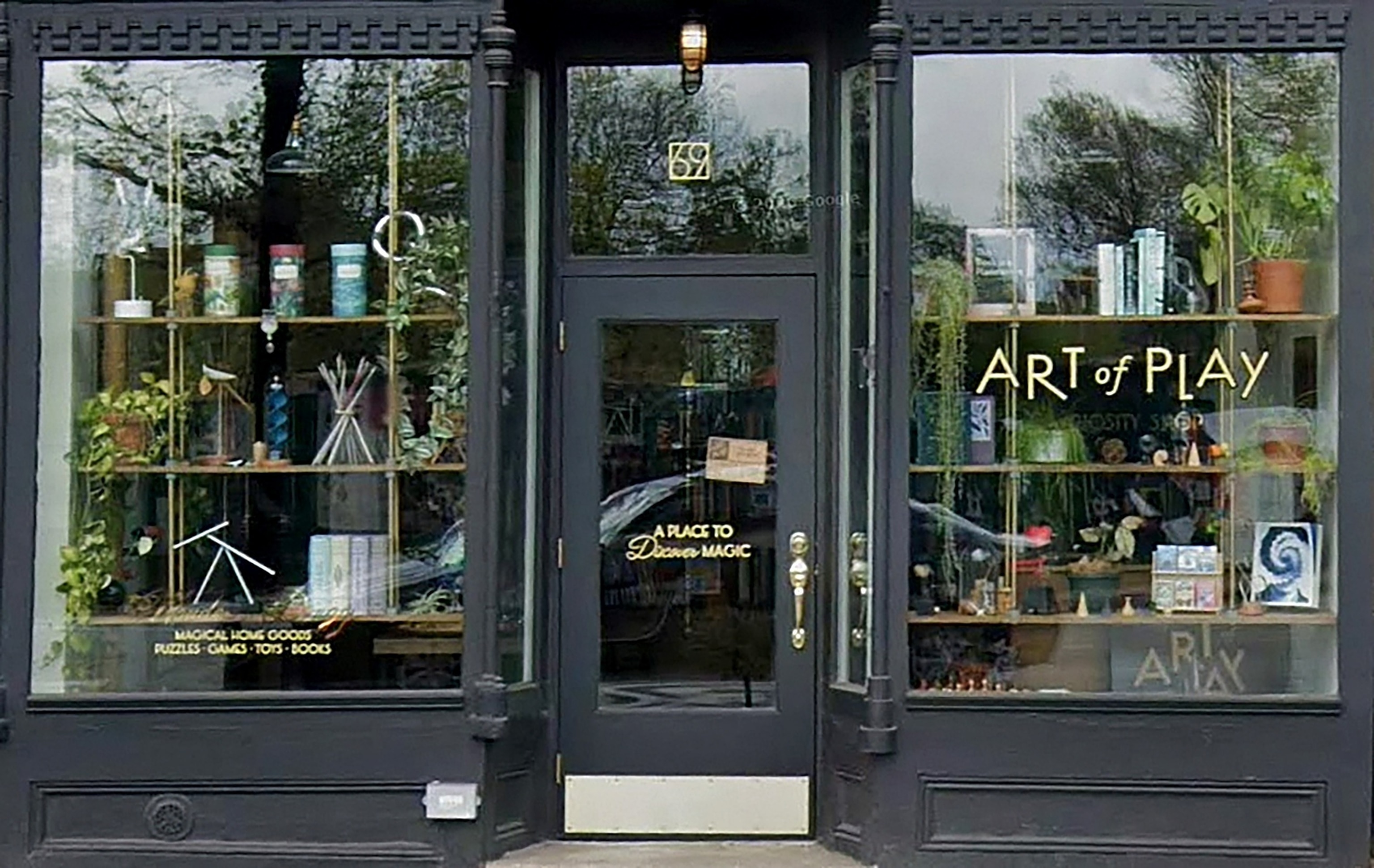
Newly released, silent security footage has added a visual timeline to Kelly Clarkson’s dispute with Brooklyn curiosity shop Art of Play. It shows the singer browsing the store, approaching a distinctive mechanical bird called Molly, speaking briefly with staff, and leaving after a short exchange near the entrance. What it does not reveal is just as important: the cameras have no audio, so they cannot establish the exact words, tone, or intent behind the disagreement.
The clip, released by the Pablo Torre Finds Out podcast and described in reports published October 14, 2026, appears to cover a visit of roughly five minutes on October 10. ABC News and Entertainment Weekly both note that the footage is silent. That limitation makes it useful for timing and visible actions, but not a definitive verdict on either side’s account.
What the silent CCTV footage appears to show
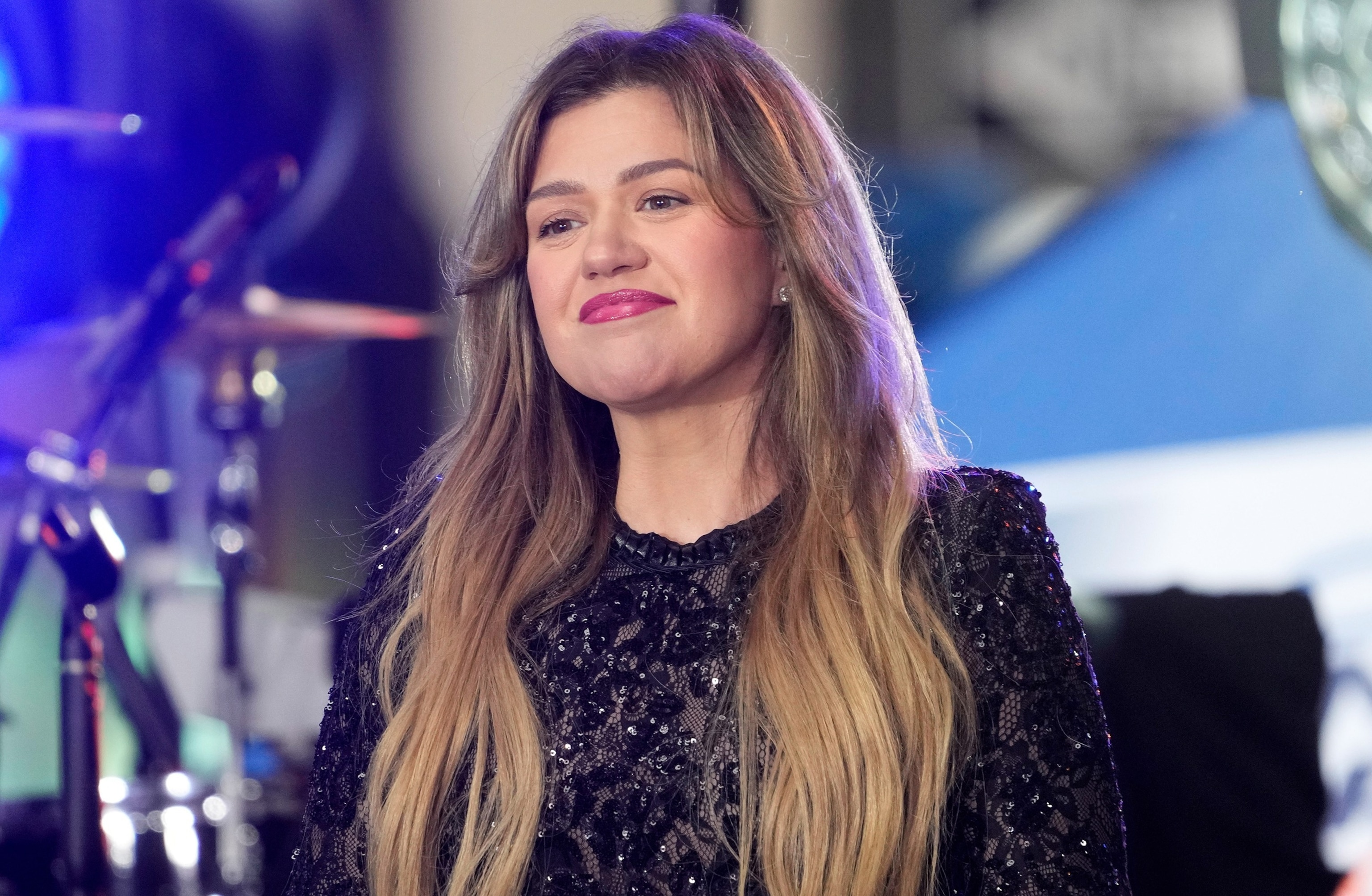
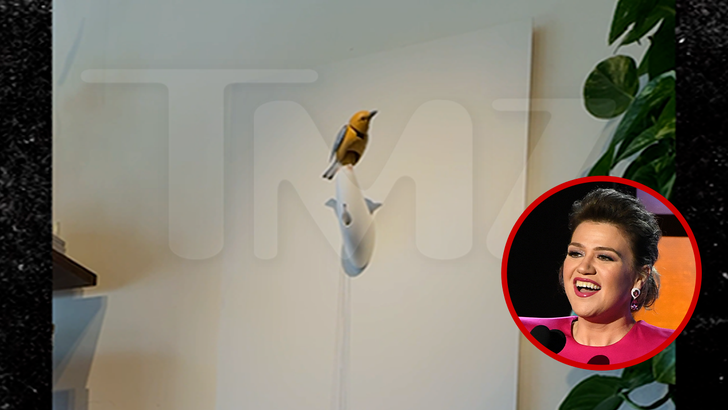
According to reporting by ABC News, CBS New York and Entertainment Weekly, the footage shows a person identified by the podcast as Clarkson entering the shop in a yellow top and baseball cap, browsing objects and examining a kaleidoscope before approaching Molly, the singing-and-dancing bird automaton displayed on the wall. She appears to point toward the bird while talking with an employee. The two then move apart.
Later, Clarkson returns toward the entrance and speaks with another employee near the counter. She gestures with her hands before leaving. The footage does not include sound, and camera angles do not make every detail of the exchange clear. Describing a specific facial expression or claiming that CCTV proves what either person said would go beyond what the clip can establish.
Why the bird Molly became the center of the dispute
Clarkson first described her experience publicly on X on October 10. She said she had driven to Brooklyn intending to shop and felt that an employee assumed she could not afford the item she asked about. She compared the experience with the shopping scene in the 1990 film Pretty Woman.
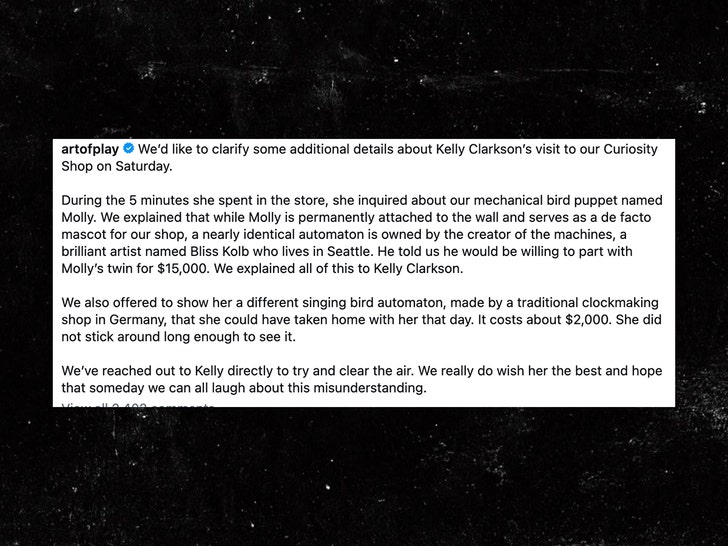
Art of Play offered a different account. In statements shared on Instagram, the store said Molly is a one-of-a-kind automaton permanently attached to the wall and not for sale. The owners later said the artist, Seattle-based Bliss Kolb, was willing to sell a nearly identical bird for $15,000, and that staff also offered to show Clarkson a different mechanical bird priced at about $2,000. Clarkson disputed the store’s explanation and maintained that an employee had referred to a $15,000 price tag during their conversation.
How a $15,000 price became a $15 million headline
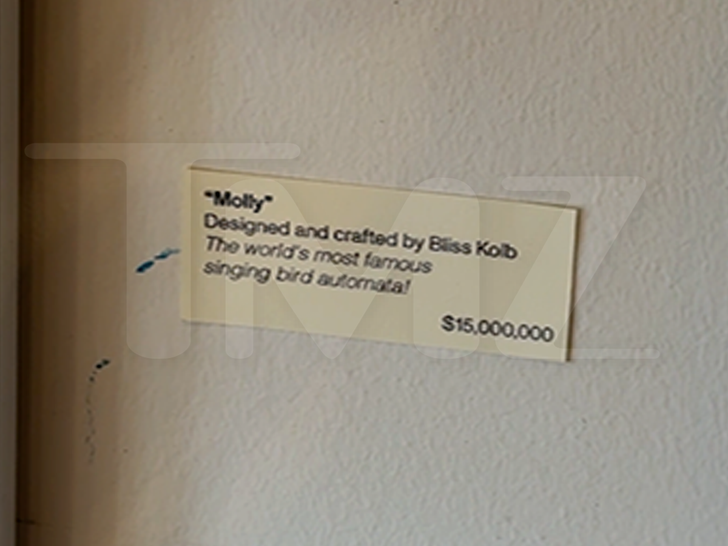
The story took another turn when Art of Play co-owner Adam Rubin said the bird’s displayed price had been raised to $15 million amid the attention. Entertainment Weekly reported Rubin’s explanation that the original $15,000 figure was intended to gauge serious interest in a similar work, rather than to indicate that the wall-mounted store mascot was available for immediate purchase.
The enormous new figure is best understood as part of the viral dispute, not as an independently verified market valuation. No sale at that price has been reported in the coverage reviewed for this article. The difference between a price displayed or announced by a seller and a completed transaction matters: a listing alone does not establish what an object is worth on the open market.
The other side of the story: a small shop under a spotlight
Art of Play’s co-owner has said the social-media backlash brought negative reviews and hostile messages to the business. In interviews reported by ABC News and other outlets, Rubin said he was concerned about staff safety. Those claims should be attributed to the store rather than treated as independently established facts in every detail; they nevertheless highlight a real risk when a viral post sends large numbers of strangers toward a small local business.
The store’s location and public response have also become part of the story. The disagreement is no longer only about a brief retail interaction. It has turned into a wider argument about customer service, celebrity reach, how businesses answer public criticism, and whether online audiences can fairly judge an encounter when the available video lacks audio.
Watch the footage and read the original posts
The video is most useful when viewed alongside the statements from both parties. Watch the footage from the Pablo Torre Finds Out podcast on YouTube, then compare the original public posts below. The embedded posts are included as primary-source context; their claims are not independent proof of what was said inside the shop.
Kelly Clarkson’s original public post about her visit to Art of Play.
View the original post on X
View Art of Play's statement on Instagram
What the footage proves—and what it cannot
- It appears to show: a short visit, Clarkson browsing the store, an interaction near the bird display, a later exchange near the entrance, and her departure.
- It does not prove: the exact wording, whether anyone used a condescending tone, whether a price was described in the way either side recalls, or what either person intended.
- It does not establish: that a $15 million sale has occurred or that the announced price reflects an independently assessed market value.
That distinction is the most important takeaway. Video can clarify sequence and movement, but silent surveillance cannot settle a disagreement about spoken words. Until there is additional verifiable evidence or a direct resolution, the fairest account is to report what each side says, identify what the footage visibly shows, and be transparent about what remains unknown.
Frequently asked questions
Does the CCTV footage have audio?
No. Reports by ABC News and Entertainment Weekly describe the released security footage as silent. It cannot independently confirm the exact conversation or tone.
How long was Kelly Clarkson at Art of Play?
The released footage and accompanying reports put the visit at about five minutes, with the exchange about the bird lasting only a short time.
Was Molly actually for sale for $15,000?
The store said Molly was a wall-mounted fixture and not for sale, while a nearly identical bird owned by its creator could be available for $15,000. Clarkson has disputed the store’s account of how the price was discussed.
Why is the bird now being described as worth $15 million?
Art of Play co-owner Adam Rubin said the shop raised the price to $15 million after the dispute attracted widespread attention. That announced price is not the same as a verified sale or independent appraisal.
Can the footage settle who was right?
Not by itself. It provides visual context but has no sound, so it cannot establish the words or tone at the center of the disagreement.
Sources and further reporting
- ABC News: Newly released surveillance video shows Kelly Clarkson in Brooklyn store
- Entertainment Weekly: Footage released from Kelly Clarkson’s Art of Play visit
- PEOPLE: Adam Rubin and Art of Play background
- TMZ: Art of Play’s bird and the reported $15 million price
By Shivam Das


