

By Shivam Das
Spoilers for Episode 1 of MGM+’s Treasure Island.
The first episode of MGM+’s Treasure Island begins with a curious kind of wager: Jim Hawkins is challenged to recall passages from the King James Bible, while the adults around him put money on the outcome. It is an unusual opening for a pirate adventure, but it quickly tells us what kind of story this adaptation wants to tell. Before Jim ever sees a treasure map, the series makes his mind the most valuable thing in the room.
The scene is not simply a quirky trick or a shortcut to show that Jim is clever. It connects money, literacy, performance, family survival and power. In a series where a map will soon become dangerous because Jim can remember it after it is destroyed, the Bible wager acts as a small-scale preview of the larger conflict.
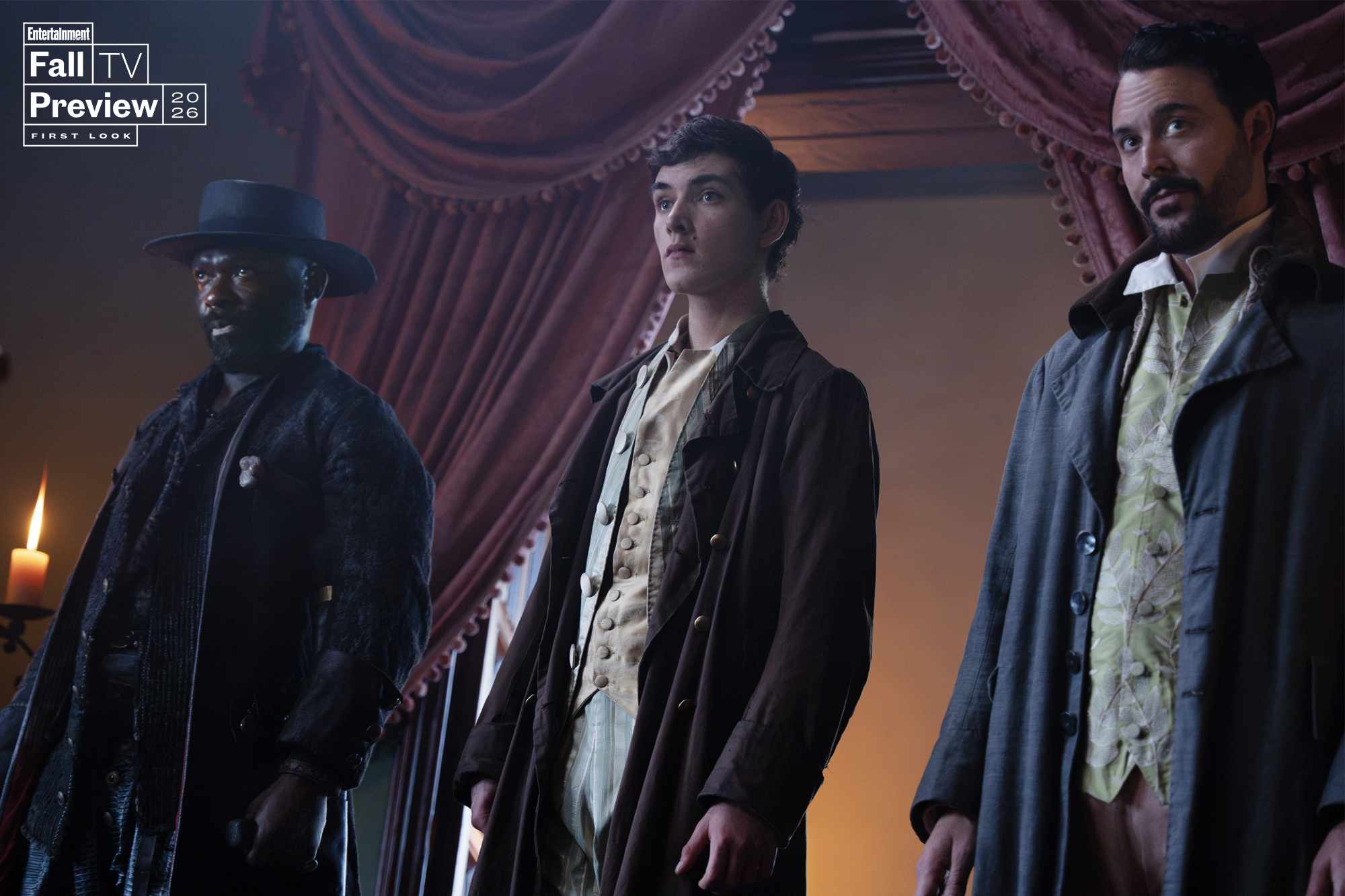
1. The wager turns knowledge into money
In the opening, the King James Bible becomes the basis for a public contest. A participant can select a passage, and Jim’s task is to reproduce it from memory. The adults’ bids transform his ability into a kind of entertainment—and, crucially, a way to earn money.
That matters because Jim and his mother, Bess Hawkins, are not introduced as comfortably secure people with time to spare. They run the Admiral Benbow Inn and need money. The wager therefore has a practical edge: Jim’s unusual talent is not just something to admire; it is something the family can use to get through the day.
The scene also makes the room’s power dynamics visible. The adults choose the terms, control the purse and watch Jim perform. He may possess the extraordinary skill, but other people decide how it is valued. That imbalance will become more dangerous once his memory holds information that pirates and agents would kill to possess.
2. The Bible is a test of memory, not a hidden code
It is tempting to treat the Bible as a secret key to the treasure hunt, but the premiere does not establish that the verses contain a cipher or a direct clue to Captain Flint’s fortune. The stronger reading is thematic. The Bible is a familiar, weighty text that makes Jim’s feat instantly legible to the people watching: this is a boy who can retain exact wording under pressure.
That distinction is important. The scene’s meaning comes from the act of remembering, not from any confirmed prophetic message in the chosen verses. Unless a later episode supplies a specific textual connection, claims that the opening Bible passage predicts the plot should be treated as speculation rather than fact.

3. Jim’s memory becomes the real treasure map
The wager foreshadows the premiere’s central invention: Jim has an almost photographic memory. When the treasure map enters the story, the ability changes the usual rules of a pirate adventure. A map can be stolen, hidden, burned or destroyed. Information stored in Jim’s mind is harder to take away.
That turns a familiar object—the map—into a much more complicated problem. In Robert Louis Stevenson’s 1883 novel, Jim narrates the adventure and becomes important because of what he sees, hears and does. This adaptation makes his capacity to remember an explicit plot mechanism. It gives the villains a reason to keep him close, but it also risks making Jim feel less like an ordinary boy learning through experience and more like a strategic asset.
The opening wager is the first clue to that change. The show tells us early that Jim’s mind can be monetized. Later, that same ability makes him valuable to people whose motives are far less innocent than a tavern crowd’s wager.
4. Bess’s role makes the scene about family survival, too
Because Bess is part of the story’s center, the wager also says something about the relationship between mother and son. Jim’s talent is not happening in isolation; it exists inside a household under financial pressure. Bess is resourceful and decisive, and the series presents the family’s struggle as a shared problem rather than a boy’s adventure that begins only when he leaves home.
That is one of the adaptation’s biggest departures from the traditional shape of Treasure Island. The story is still about a young person being pulled into a dangerous world, but Jim does not begin as a lone observer waiting for adults to send him away. His bond with Bess is already part of the stakes. The opening contest helps establish why their choices are practical as well as emotional.
5. The scene previews the show’s central question: who owns knowledge?
There is a useful progression in the premiere: first Jim’s memory earns money in a room full of strangers; then it becomes tied to a treasure map; finally, it makes him a target. The same ability changes meaning depending on who is watching and what they want.
That is the deeper point of the Bible-verse wager. Knowledge is presented as valuable, but value alone does not make it safe. A skill that helps a family survive can also expose them to exploitation. The people who want the map do not need to respect Jim as a person; they only need to understand what he knows.
For viewers, the opening is also a promise about the kind of puzzle this adaptation wants to build. The mystery is not only where the treasure lies. It is whether Jim can keep control of his own knowledge while older, more powerful people try to turn it into leverage.
Does the Bible wager predict what happens next?
Not literally, at least not on the evidence of Episode 1. The scene is best understood as character setup and foreshadowing: it introduces Jim’s extraordinary recall, the family’s need for money, and the danger of letting other people profit from what he knows. If later episodes connect a particular verse to an event, that would add another layer—but the premiere alone does not prove that the Bible is a coded treasure clue.
Frequently asked questions
Why does Jim Hawkins recite Bible verses in Treasure Island Episode 1?
The wager showcases Jim’s exceptional memory and gives him and Bess a way to earn money. It also foreshadows how his ability will become valuable—and dangerous—once the treasure map appears.
Does the Bible passage reveal the location of the treasure?
Episode 1 does not establish that the verses are a cipher or contain the treasure’s location. That interpretation remains speculation unless a later episode confirms it.
Is Jim’s photographic memory in the original Treasure Island novel?
The 2026 series makes Jim’s near-photographic memory an explicit feature of its adaptation. It is a major storytelling change rather than a central, superhuman ability in Stevenson’s original novel.
What does the opening wager tell us about Bess?
It establishes the family’s financial pressure and shows how Jim’s unusual talent is woven into their everyday survival, reinforcing the adaptation’s expanded focus on Bess and Jim as a team.
Where can I read the original Treasure Island?
Robert Louis Stevenson’s novel is available to read for free through Project Gutenberg’s edition of Treasure Island.
What to watch for next
As the voyage continues, pay attention to when Jim chooses to reveal what he remembers—and when he keeps quiet. That choice may become as important as the memory itself. The premiere’s opening wager gives the series a simple but effective idea to build on: Jim’s mind is his advantage, but it is also the thing that makes him vulnerable.
More from this series: Episode 1 ending twist: why Silver is already on the Hispaniola · How Jim’s photographic memory changes the treasure-map story
Sources and further reading
- RogerEbert.com: Treasure Island review
- FandomWire: Episode 1 recap
- Project Gutenberg: Robert Louis Stevenson’s Treasure Island
Editorial note: Interpretations of the scene are analysis, not confirmed statements from the show’s creators.


