

By Shivam Das | Comparison guide
How does MGM+’s new Treasure Island compare with Disney’s 1950 film? The biggest difference is where each version puts the audience’s attention. Disney’s classic live-action adventure moves briskly toward Billy Bones, the map, and the voyage ahead. The MGM+ premiere begins further inside the Hawkins family’s precarious life, giving Bess a much larger role and turning Jim’s extraordinary memory into a central plot device.
This is not a scene-for-scene remake comparison. The Disney film, directed by Byron Haskin and released in 1950, is a feature-length adaptation of Robert Louis Stevenson’s novel. The MGM+ version is a six-part television reimagining that has more room to reshape character motivations and build longer-running tensions. Both use the Admiral Benbow Inn as the gateway to danger, but they take noticeably different routes through it.

At a glance: MGM+ vs. Disney’s 1950 Treasure Island
| Story element | MGM+ premiere | Disney’s 1950 film |
|---|---|---|
| Opening focus | Jim and Bess Hawkins’ struggle to keep the Admiral Benbow Inn afloat, including Jim’s memory-based betting scheme | A more direct introduction to the inn, Jim, and the arrival of the dangerous world of pirates |
| Bess Hawkins | A major protagonist with her own financial pressures, decisions, and relationships | Jim’s mother is part of the story’s background rather than its main dramatic engine |
| Jim’s ability | An almost photographic memory becomes important to the treasure-map plot | Jim’s courage, curiosity, and quick decisions drive his coming-of-age adventure |
| Long John Silver | David Oyelowo plays a more reimagined Silver whose backstory and identity are part of the series’ revision | Robert Newton’s charismatic, theatrical pirate helped define the screen version of Silver for generations |
| Pacing | Serial storytelling can spend more time on family dynamics, secrets, and political context | A 96-minute film needs to move efficiently from the inn toward the voyage and treasure hunt |
1. The opening: a family survival story versus a classic adventure launch
The MGM+ premiere begins with a sharper emphasis on economic pressure. Bess uses Jim’s unusual ability to recite a page of the Bible after a brief look to make money from wagers at the inn. The trick is clever, but it also tells us something essential: this family is improvising ways to survive, and Jim’s gift is both an asset and a burden.
Disney’s 1950 film is more economical. Its opening establishes Jim’s world and then lets the arrival of Billy Bones bring danger to the doorstep. The film does not need to build an entire season’s worth of family conflict before the treasure plot takes over. Its priorities are momentum, atmosphere, and the classic promise of a boy drawn into a dangerous voyage.

2. Jim Hawkins: photographic memory versus courage under pressure
The new series gives Jim a near-photographic memory, and the premiere makes that trait a practical plot mechanism rather than a decorative character detail. Once the treasure map is burned, Jim’s ability potentially makes him the only surviving record of what it showed. That changes the balance of power: information lives in a person, not on a piece of paper.
In Disney’s film, Jim is not defined by a superhuman memory. His appeal comes from being young and inexperienced but increasingly capable of making decisions in dangerous circumstances. He learns by watching adults, judging whom to trust, and taking risks. That is a cleaner, more familiar coming-of-age arc; MGM+ is trying a more puzzle-driven variation.
Neither approach is automatically better. The memory device gives the series a distinctive hook and creates a reason for villains to keep Jim close. The risk is that Jim can begin to feel like a plot solution instead of a boy whose judgment develops. The key question for later episodes is whether the show makes him more than a human treasure map.

3. Bess Hawkins: the biggest structural change
For many viewers, Bess is the most consequential difference between the two versions. MGM+ gives her agency over the family’s finances and decisions, and it allows her to influence events that the classic adventure mostly organizes around Jim. Her choices can affect the map, the voyage, and the relationships forming around the treasure.
That change can enrich the story. A mother trying to protect her child while confronting poverty and limited options creates stakes that do not depend on pirates alone. It also opens up a useful tension: Jim wants independence, but Bess has spent years making decisions because survival left little room for idealism.
The challenge is balance. If Bess’s storyline dominates too heavily, Jim’s coming-of-age journey may feel secondary. Disney’s simpler structure keeps Jim unmistakably at the center. The series has more space to make Bess important, but it must still give Jim meaningful choices and consequences of his own.
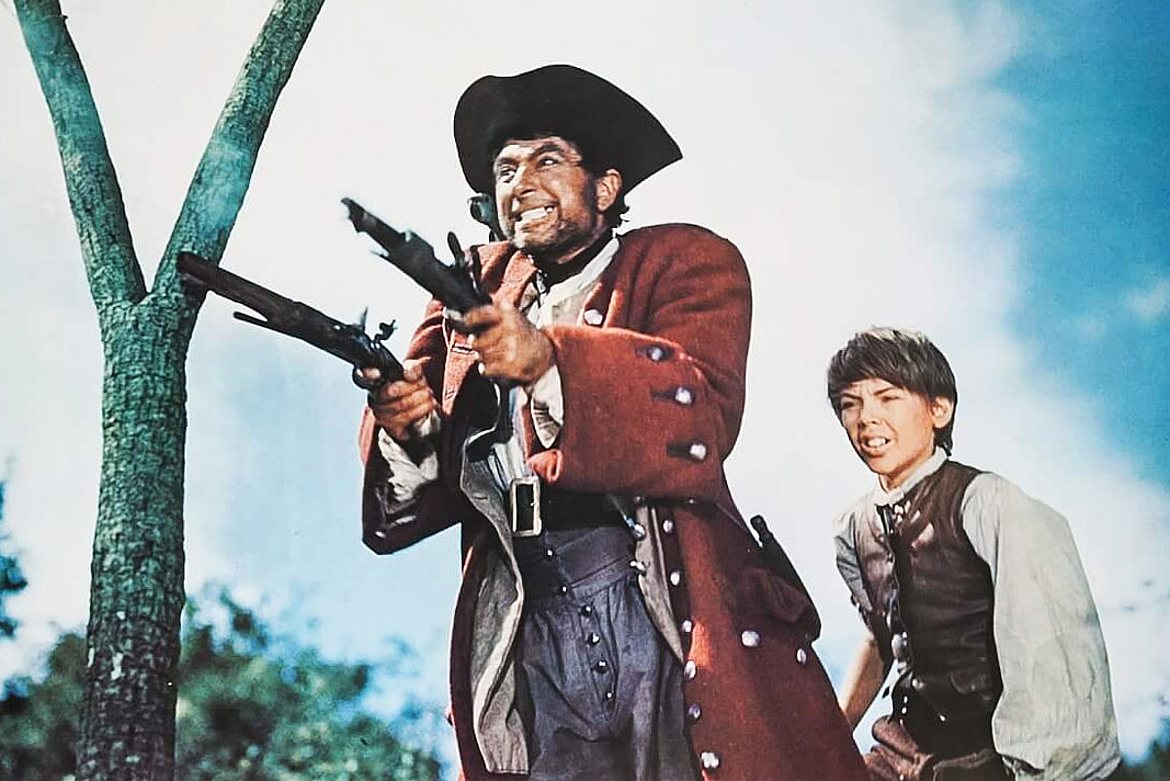
4. Long John Silver: iconic performance versus reinterpretation
Robert Newton’s Long John Silver helped establish a screen-pirate template: theatrical, funny, persuasive, and dangerous. Disney’s film uses that larger-than-life presence to make Silver compelling even when his loyalties are uncertain. He is not simply a villain to be defeated; he is an adult Jim can admire, fear, and struggle to understand.
David Oyelowo’s MGM+ interpretation is working in a different register. The series revisits Silver’s background and presents him through a contemporary lens, rather than simply repeating Newton’s famous performance. That gives the show room to ask new questions about power, survival, and who gets to control the treasure story.
The comparison is less about deciding which actor is “correct” and more about the kind of story each production wants to tell. Disney’s Silver is a memorable adventure-film creation. MGM+’s Silver is part of a broader attempt to reopen the character and his world for a longer serial drama.

5. Tone and pacing: six episodes have different obligations from one movie
Disney’s film has a clear job: establish the danger, assemble the voyage, and deliver a satisfying adventure within roughly 96 minutes. Its visual style, broad character beats, and forward motion serve that goal. It is a family-oriented adventure, though Disney lists the film as PG and notes tobacco depictions on its streaming listing.
The MGM+ series can linger on secrets, class, family tension, and historical context. That extra space can make the world feel more complicated, but it can also slow the launch of the central quest. A feature film can move past a conversation in seconds; a series may turn that conversation into a continuing conflict. Whether that feels rich or overextended will depend on how well the later chapters pay off what the premiere sets up.
6. What both versions preserve from Robert Louis Stevenson
Under the changes, the core ingredients remain recognizable: Jim Hawkins, the Admiral Benbow Inn, Billy Bones, a dangerous map, Long John Silver, and the lure of buried treasure. Stevenson’s novel, first published in book form in 1883, gives adaptations a strong framework because the treasure hunt is also a story about trust, maturity, and moral ambiguity.
The most useful way to watch the two versions is to treat Disney as a classic, tightly compressed adventure and MGM+ as a reinterpretation that shifts more of the emotional weight onto Bess and Jim’s unusual memory. One emphasizes the thrill of setting sail; the other spends more time asking what makes the journey necessary and who gets to shape it.
Verdict: which opening works better?
Choose Disney’s 1950 opening if you want immediate adventure, a classic screen-pirate performance, and a direct route into the treasure hunt. Choose MGM+ if you are interested in a more heavily reworked family story, a more prominent Bess, and a mystery built around Jim’s memory. The older film is more focused by design; the newer series has more room to experiment, but it also has more threads to justify.
For readers following the new adaptation, continue with our Episode 1 ending explained: why Silver is already on the Hispaniola and our guide to how Jim’s photographic memory changes the treasure-map story.
Frequently asked questions
Is MGM+’s Treasure Island a remake of Disney’s 1950 movie?
No. It is a new television adaptation of Robert Louis Stevenson’s story, with substantial changes to character emphasis and plot mechanics. Disney’s 1950 film is one earlier screen adaptation.
What is the biggest difference between the two openings?
MGM+ gives more attention to Bess Hawkins, the family’s financial pressure, and Jim’s memory-based betting scheme. Disney moves more directly toward the classic pirate-adventure setup.
Does Disney’s Treasure Island feature Jim’s photographic memory?
No. In the 1950 film, Jim is defined more by his courage, curiosity, and decisions under pressure than by a photographic-memory ability.
Who plays Long John Silver in Disney’s 1950 Treasure Island?
Robert Newton plays Long John Silver opposite Bobby Driscoll as Jim Hawkins. Disney’s official film page lists the cast and identifies the movie as its first live-action feature.
Where can I verify details about the classic film?
Start with the official Disney film page and the Walt Disney Family Museum’s history of the production. Availability can vary by country and streaming service.
Sources and further reading
- Disney Movies: Treasure Island (1950)
- The Walt Disney Family Museum: Disney’s first fully live-action feature
- AFI Catalog: Treasure Island
- Disney+ film listing
Editorial note: Film stills and promotional images remain the property of their respective rights holders. This comparison is editorial commentary, not an official Disney or MGM+ publication.


