

By Shivam Das | October 13, 2026
In 100 Days of Deception, the most dangerous person in a room is not always the one raising their voice. Park Jinyoung’s Sato Hideo often appears measured, formal and almost unreadable. That calmness is part of what makes him compelling: he works inside the Japanese Government-General, speaks the language of authority, and carries a personal history that does not fit the identity he presents to the world.
The series follows Lee Ga-kyung, a skilled pickpocket drawn into an independence movement mission, and Hideo, the Government-General interpreter who becomes suspicious of her. Netflix’s official synopsis describes Ga-kyung’s infiltration and her unexpected connection to the target’s son; Soompi’s character coverage also frames Hideo as someone caught between two identities. Those details make his restraint more than a stylistic choice—it becomes a survival strategy.
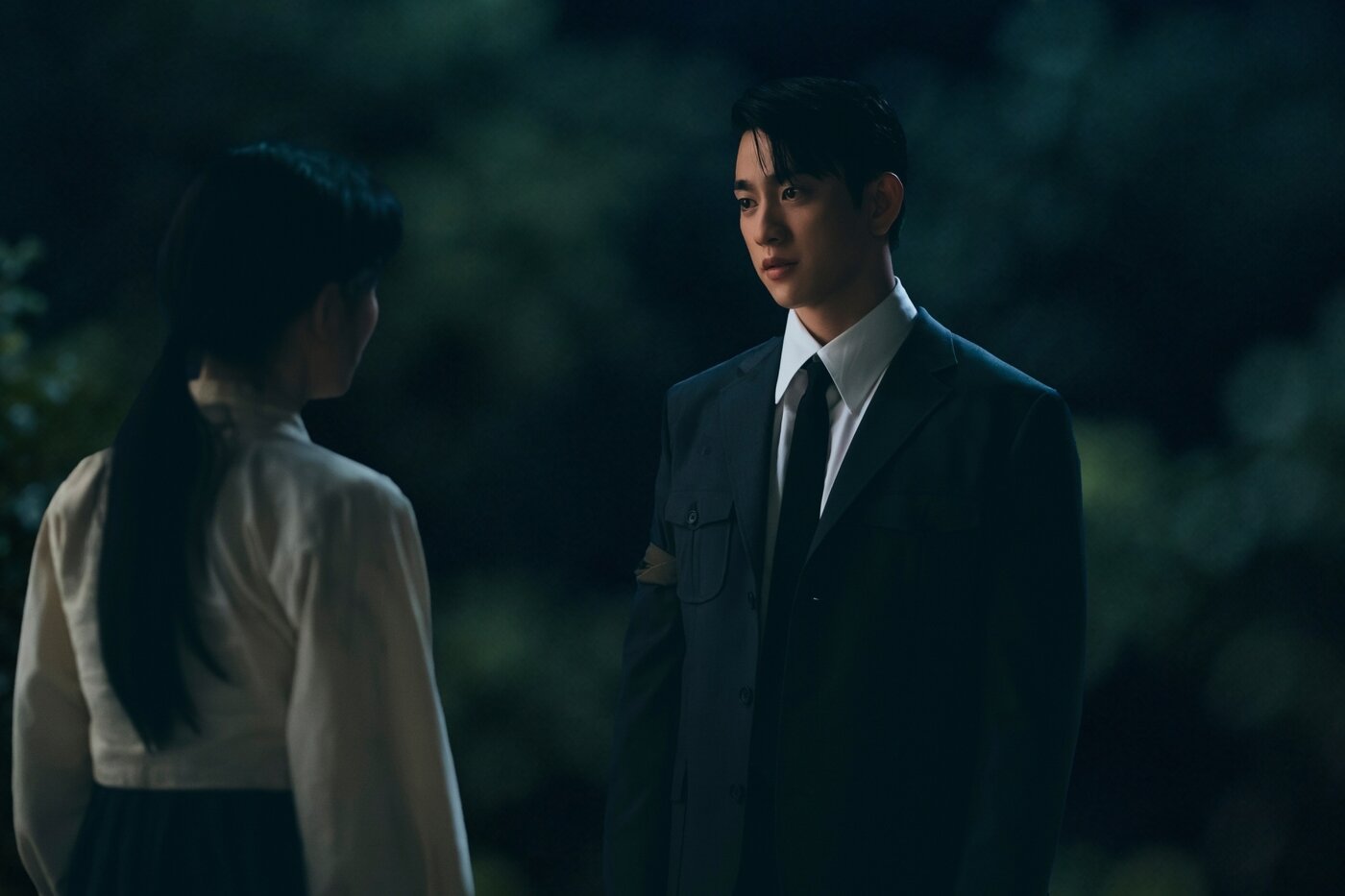
Why Hideo’s quietness creates tension
Many thriller characters announce their power through threats, anger or obvious displays of force. Hideo’s approach is different. He watches, remembers inconsistencies and lets silence do some of the work. When Ga-kyung appears in a new role after their earlier encounter, he does not need to make a dramatic accusation for the audience to feel the danger. His suspicion is enough to change the temperature of a scene.
That kind of performance asks viewers to read small signals: a pause before answering, a glance held a beat too long, or a question that sounds polite but carries a second meaning. The character’s authority is especially unsettling because he can appear courteous while gathering information that may expose someone else.
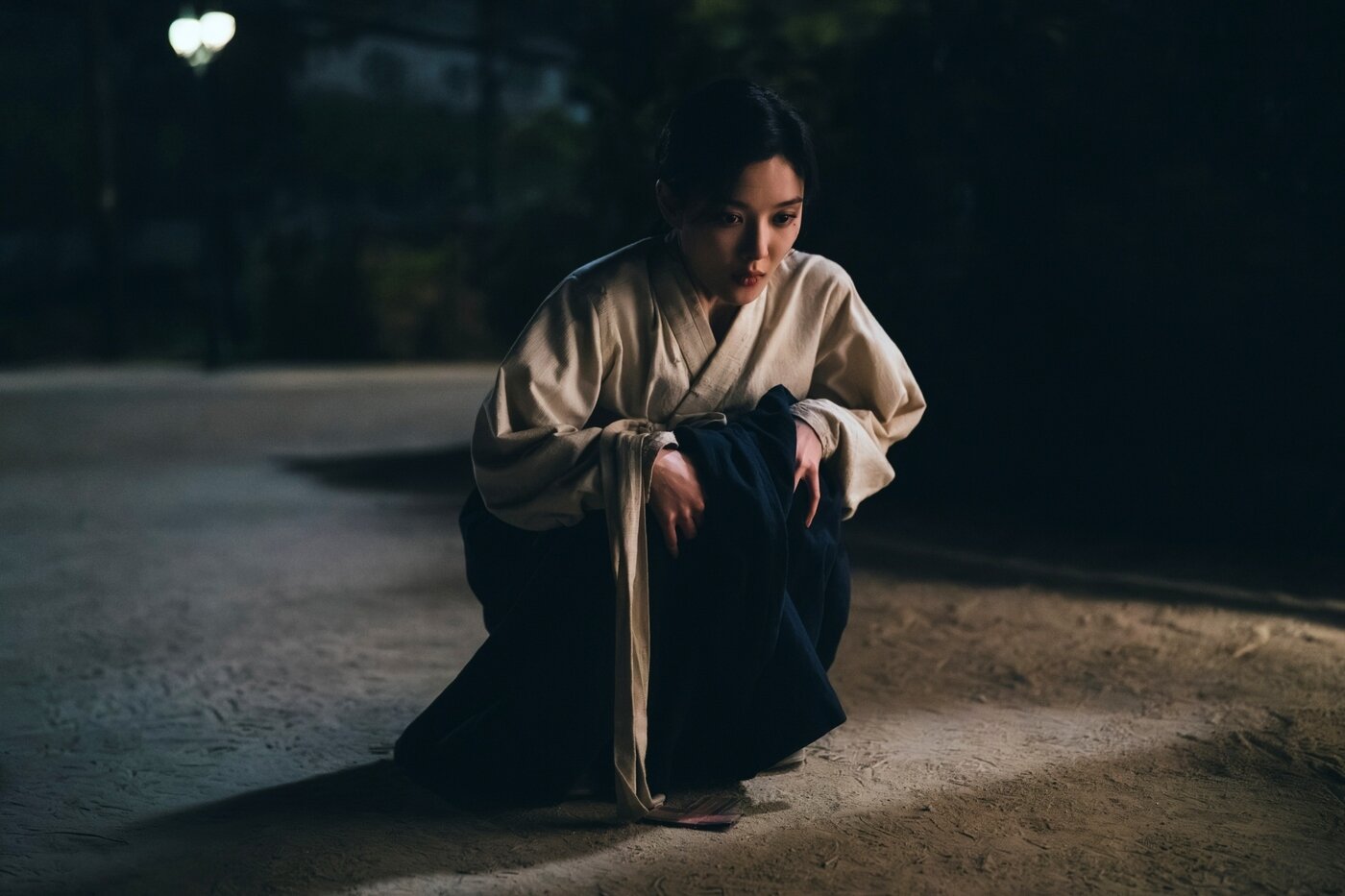
A double identity makes every choice more complicated
Hideo is presented publicly as Sato Hideo, an interpreter adopted by a powerful Japanese official. But the story’s background establishes that his identity is more complicated than his official position suggests. Soompi’s preview coverage describes him as a character caught between Hideo and Tae-woong, with his sense of self unsettled by the people he meets.
This history gives his quiet control a sharper edge. He has reasons to understand how institutions use names, status and loyalty to decide who belongs. He also has reasons to be cautious about what he reveals. That does not automatically make him a hero or a villain; it makes his decisions harder to predict.
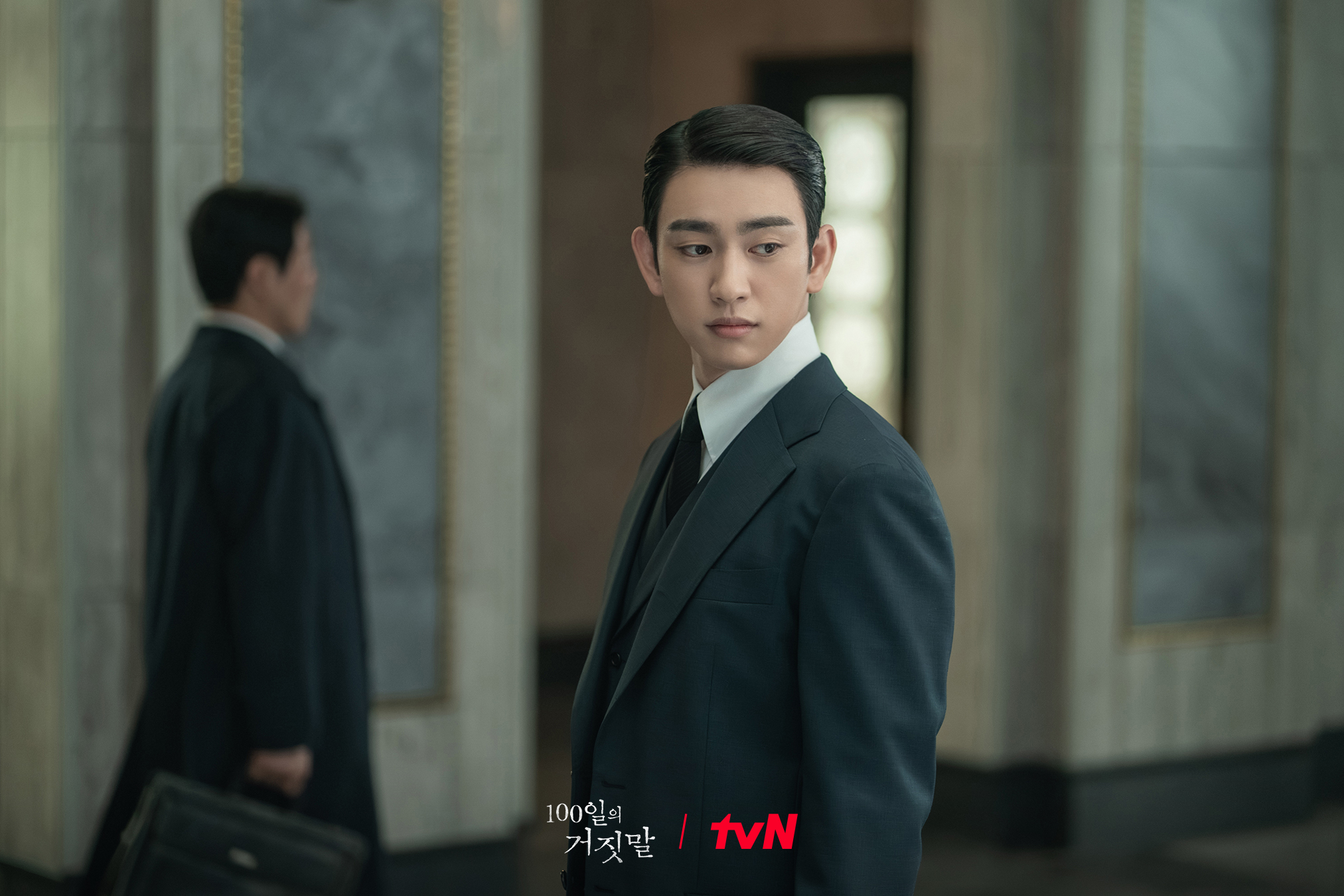
The Government-General setting turns politeness into a weapon
Inside a colonial administration, language is not neutral. An interpreter can influence what is understood, what is delayed and what reaches people in power. Hideo’s job therefore puts him close to sensitive information while requiring him to perform loyalty in public. In this setting, a carefully chosen phrase can be as consequential as a weapon.
The drama’s period interiors and formal offices amplify the feeling that everyone is being observed. Characters rarely have the freedom to speak plainly. Hideo’s composure fits this world, but it also makes him vulnerable: the more convincingly he performs his role, the more difficult it may become to show where his real loyalties lie.
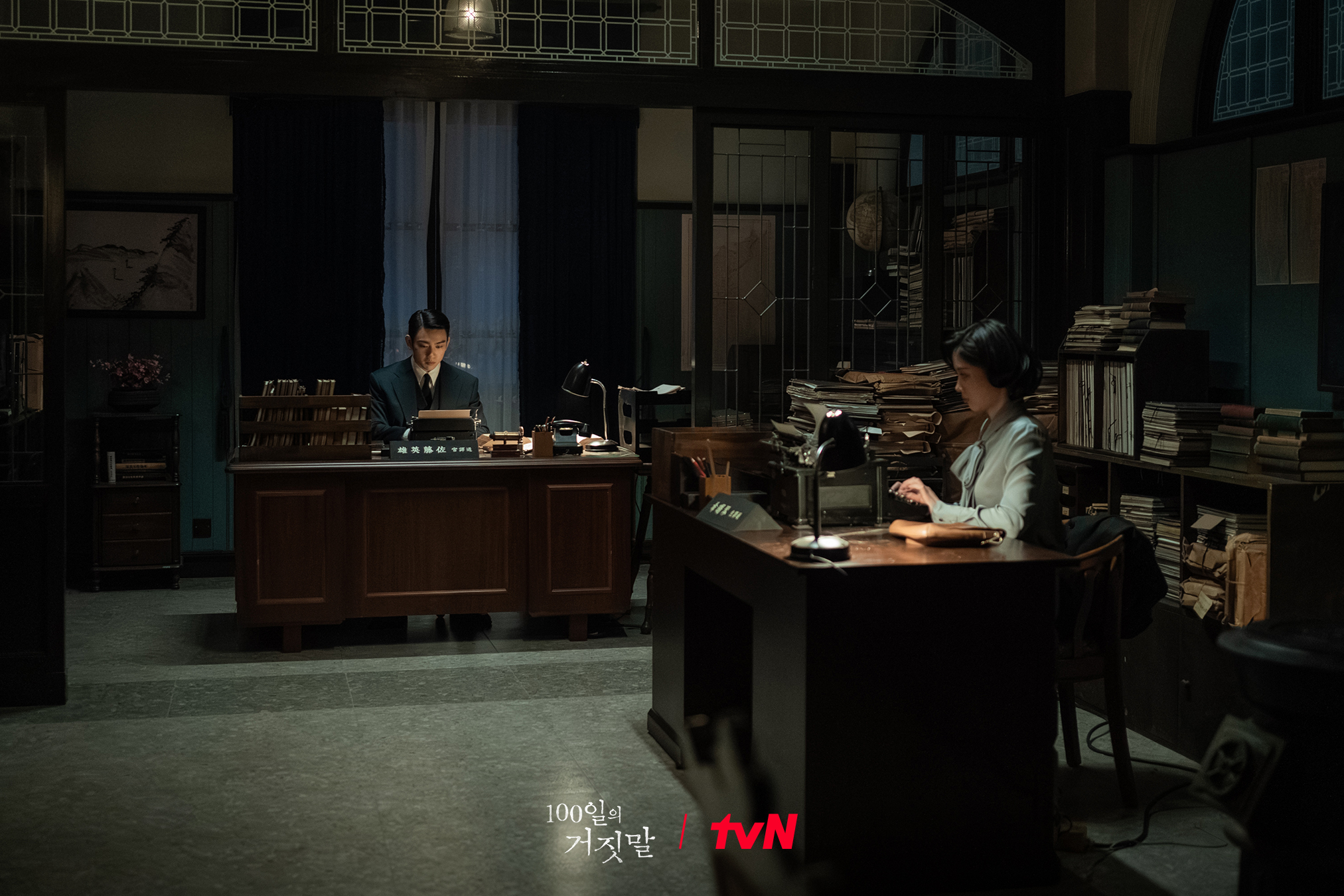
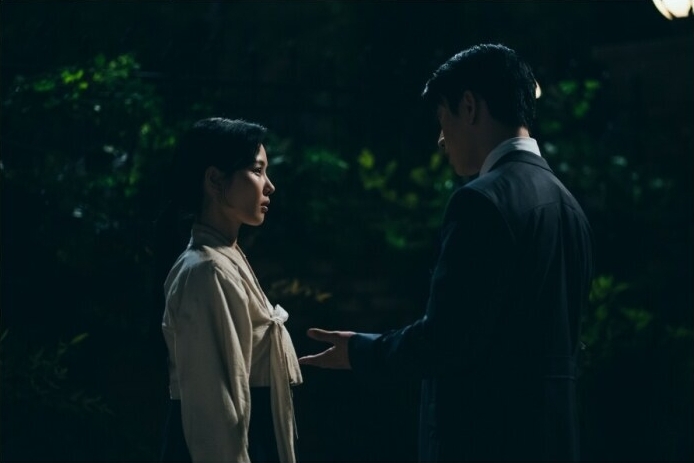
His dynamic with Ga-kyung is a contest of observation
Ga-kyung survives by noticing details other people overlook. Hideo’s strength is that he notices her noticing them. Their encounters are compelling because neither can fully trust the other, yet both are intelligent enough to recognize a capable opponent. The tension is not simply romantic; it is also a contest over who will understand the other’s disguise first.
Hideo’s restraint gives the relationship room to evolve. If he openly declared everything he suspected, the mystery would collapse too quickly. Instead, he tests, watches and adjusts. Viewers are left to wonder whether a quiet gesture signals concern, calculation or both. That ambiguity is one of the drama’s most useful engines.
What the performance needs to deliver next
Quiet intensity works only when the story gives it consequences. As Hideo’s suspicions deepen, the drama needs to show what he is willing to risk, what he refuses to betray and whether his self-control can survive a direct challenge to his identity. If every scene keeps him perfectly unreadable, restraint could become distance. The strongest next step would be to reveal the cost of his composure without explaining away all the mystery.
That is why calling Hideo the “most dangerous” character is best understood as an interpretation, not an established ranking. His access to information, his position inside the administration and his ability to conceal his reactions make him potentially dangerous. Whether he uses those advantages to protect himself, protect Ga-kyung or pursue another goal remains part of the suspense.
Quick answer: Why does Park Jinyoung’s quiet control make Hideo dangerous?
Hideo’s calm manner hides how closely he watches other people. As an interpreter inside the Government-General, he has access to sensitive conversations, while his complicated identity gives him reasons to conceal his loyalties. His quietness creates uncertainty about what he knows and what he may do with it.
Frequently asked questions
Who does Park Jinyoung play in 100 Days of Deception?
He plays Sato Hideo, also associated with the name Kim Tae-woong, an interpreter at the Japanese Government-General whose background complicates his public identity.
Is Hideo a villain?
The early story presents him as guarded and suspicious rather than easy to classify. His motives and loyalties should be judged by what the episodes reveal, not by his calm demeanor alone.
Why is Hideo suspicious of Lee Ga-kyung?
They have crossed paths before, and her later appearance in a different role gives him reasons to question whether their encounters are accidental.
Where can I watch 100 Days of Deception?
The series has an official listing on Netflix. Availability varies by region.
Watch an official behind-the-scenes video
The video below is from BH Entertainment’s YouTube upload connected to the drama. It offers additional context around Park Jinyoung’s work on the series; it is not evidence for any plot theory discussed above.
Sources and further reading
- Netflix — 100 Days of Deception official title page
- Soompi — Character posters and hidden agendas
- Soompi — Park Jinyoung’s character grows suspicious of Ga-kyung
- Soompi — Episode 2 preview
Image credits: tvN promotional stills distributed through Soompi. Confirm licensing or permission before reuse if required by your publishing arrangement.


