

Quick answer: The 2026 Treasure Island adaptation makes race and historical identity explicit by casting David Oyelowo as Long John Silver and giving Silver a backstory connected to enslavement in the Caribbean. Hayley Atwell’s Bess Hawkins also moves from a minor figure in Robert Louis Stevenson’s 1883 novel to a central character. Those choices create room for a wider historical perspective—but they do not automatically make every creative decision successful. The clearest debate is about execution: whether the series integrates its new ideas into a convincing adventure story.
By Shivam Das | Updated October 12, 2026
The new Treasure Island is not simply changing who appears on screen. It is changing whose experiences shape the story. In this six-part adaptation, David Oyelowo plays Long John Silver, Hayley Atwell plays Bess Hawkins, and Tom Sweet plays Jim Hawkins. The result has prompted a familiar but important question about period storytelling: how can a modern adaptation broaden representation without making its characters feel like additions to a story that is otherwise unchanged?
That question deserves more than a quick verdict about whether a production is “historically accurate” or “too modern.” Stevenson published his novel in 1883, but the story is set in an imagined pirate world shaped by empire, maritime trade, violence, and the pursuit of wealth. A contemporary adaptation has room to examine those contexts. It also has a responsibility to make its dramatic choices coherent.
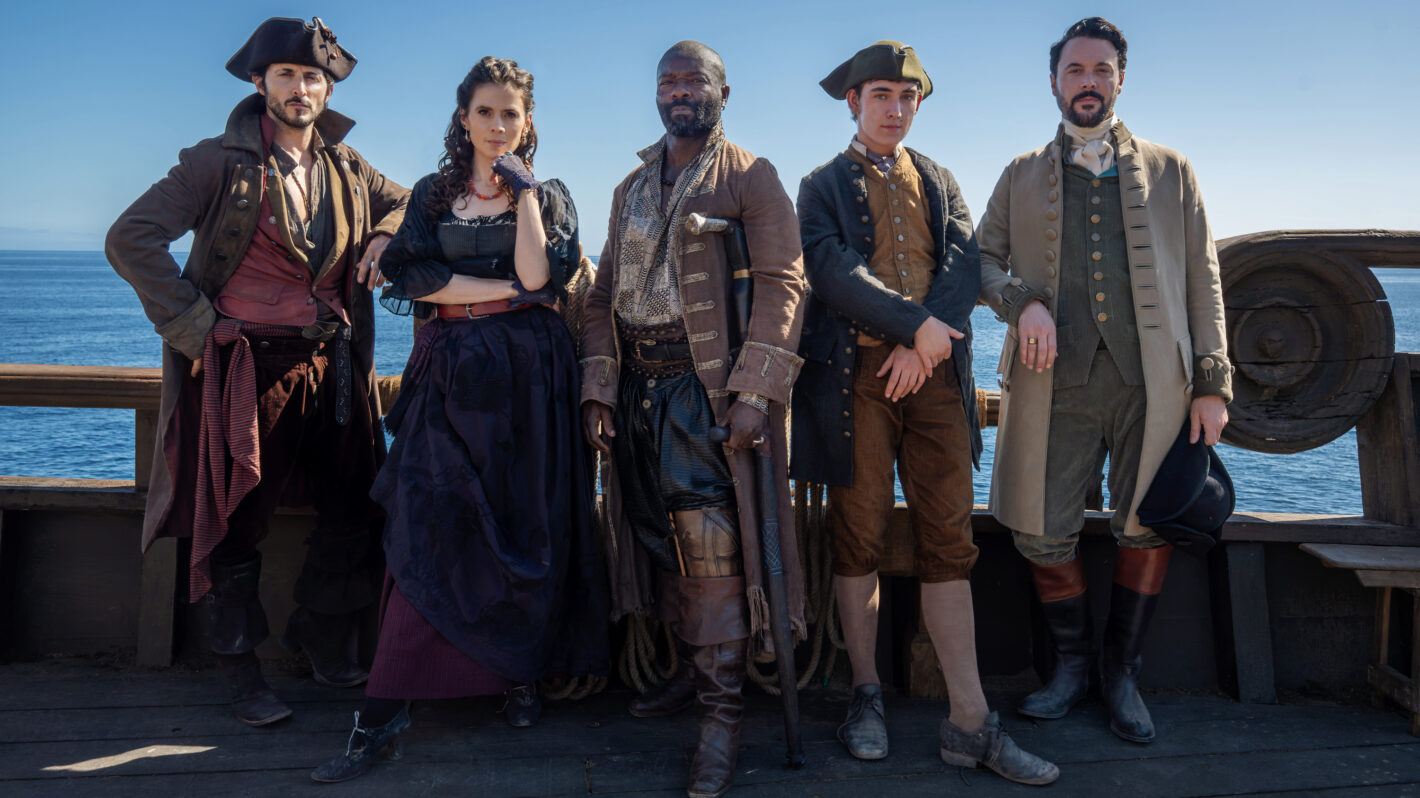
Why David Oyelowo’s Long John Silver changes the conversation
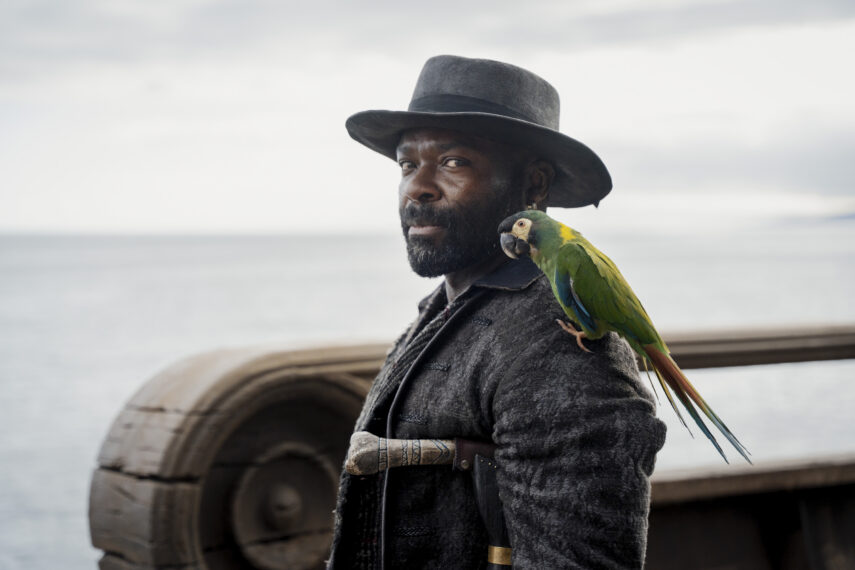
Oyelowo’s casting is more than a visual update. In an Entertainment Weekly interview, the actor explained that the adaptation engages directly with the racial and political realities of its setting. He described Silver as a formerly enslaved Caribbean man and said the role’s historical context was important to making the character believable within that world.
This approach gives the production an opportunity to move beyond the familiar image of the pirate as a free-floating rogue whose wealth and violence have no connection to wider power structures. The Caribbean was shaped by colonial rule, plantation slavery, forced migration, and maritime commerce. Piracy itself was not one unified movement, and individual pirates had different motives and backgrounds. Still, the region’s history makes questions of freedom, coercion, and survival relevant to a story about people risking everything at sea.
The distinction matters: a character’s fictional biography is not proof that every historical detail in a series is accurate. It is a dramatic lens. Viewers can welcome the lens while still asking whether the show develops it carefully.

Historical context is not the same as historical proof
One claim often repeated in conversations about pirates is that many were Black or came from communities affected by enslavement and colonialism. The broad historical point—that Black sailors and people escaping enslavement could enter pirate crews—is well established in histories of Atlantic piracy. But precise percentages depend on the period, location, and definition of “pirate.” A sweeping statistic should not be treated as a universal count for every crew or decade.
The series’ decision to connect Silver’s identity to the Caribbean therefore opens a useful door, but the strongest analysis keeps fiction and history distinct. A drama can use an individual character to explore a real system without claiming that one invented life represents every person who lived under it.
For readers who want the wider background, our related guide explores the historical context of Black pirates and women in pirate history. That context helps separate documented history from modern storytelling choices.
Hayley Atwell’s Bess Hawkins: a stronger role, a different story
The other major shift is Bess Hawkins. In Stevenson’s novel, Jim’s mother is important to the opening situation but does not remain at the center of the adventure. The adaptation gives Bess a much larger role and makes her choices part of the story’s forward momentum.

That expansion can give the story a perspective the book leaves largely unexplored: a woman trying to maintain security and agency in a world where power is often controlled by men with money, weapons, ships, or social status. It also changes the balance of the adventure. If Bess becomes the most active decision-maker while Jim is left reacting, the adaptation risks weakening the coming-of-age journey that gives the original story its emotional shape.
Those two reactions are not mutually exclusive. A more developed female character can be welcome, while the script can still struggle to give both mother and son convincing arcs. The question is not whether Bess should be allowed to lead; it is whether the writing gives Jim enough agency to remain the young hero whose choices matter.
What the criticism actually targets
The Guardian’s October 12 review gave the series two out of five stars and criticized its superpower-like memory concept, stylized flashbacks, melodramatic dialogue, and the way Jim can feel sidelined. It also singled out Oyelowo’s performance as a compelling element amid the show’s broader problems. The review’s central complaint is about the adaptation’s storytelling and tone—not evidence that audiences broadly reject a Black Long John Silver.
That distinction is essential when describing “backlash.” A negative review, a social-media post, and a measurable audience trend are different kinds of evidence. Without a representative survey or transparent platform data, it would be misleading to claim that viewers as a whole are angry about the show’s racial or historical choices. Likewise, praise for representation does not prove that every viewer agrees with the adaptation’s execution.
Another useful comparison comes from TV Insider’s interview with Atwell and Oyelowo, which explains how the performers approached the updated characters. Those comments help establish the creators’ intentions; they do not settle whether the choices work dramatically for every viewer.

Can a modern adaptation be both inclusive and faithful?
“Faithful” is often used as if it has only one meaning. Some viewers want fidelity to plot and character; others value fidelity to a book’s emotional themes, even when details change. Those standards can lead to different conclusions about the same scene.
Stevenson’s novel is an adventure about risk, loyalty, greed, manipulation, and a young person learning to judge adults. A version can change Silver’s background or give Bess more agency while retaining those themes. But if new elements distract from the treasure hunt, flatten Jim’s development, or make character motivations hard to follow, viewers may feel the adaptation has traded narrative clarity for novelty.
That is the most productive standard for judging this version: not whether it is allowed to change the book, but whether the changes create a richer story. Representation works best when characters have motives, contradictions, and consequences—not when identity alone is expected to carry the drama.
Official trailer: watch the series for yourself
The official Paramount+ UK and Ireland trailer offers a direct look at the series’ tone, cast, and visual approach. Trailer material is promotional; it cannot by itself establish whether the full series delivers on its ideas.
Quick answers
Does the 2026 Treasure Island make Long John Silver Black?
Yes. David Oyelowo plays Long John Silver, and the adaptation explicitly connects the character’s backstory to the Caribbean and enslavement.
Is the series historically accurate?
It is a fictional adaptation that draws on historical themes. Individual details should be checked against reputable historical sources rather than treated as documentary fact.
Why is Hayley Atwell’s Bess Hawkins controversial with some book fans?
Her role is much larger than in the novel, changing the story’s focus and Jim’s place in the adventure. Some viewers may welcome the expansion while others may question how it affects the original coming-of-age arc.
Did The Guardian criticize the series because of its casting?
The Guardian’s October 12, 2026 review focused on the adaptation’s tone, plot additions, dialogue, and the sidelining of Jim. It praised Oyelowo’s performance even while criticizing the overall production.
Is there proof of widespread social-media backlash over race?
Not from the sources cited here. Individual posts can show particular reactions, but they do not establish what the wider audience thinks without representative data.
Bottom line
The 2026 Treasure Island takes a meaningful step by placing race, Caribbean history, and Bess Hawkins’ agency closer to the center of a familiar adventure. Those choices are worth discussing on their own merits. The tougher question is whether the writing gives them enough depth—and whether the show preserves the suspense, moral ambiguity, and coming-of-age energy that have kept Stevenson’s story alive. Viewers can support broader representation and still expect the drama to earn every change it makes.
Sources and further reading
- The Guardian: Treasure Island review, October 12, 2026
- Entertainment Weekly: David Oyelowo on Long John Silver and the series’ historical framing
- TV Insider: Hayley Atwell and David Oyelowo explain the adaptation’s changes
- Related article: Black pirates and female buccaneers in historical context
Image credits: Paramount+ / MGM+ promotional stills as published by Entertainment Weekly and TV Insider; Guardian review image credited to Paramount Plus (UK). Images are linked from their respective publishers; confirm licensing and hotlink permissions before commercial reuse.


