

How historically accurate is MGM+’s Treasure Island in 1788 Cornwall? The short answer: it is a plausible dramatic backdrop, not a documentary reconstruction. The six-part adaptation uses a late-18th-century coastal world to ground its pirate thriller, but its characters, geography and story are shaped first by Robert Louis Stevenson’s fiction.
The series premiered in the United States on MGM+ on October 11, 2026, and follows Jim Hawkins and his mother Bess as they become entangled with Long John Silver and the hunt for Captain Flint’s treasure. The official series description places the drama in 1788, across Cornwall, the sea and a mysterious island. That date gives the production a clear historical frame—but how closely does the world on screen match the real place and period?
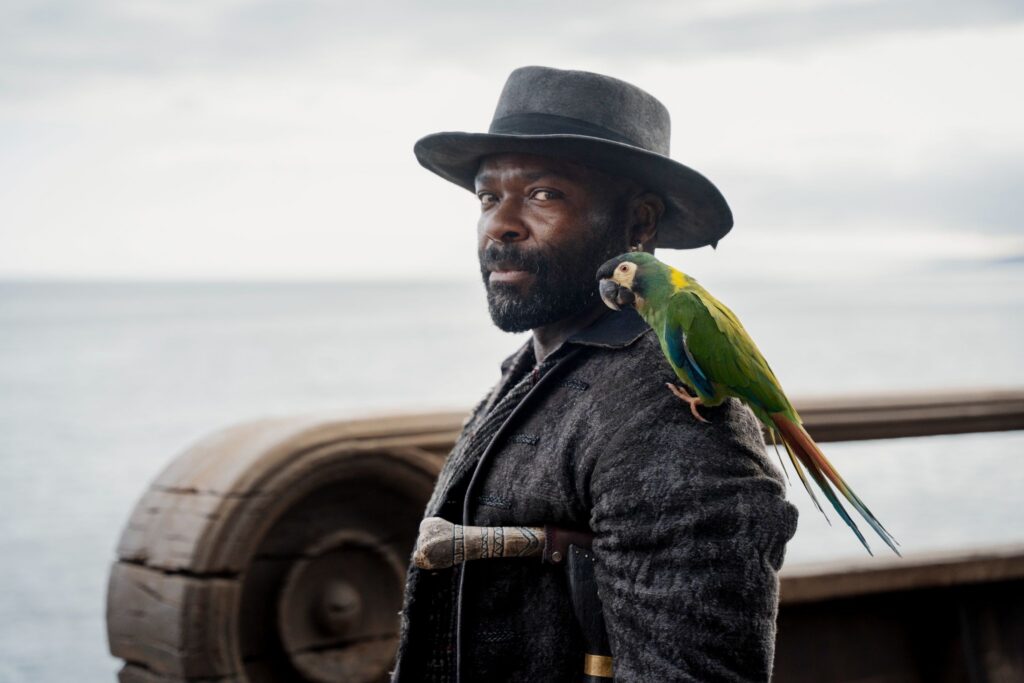
Why choose Cornwall in 1788?
Cornwall gives a pirate story an immediate sense of exposure and danger: rugged coastlines, working harbors, weather that can turn quickly, and communities connected to the sea. In the late 18th century, Britain’s maritime economy was shaped by naval power, commercial shipping, fishing, smuggling and imperial trade. A story about sailors, stolen wealth and people trying to escape the law fits naturally into that broad setting.
That does not mean every scene represents a specific documented Cornish event. The series is an adaptation, and its setting works as a dramatic shorthand for a world where a ship can offer escape as easily as it can deliver someone into danger. The date also places the story after the American Revolutionary War and before the French Revolution’s most turbulent years—an era of political change that can add context to a story about wealth, power and who gets to control it.
What the series gets right about the maritime atmosphere
The show’s strongest historical effect comes from the material world: weather-beaten clothing, wooden vessels, rope, canvas, cramped interiors and the practical discomfort of life near the water. These details help the characters feel as though they inhabit a working maritime environment rather than a polished costume pageant.
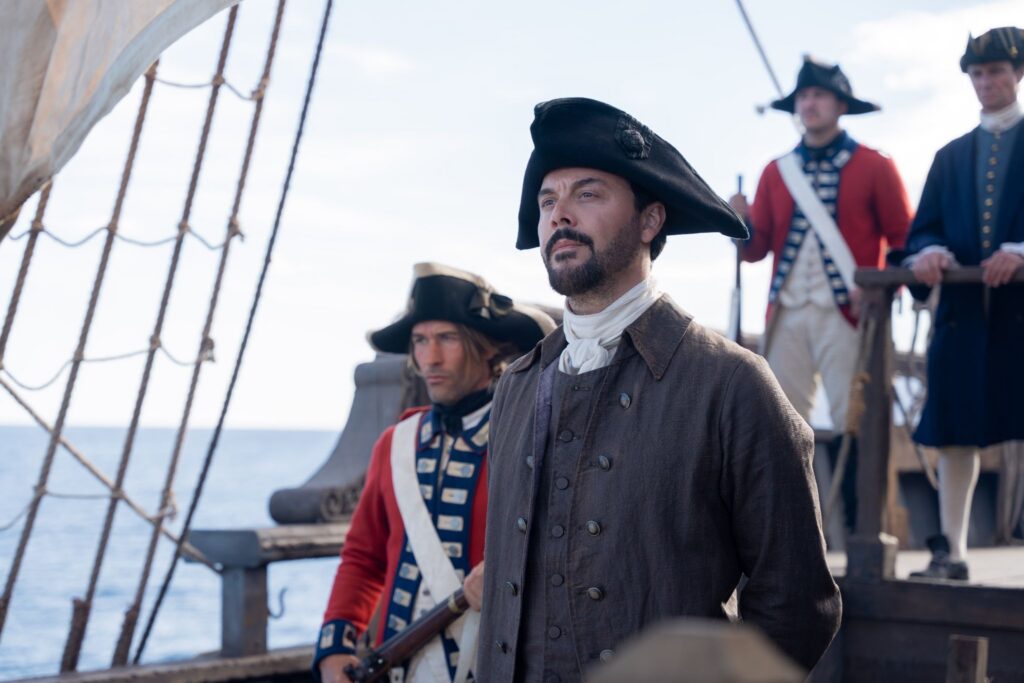
Still, visual plausibility is not the same as complete historical accuracy. A convincing jacket or ship’s deck cannot, by itself, prove that a costume, weapon, shipboard routine or social custom is exact to 1788. The available official series material establishes the setting and production background, but it does not provide a scene-by-scene historical audit. Claims that a particular prop or custom is definitively accurate should therefore be treated cautiously unless backed by specialist research.
Does the story match Robert Louis Stevenson’s original?
Not exactly—and that distinction matters. Stevenson’s Treasure Island, first published in book form in 1883, is a Victorian adventure novel looking back toward an imagined age of pirates. The new series moves the story into a specific 1788 frame and expands the role of Jim’s mother, Bess Hawkins, while adding characters and political tensions. Those choices are creative reinterpretations, not evidence that the original novel was a precise historical account of Cornwall.

The novel’s familiar starting point is the Admiral Benbow Inn and the arrival of Billy Bones; the television version reshapes the family dynamic and the route into the treasure hunt. That can make the period feel more lived-in, but it also means viewers should separate Stevenson’s original plot from the show’s new material. For a deeper look at one of the adaptation’s biggest departures, read our coverage of Jim Hawkins’ photographic memory and the treasure-map story.
How historically plausible are the people and power structures?
The broad tensions are credible for a late-18th-century adventure: wealth could bring influence, maritime trade tied local lives to distant places, and a ship’s hierarchy left little room for open disagreement. But the series’ specific conspiracies, relationships and treasure-driven decisions belong to its fictional plot. It would be misleading to present Long John Silver, Bess Hawkins or Aaron Graham as historical people, or to treat their actions as a record of actual Cornish history.
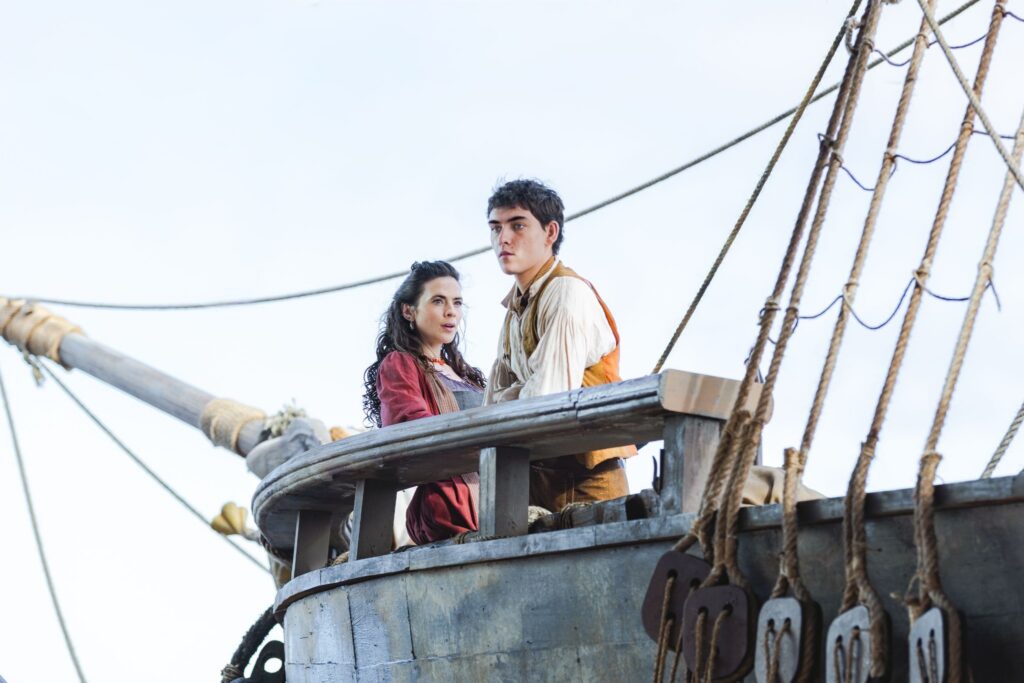
The show also draws on a wider Atlantic world. That can be an important historical backdrop, because British maritime life in this period was connected to empire, colonial economies and the movement of people and goods across the ocean. Yet viewers should look for the difference between a story that acknowledges those structures and one that fully explains them. A drama can raise historical questions without answering every one of them.
What about the locations?
Although the story evokes Cornwall, the production was filmed in Bristol in the United Kingdom and Tenerife in Spain, according to Paramount+’s official series guide. Filming locations are not necessarily the same as the places represented on screen: a production may combine several locations, sets and visual effects to create one fictional coastline or harbor.
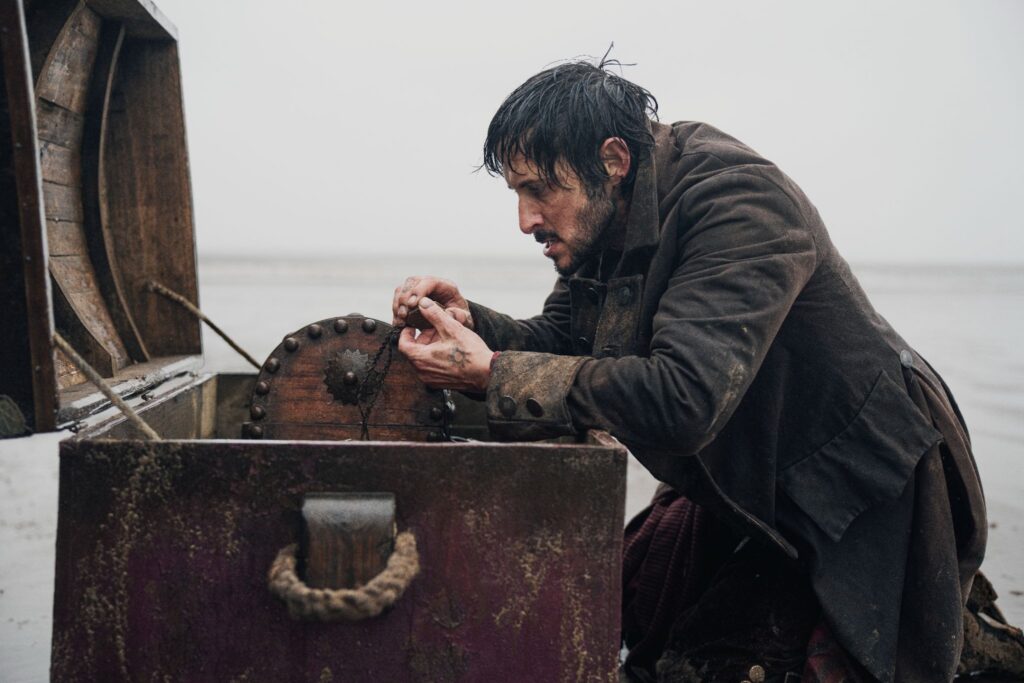
That approach is normal for television production, especially when a story needs to suggest several countries and a long ocean voyage. It can create a persuasive visual world, but it does not mean the scene was shot in Cornwall—or that every visible landscape reproduces the Cornish coast exactly.
So, is Treasure Island’s 1788 Cornwall historically accurate?
The fairest verdict is “historically inspired, dramatically adapted.” Cornwall is a believable choice for a maritime adventure, and the late-18th-century setting provides a useful frame for ships, sailors, class tensions and Atlantic politics. But the series is not a historical reconstruction, and its most prominent characters and plot turns are fictional or newly developed for television.
For viewers, the best way to watch is to enjoy the atmosphere while asking three separate questions: Does the period look convincing? Does a specific detail have reliable historical support? And is the scene part of Stevenson’s story or an invention for this adaptation? Keeping those questions separate makes the show’s historical texture more interesting—not less.
Frequently asked questions
Is MGM+’s Treasure Island set in 1788?
Yes. The series has been promoted as a reimagining set in 1788, with the action spanning Cornwall, the sea and a fictional treasure island.
Was Treasure Island filmed in Cornwall?
Paramount+’s official series guide lists Bristol in the UK and Tenerife in Spain as filming locations. The story’s setting and the production’s actual locations are not necessarily the same.
Is the 2026 series based directly on the original novel?
It is based on Robert Louis Stevenson’s Treasure Island, but it expands Bess Hawkins’ role and adds story elements. It should be viewed as an adaptation rather than a scene-for-scene version of the book.
Can the costumes and ships be considered historically exact?
The production uses period-inspired costumes and maritime imagery, but a definitive accuracy claim requires detail-by-detail evidence from reliable historical sources. Official promotional material alone does not establish that every prop, garment or practice is exact to 1788.
Sources and further reading
- Paramount+ UK & Ireland: Treasure Island — cast, setting and filming information
- Playground Entertainment: Official series overview
- Robert Louis Stevenson, Treasure Island — Project Gutenberg edition
- Related coverage: Treasure Island Episode 1’s ending twist
Written by Shivam Das. Promotional stills are credited to Paramount+ UK & Ireland. This article distinguishes verified production details from interpretation; it does not claim that every costume, prop or plot point has been independently authenticated by a historian.


