

By Shivam Das | Updated October 12, 2026
David Oyelowo’s Long John Silver has one of the most immediately distinctive choices in MGM+’s new Treasure Island: a Jamaican accent and speech pattern that make the pirate sound different from the familiar, theatrical Silver audiences may expect. The choice is drawing attention because it changes more than the character’s voice—it changes how viewers read his authority, identity, and place in the story.
Important context: Early discussion of the accent is not the same as a verified, widespread backlash. Reviews have commented on the choice, but reactions are still developing as the six-part series begins its weekly run. Here is what the debate is really about, what the adaptation is trying to do, and how to judge the performance fairly.
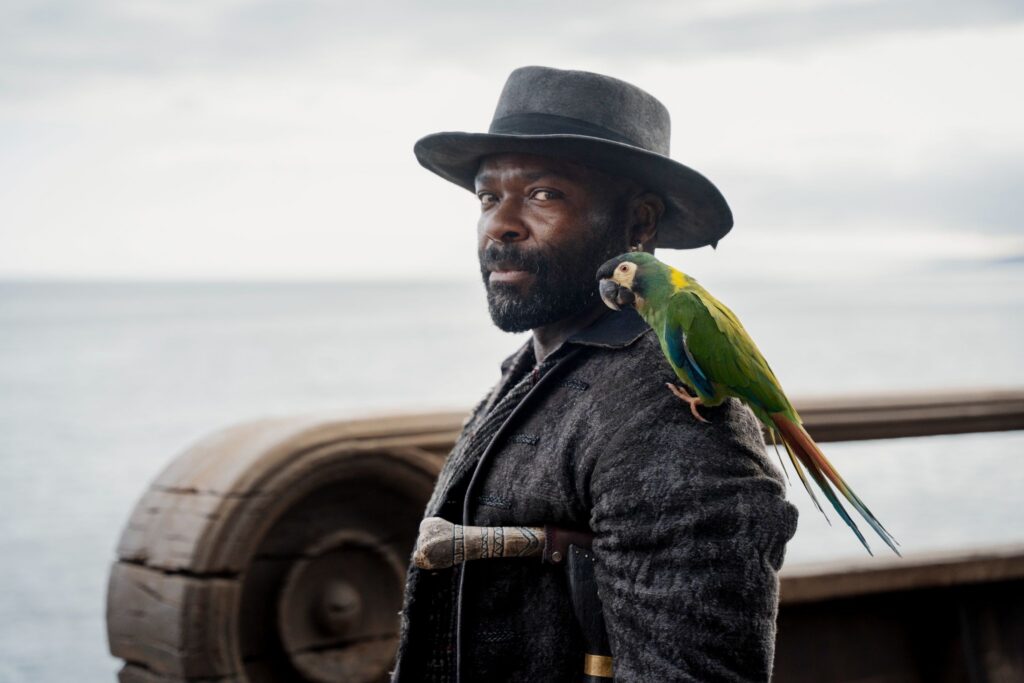
Why Silver’s Jamaican accent stands out
Long John Silver has been performed in many different ways since Robert Louis Stevenson published Treasure Island in 1883. Popular screen versions have often leaned into a broad, instantly recognizable pirate voice. Oyelowo’s version takes a different route: his voice is more grounded and controlled, with a Jamaican identity that is part of the character rather than a quick comic flourish.
That choice is meaningful in a story about a voyage toward the Caribbean, treasure, empire, and competing claims to wealth. It invites the series to look at the colonial world surrounding the adventure instead of treating the setting as a neutral backdrop. It also makes Silver feel less like a stock pirate and more like a person with a history, loyalties, and ambitions that the audience has not yet fully discovered.

What critics are actually saying
Early reviews have not reached one unanimous verdict on the series. Radio Times’ review praises Oyelowo as a commanding presence and describes the Jamaican element as adding layers to the story. Meanwhile, The Guardian’s review is much harsher about the adaptation overall, criticizing its tonal choices and confusing accents while still acknowledging Oyelowo’s strength as Silver.
Those are different criticisms. One sees the accent as a useful way to deepen the character; another finds the show’s overall vocal and tonal choices distracting. Neither review, by itself, proves that viewers broadly reject the accent. A responsible reading separates a critic’s response from a measurable audience trend.

Is the accent historically appropriate?
There is no single “correct” accent for a fictional pirate. The more useful questions are whether the performance feels coherent, whether the dialogue is understandable, and whether the character’s background is thoughtfully integrated into the writing. The Caribbean setting makes questions of language, power, and identity relevant—but a character’s accent should not be treated as proof of a specific biography unless the series establishes that history.
It is also worth distinguishing a Jamaican accent from a generic “pirate voice.” Older adaptations often used exaggerated vocal mannerisms to signal danger, comedy, or nautical roughness. Oyelowo’s more specific approach asks the audience to listen to Silver as an individual. Some viewers may find that choice fresh; others may need time to adjust to a familiar character being reinterpreted.

Three fair ways to evaluate Oyelowo’s performance
- Listen for consistency. Does the voice remain believable across tense, quiet, and conversational scenes, rather than appearing only when the story wants to signal “pirate”?
- Watch what the voice does dramatically. Silver is a strategist. Does his speech help communicate charm, menace, persuasion, and the ability to command a room?
- Separate performance from the script. If a line sounds awkward, the cause may be dialogue, direction, editing, or accent work—or a combination. One scene is not enough to settle the question.
Why the choice matters for the whole adaptation
This Treasure Island expands Bess Hawkins’ role and places more emphasis on the relationships and power struggles behind the treasure hunt. A Silver who feels culturally and socially specific fits that broader approach. The risk is that a bold reinterpretation can feel uneven if the surrounding writing and world-building do not support it. That tension helps explain why some reviews praise Oyelowo while criticizing other parts of the show.
For more premiere context, read our Episode 1 ending breakdown and our analysis of Jim Hawkins’ photographic memory.
Frequently asked questions
Does David Oyelowo use a Jamaican accent as Long John Silver?
Yes. The 2026 adaptation gives Silver a Jamaican identity and vocal style, distinguishing him from many earlier screen portrayals.
Are viewers universally criticizing the accent?
No reliable evidence establishes a universal audience response. Early professional reviews differ, and a critic’s opinion should not be mistaken for a measured consensus among viewers.
Is the accent historically accurate to Robert Louis Stevenson’s novel?
The series is a modern reimagining, not a word-for-word reproduction of the 1883 novel. Its characterization choices should be judged as adaptation decisions, while the novel remains the reference point for comparison.
Does the accent make Silver a better character?
That depends on whether it works with the performance, dialogue, and story. The strongest case for it is that it gives Silver a more specific identity and helps move him beyond a familiar pirate stereotype.
Sources and further reading
- Paramount+ UK & Ireland: Treasure Island cast, premise, and first-look images
- Radio Times: Treasure Island review
- The Guardian: Treasure Island review
- Ready Steady Cut: Episode 1 recap
Image note: The stills above are hosted by Paramount+ UK & Ireland and credited accordingly. Confirm the image-use permissions that apply to your publication and territory before relying on externally hosted promotional stills.


