

David Oyelowo’s Long John Silver arrives in MGM+’s 2026 Treasure Island with two unmistakable pirate signatures: a wooden leg and a parrot. Those details are instantly recognizable, but the interesting question is not whether the costume looks “pirate enough.” It is how the design balances Robert Louis Stevenson’s familiar character with a more grounded, character-driven television adaptation.
Quick answer: The peg leg and parrot are faithful to the character’s established literary image, while the series’ weathered clothing, restrained color palette and practical-looking accessories aim to make Silver feel like a working seaman as well as a dangerous strategist. The overall design is a blend of source-material tradition and modern screen realism—not a literal reconstruction of one historically documented pirate.
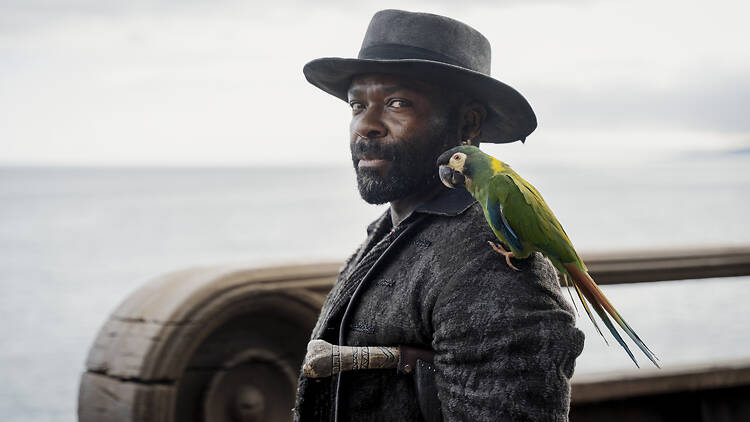
Why the peg leg matters beyond the silhouette
Silver’s missing leg is not just a visual shortcut for “pirate.” In Stevenson’s 1883 novel, it is part of how Jim Hawkins and the other characters assess Silver: he appears physically vulnerable in one respect, yet his competence, authority and ability to move through the ship make him far more formidable than a simple stereotype would suggest.
The 2026 adaptation keeps that recognizable feature while presenting Silver as a capable survivor. A convincing costume has to make the prosthetic leg feel integrated into his movement and daily life, rather than like a prop added for a poster. The design is most persuasive when it supports the performance: Silver can be physically distinctive without being reduced to his disability.
It is worth separating screen design from medical history. The series is a period adventure, not a documentary about eighteenth-century prosthetics. Historical artificial limbs varied widely by materials, cost and purpose, and a modern production may adjust a design for safe movement, repeatable takes and visual clarity. Without a production-design statement detailing the exact build, it would be misleading to claim that every visible component reproduces a specific historical device.

The parrot: literary detail, practical prop
Silver’s parrot is one of the character’s most enduring calling cards. In the novel, the bird—named Captain Flint—helps give Silver a memorable presence before readers fully understand the danger he represents. Its repeated cries also make the treasure hunt feel like a world with its own sounds, habits and private jokes.
On screen, a parrot can easily become a decorative accessory. The better choice is to treat it as part of Silver’s routine: a living creature that needs to be carried, handled and accommodated, not simply perched on a shoulder for every shot. That small practical consideration helps the character feel as if he has a life beyond the camera’s frame.
The bird also changes the balance of Silver’s appearance. His dark, weathered clothes and controlled expression suggest someone who is hard to read; the bright, restless parrot introduces a flash of color and unpredictability. It is a classic bit of visual contrast, and it still works when the surrounding performance is more serious than the broad, comic pirate traditions some viewers may remember.
Does the costume look historically accurate?
The fairest answer is: partly, but historical accuracy is not a yes-or-no test. The series is set in the late eighteenth century, and its costume design has to communicate rank, work, travel, personality and danger quickly. Salt-worn fabric, layered garments, practical outerwear and a lived-in appearance can suggest a sailor who has spent years at sea. They do not, by themselves, prove that every seam, fastening or accessory is exact to a particular year or port.
There is another complication: “pirate clothing” was not one standardized uniform. Real maritime dress depended on a person’s background, available clothing, the weather, the work being done and whether the person was trying to blend in or display status. The familiar hat-and-peg-leg image is as much a product of storytelling and later illustration as it is a historical record.
That is why the costume should be judged against two standards. First, does it feel plausible for the show’s world? Second, does it communicate who Silver is? A costume can take reasonable historical liberties and still succeed dramatically. Conversely, a perfectly researched garment would not help much if it made Silver look like a generic theme-park pirate.
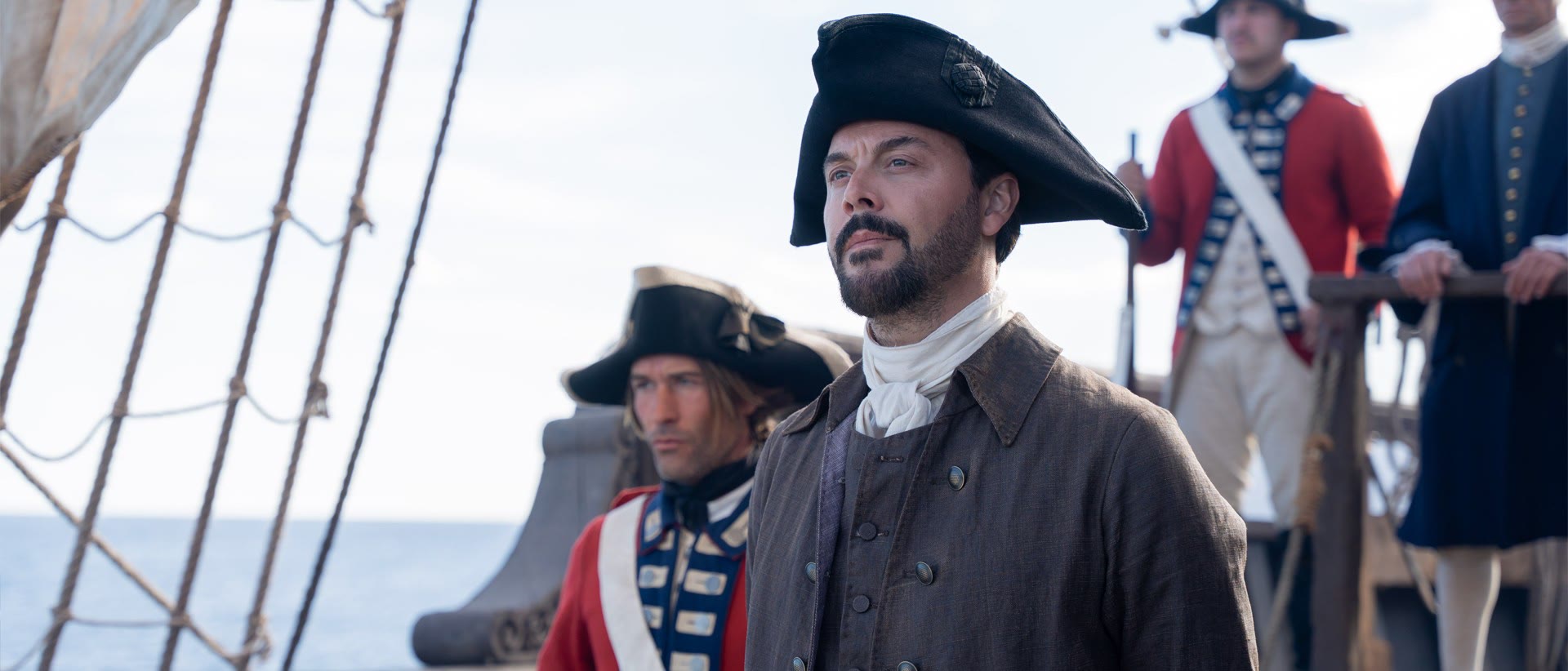
Color, texture and the difference between Silver and the officers
Costume is also a storytelling system. A pirate crew member’s rough, repeatedly worn layers tell a different story from a character whose clothes are more structured or carefully maintained. When viewers compare Silver with the people who command or finance the voyage, those contrasts can suggest competing kinds of power: authority backed by a uniform, money expressed through better fabric, and influence earned through experience and fear.
The wider cast helps make that visual language clearer. Aaron Graham’s more composed period styling, for example, gives the production another point of comparison. The distinction is not simply “good clothes versus bad clothes.” It is about how each character wants to be seen—and how much control each has over the room or ship around him.

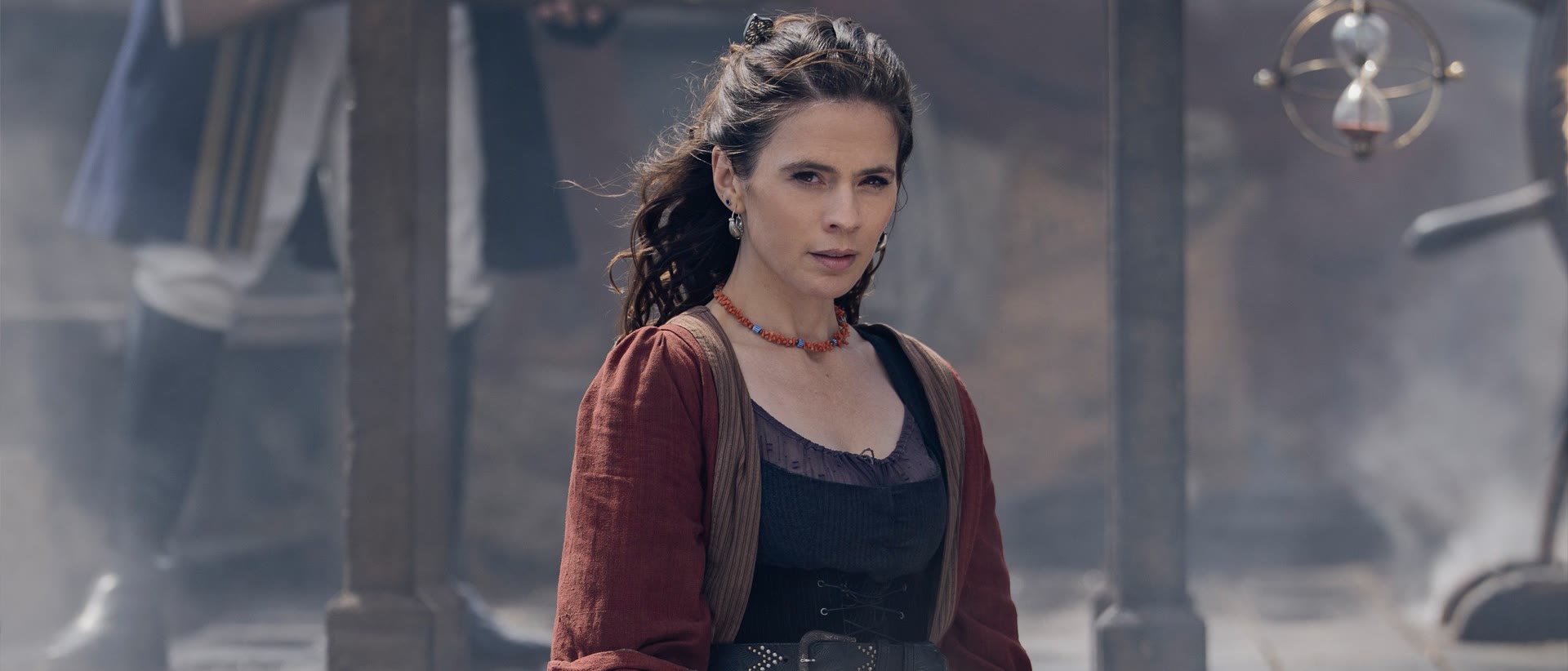
Why the costume should serve the performance
Oyelowo’s portrayal is designed to make Silver feel calculating, charismatic and dangerous rather than merely eccentric. The peg leg and parrot establish the outline, but posture, pacing, voice and the way he occupies a space are what turn those familiar details into a character. Costume succeeds when it supports those choices without drawing attention away from them.
That approach also avoids one of the oldest problems in pirate adaptations: treating every familiar symbol as a punchline. Silver can have a parrot and a distinctive gait without becoming a cartoon. The more grounded the surrounding world feels, the more unsettling it can be when his charm gives way to violence or calculation.
What the 2026 design gets right—and what remains uncertain
- Recognizable character details: The peg leg and parrot preserve two of Silver’s most familiar traits.
- A lived-in look: Weathered textures and practical layers help sell the idea of a sailor who has survived hard voyages.
- Character contrast: Silver’s look can be read against the more composed clothing of other people aboard the Hispaniola.
- Room for interpretation: The show can honor Stevenson’s imagery without claiming to reproduce a single documented historical pirate’s wardrobe.
What cannot be confirmed from publicity stills alone is the exact construction of the prosthetic, the materials used for every costume piece, or how much of the parrot work relies on a live animal, a trained stand-in or visual effects. Those specifics would require direct confirmation from the costume department or production team. Treating guesses as production facts would make the analysis sound more certain than the evidence allows.
Watch the official trailer
The official trailer gives a closer look at the series’ visual tone, including Silver’s silhouette, the shipboard world and the contrast between its principal characters.
Frequently asked questions
Does Long John Silver have a peg leg in the 2026 Treasure Island series?
Yes. David Oyelowo’s version retains Silver’s distinctive peg leg, one of the character’s best-known features from Robert Louis Stevenson’s novel and later adaptations.
What is the name of Long John Silver’s parrot?
In Stevenson’s novel, Silver’s parrot is named Captain Flint, a name that echoes the pirate whose treasure drives the story.
Is the 2026 Treasure Island costume historically exact?
The costumes are designed for a period adventure and use visual cues associated with eighteenth-century maritime life, but publicity images alone cannot establish that every garment or prosthetic detail is historically exact.
Who plays Long John Silver in Treasure Island (2026)?
David Oyelowo plays Long John Silver in the six-part series released on MGM+ in the United States and Paramount+ in the United Kingdom and Ireland.
Where can I see official images of the costume?
Start with the official Playground Entertainment series page and the Paramount+ UK & Ireland first-look gallery.
Related Treasure Island coverage
- David Oyelowo’s Long John Silver vs. Classic Portrayals
- 7 Subtle Changes in the New Treasure Island
- Treasure Island Episode 1: Premiere Recap and Ending Explained
Sources: Paramount+ UK & Ireland official series guide and first-look gallery; Playground Entertainment official series page; Time Out’s Treasure Island production coverage; GeekTyrant’s first-look coverage.
By Shivam Das


