

Quick answer: Disney’s Treasure Island (1950) is a compact, classic swashbuckler centered on Jim Hawkins and Robert Newton’s famously theatrical Long John Silver. MGM+’s 2026 adaptation takes a broader, more serialized approach, expanding Bess Hawkins’ role and framing the hunt for Captain Flint’s treasure around family, political ambition, danger, and shifting loyalties. Both draw from Robert Louis Stevenson’s novel, but they tell the adventure with different priorities.
The biggest difference is not simply color versus modern production design. It is how much space each version gives its characters to explain themselves. The 1950 film moves with the momentum of a traditional adventure movie. The six-part 2026 series has more time to develop relationships and make the voyage feel like a pressure cooker in which every ally may have a private agenda.

At a glance: the two Treasure Island adaptations
| Category | Disney (1950) | MGM+ (2026) |
|---|---|---|
| Format | Feature film, about 96 minutes | Six-part adventure drama |
| Jim Hawkins | Bobby Driscoll | Tom Sweet |
| Long John Silver | Robert Newton | David Oyelowo |
| Jim’s mother | Not the central dramatic focus | Hayley Atwell’s Bess Hawkins has a much larger role |
| Storytelling style | Direct, brisk, classic adventure | Serialized, character-led, with expanded motivations |
| Release | July 19, 1950 | October 11, 2026, on MGM+ in the United States |
Disney lists the 1950 film as its first fully live-action feature, directed by Byron Haskin and released on July 19, 1950. The new series stars David Oyelowo, Hayley Atwell, Tom Sweet, Jack Huston, and Tomer Capone. Paramount+ UK and Ireland lists its premiere for October 12, 2026, while MGM+ launched the series in the United States a day earlier.
1. Long John Silver: Robert Newton vs David Oyelowo
Robert Newton’s performance helped shape the screen image of Long John Silver for generations: flamboyant, quick-tongued, unpredictable, and capable of making danger sound like a joke. His Silver has a theatrical quality that suits the classic film’s forward drive. He is a pirate audiences can enjoy watching even when they know he cannot be trusted.
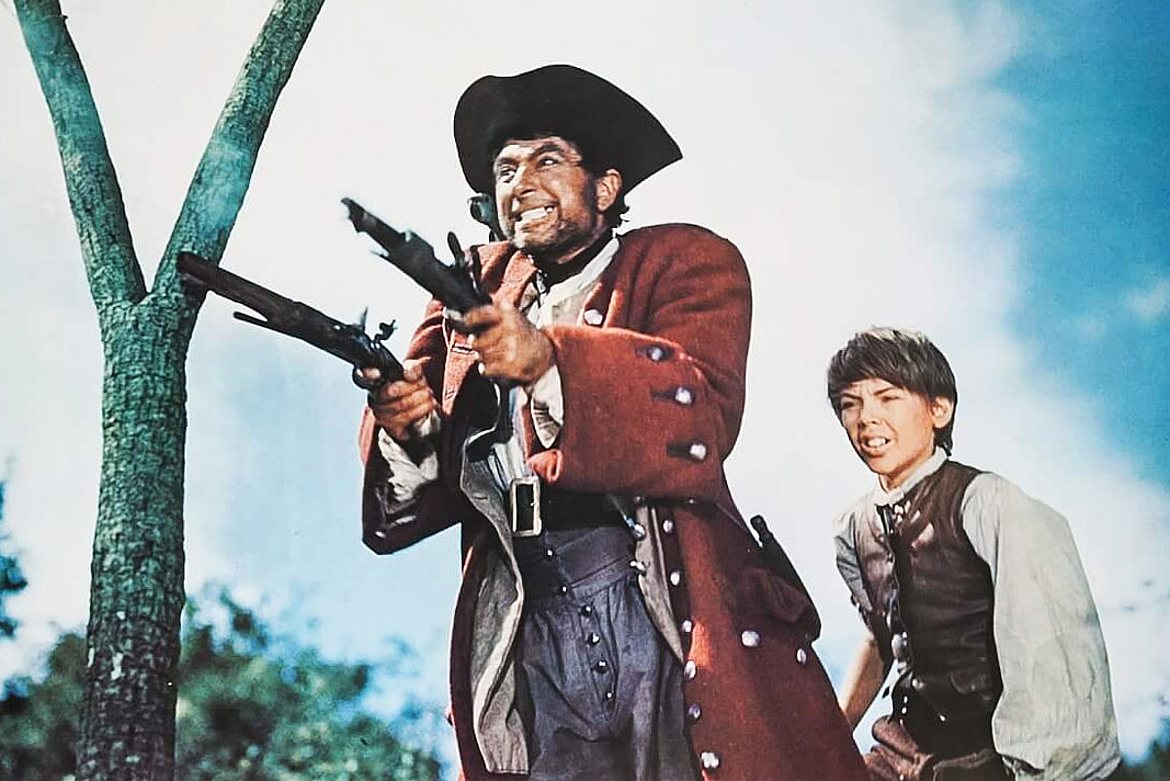
David Oyelowo’s 2026 interpretation arrives in a more psychologically layered drama. The series presents Silver as charming and dangerous, but also as a survivor with ambitions that connect the treasure to a wider struggle for power. That extra narrative room can make his choices feel less like a string of pirate tricks and more like a strategy unfolding over several episodes.
Which performance is better? That depends on what viewers want from Silver. Newton is the benchmark for classic, larger-than-life pirate charisma. Oyelowo has the advantage of a serialized format that can explore the character’s contradictions over time. They are not trying to do exactly the same job.
2. Jim Hawkins: a classic young hero or a more active strategist?
Bobby Driscoll’s Jim belongs to the tradition of the resourceful young adventurer whose courage grows as the voyage becomes more dangerous. The 1950 film keeps the plot moving and places Jim’s choices inside a familiar coming-of-age adventure.

Tom Sweet’s Jim is part of a more expansive family story. In the 2026 series, his extraordinary memory becomes an important plot device: even when a physical map is lost, what Jim remembers can keep the treasure hunt alive. It gives the character a specific skill that changes the balance of power between the boy and the adults pursuing the fortune.
The practical difference is pacing. The film can move quickly from one peril to the next; the series can spend more time showing how Jim learns to read people, manage fear, and understand that the adults around him may be concealing as much as they reveal.
3. Bess Hawkins: the most significant expansion in the new version
The 2026 adaptation gives Jim’s mother, Bess Hawkins, a much more central dramatic role, with Hayley Atwell playing her as a determined parent who has to make decisions under pressure. Rather than functioning only as part of Jim’s backstory, Bess becomes an active participant in the decisions that send the pair toward the Hispaniola and into the treasure hunt.
This is one of the clearest reasons the series feels different from the 1950 film. A feature film has limited time to devote to a supporting character’s private calculations. A six-part drama can make family loyalty, financial insecurity, and a parent’s fear for a child part of the main adventure. The change is not automatically better for every viewer, but it gives the new adaptation a different emotional center.
4. Shipboard danger, treasure, and production style
The 1950 film’s color photography and practical locations were part of its appeal. The Walt Disney Family Museum notes that filming began at Bristol Harbour in England in July 1949, and that the production’s success helped open the door to more live-action features from Disney. Its production history is part of film history, not merely a nostalgic footnote.
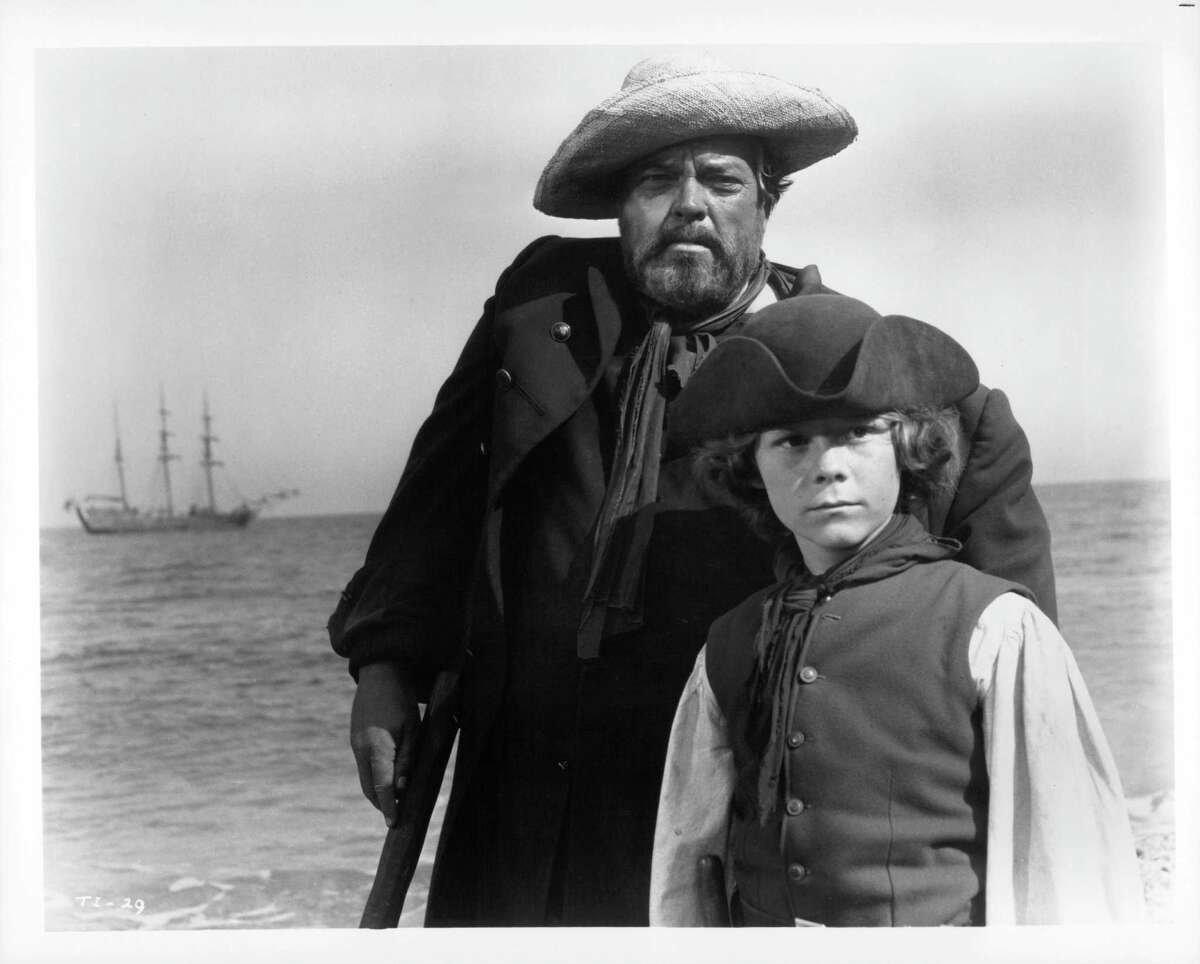
The 2026 production uses the longer format to build a world across Cornwall, the sea, and an island setting. The official series guide identifies Bristol in the UK and Tenerife in Spain among the filming locations. Rather than relying only on the spectacle of a pirate ship, the new version links its atmosphere to conflict between people who want the treasure for very different reasons.
5. Which version is more faithful to Robert Louis Stevenson?
Faithfulness is not just a count of scenes retained from the novel. The 1950 film preserves the recognizable adventure structure: Jim, the map, the ship, the mutiny threat, and Silver’s shifting loyalties. Its greatest strength is clarity. The central conflict is easy to follow, and the film rarely loses sight of the forward motion of the treasure hunt.
The 2026 version keeps the familiar core but expands the world around it. Bess’s larger role and the series’ political dimension make the adaptation more of a reinterpretation than a scene-for-scene retelling. Some Stevenson fans may prefer the earlier film’s directness; others may welcome a version that spends more time on motives and consequences. Neither preference needs to cancel the other.
6. Which should you watch first?
- Choose the 1950 Disney film if you want a self-contained classic, a brisk pace, and Robert Newton’s influential take on Long John Silver.
- Choose the 2026 MGM+ series if you want a longer, character-driven retelling with a larger role for Bess Hawkins and more room for political and family tensions.
- Watch both in release order if you want to see how screen adaptations change with their formats and audiences. The contrasts are more interesting than a simple winner-versus-loser verdict.

Watch the official 2026 Treasure Island trailer
The new series premiered on MGM+ in the United States on October 11, 2026, and on Paramount+ in the United Kingdom and Ireland on October 12, 2026. Watch the official trailer below, then compare its tone with Disney’s original film.
Frequently asked questions
Was Disney’s Treasure Island (1950) its first live-action movie?
Disney describes it as the studio’s first fully live-action feature film. It was directed by Byron Haskin and released in 1950.
Who played Long John Silver in the 1950 film?
Robert Newton played Long John Silver opposite Bobby Driscoll as Jim Hawkins.
Who plays Long John Silver in the 2026 MGM+ series?
David Oyelowo plays Long John Silver. The series also stars Hayley Atwell as Bess Hawkins and Tom Sweet as Jim Hawkins.
Is the 2026 version a remake of the Disney film?
It is a new adaptation of Robert Louis Stevenson’s novel, rather than a direct remake of the 1950 Disney production.
Where can US viewers watch the 2026 Treasure Island series?
The series premiered on MGM+ in the United States on October 11, 2026. Availability and subscription requirements can vary by provider.
Sources and further reading
- Disney Movies: Treasure Island (1950)
- The Walt Disney Family Museum: production history of the 1950 film
- Paramount+ UK & Ireland: official 2026 series guide and cast
- C21Media: MGM+ and Paramount+ adaptation announcement
By Shivam Das


