

Tesla’s long-delayed next-generation Roadster finally delivered the spectacle fans had waited years to see. At an October 15, 2026, demonstration at a SpaceX test facility in McGregor, Texas, the prototype drove upside down on a curved ramp, flipped in midair and briefly lifted over a row of vehicles. Tesla also showed a run from zero to 60 mph in about 0.81 seconds. Those were dramatic demonstrations, but they do not yet prove that every stunt or performance claim will be available in a customer-ready, road-legal production car.
The most important distinction is between what viewers saw on stage and what buyers can eventually expect. Tesla says production is targeted for 2028; final pricing and the production specification remain unsettled. Reuters’ event report also notes that the public-road legality of the thruster features was not immediately clear.
What happened at the Roadster demonstration?
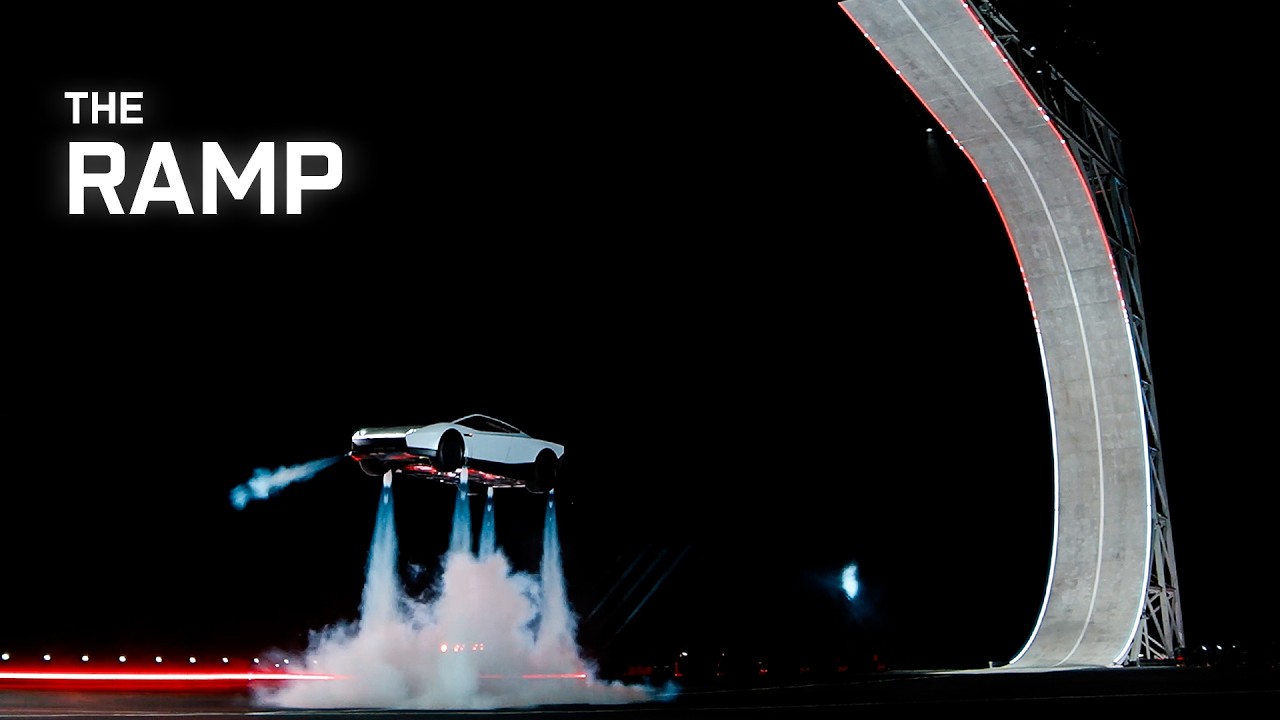
The Roadster climbed a steep curved ramp and continued along an inverted section. Tesla executives attributed that portion of the stunt to a fan-based suction system beneath the car. The vehicle then left the ramp, rotated in the air and returned to the ground with help from compressed-gas thrusters developed with SpaceX. In a second stunt, it cleared a line of Tesla vehicles, including a truck, before landing.
The event was designed to be a spectacle, and it succeeded on that level. But the demonstration was conducted in a controlled setting with no ordinary road traffic. It should not be confused with evidence that a customer can safely or legally make the car fly on public streets.

How fast is the new Roadster?
During the event, Tesla presented a zero-to-60-mph run of roughly 0.81 seconds. That figure is extraordinary, but it should be treated as a demonstration result reported from Tesla’s own event rather than an independently verified production-car test. Launch conditions, the thruster configuration and the final vehicle specification matter when comparing acceleration claims.
Tesla’s current reservation information distinguishes three configurations: Performance, Thrust and an invite-only Rocket version. Reporting on the event says the Performance reservation requires a $50,000 deposit and the Thrust version a $250,000 deposit. Those deposits are not the same thing as a confirmed final vehicle price. Tesla did not announce definitive retail pricing for the new car at the event.

What SpaceX thrusters add — and what remains unknown
The thruster package is the headline difference between a conventional electric supercar and the experimental vehicle shown at the reveal. Tesla described compressed-gas propulsion for brief aerial maneuvers, while the fan-based system helps the car hold to the inverted ramp. Those systems raise practical questions that a stage demonstration cannot settle: durability, maintenance, safety systems, operating limits, certification and how much of the setup will reach production.
There is also a regulatory distinction. A car that briefly leaves the ground is not automatically approved to fly or perform stunts on public roads. Aviation rules, vehicle regulations and local laws may all be relevant, depending on the final design and use. WIRED’s analysis of the regulatory questions is useful context, but the final legal position will depend on the production vehicle and applicable authorities.

When could customers get one?
Tesla has pointed to 2028 for production, meaning the reveal is not the same as a customer delivery launch. The company has missed earlier timelines for the next-generation Roadster, first previewed in 2017, so prospective buyers should treat the latest schedule as a target rather than a guaranteed delivery date. A reservation deposit does not remove that timing risk.
The company’s original Roadster page still contains specifications from earlier announcements, including a claimed 620-mile range and 1.9-second acceleration figure. Those older numbers should not be casually combined with the new demonstration’s figures. The revised car’s final range, certification, price and trim-by-trim performance need to be confirmed for the production version.

Watch the Roadster coverage
The video below provides additional visual context for the demonstration. Embedded video availability can vary by device, region and publisher settings.
For Tesla’s own published Roadster information, see the official Tesla Roadster page. For independent event reporting, compare the accounts from Reuters and The Verge.
What the reveal really means
The Roadster demo showed that Tesla can stage a striking technology showcase, and it gave the long-delayed project fresh momentum. The harder test starts after the applause: turning a controlled prototype demonstration into a reliable, certifiable product that customers can actually buy and use. Until production vehicles are independently tested and final prices, range and delivery dates are published, the most sensible reading is excitement with clear caveats.
Frequently asked questions
Did the Tesla Roadster really fly?
At the October 2026 demonstration, the prototype briefly left the ramp and performed aerial maneuvers using thrusters. That is different from proving that a production Roadster will function as an everyday flying car.
How quickly did it reach 60 mph?
Tesla demonstrated a run reported at about 0.81 seconds from zero to 60 mph. This is a company-event result, not yet a substitute for independent testing of a production vehicle.
How much will the new Tesla Roadster cost?
Tesla had not announced final retail pricing at the event. Reports described reservation deposits of $50,000 for Performance and $250,000 for Thrust; those are deposits, not confirmed total prices.
When will the new Roadster go into production?
Tesla has targeted 2028. Given the project’s history of delays, that date should be treated as a current target rather than a guaranteed delivery schedule.
Can owners use the thrusters on public roads?
That has not been established. The prototype demonstration took place in a controlled environment, and the legal status of the thruster features for public-road use remains uncertain.
Reporting note: This article distinguishes event demonstrations and company claims from independently verified production specifications. Images from Tesla’s official gallery are identified as earlier design imagery rather than October 2026 event photographs.






