

Quick answer: Tesla’s October 15, 2026 Roadster demonstration showed a remotely operated prototype using a suction system and compressed-gas thrusters to perform brief airborne maneuvers. It did not prove that a production car can fly freely like an aircraft or that the stunt is safe or legal on public roads.
Elon Musk’s long-promised Tesla Roadster is back in the spotlight after a dramatic demonstration at a SpaceX test site in McGregor, Texas. The white two-seat vehicle drove up a curved ramp, appeared upside down using a suction-based system, then used thrusters to reorient itself and land. Tesla also showed a jump over other vehicles. Reuters reported that production is planned for 2028, while the legality and everyday use of these features remain unresolved. Read Reuters’ report.
Roadster
— Tesla (@Tesla) October 16, 2026
What the Tesla Roadster demo actually showed
The reveal was an engineering showcase, not a public-road test. The car was demonstrated in a controlled test-site environment, and reports said the stunts were performed without a person sitting inside. That distinction matters: a successful staged maneuver can demonstrate that a prototype system works under specific conditions, but it does not establish reliability, repeatability, passenger safety, weather tolerance or regulatory approval.
Reuters reported that Tesla said the new Roadster could accelerate from zero to 60 mph in less than one second, reach more than 230 mph and travel over 300 miles per charge. Those are company-reported figures from a launch event, not independent real-world test results. Tesla’s earlier 2017 presentation promised a 620-mile range and deliveries by 2020; the new production target is 2028. The history of delays makes it sensible to treat future specifications and timelines as targets until production vehicles are delivered and independently tested.
How can a car briefly lift or turn in the air?
Reports describe two separate systems. First, powered fans and a sealing arrangement create suction beneath the vehicle, helping it cling to a purpose-built ramp. Second, cold-gas thrusters use stored compressed air to apply short bursts of force and change the vehicle’s orientation. This is different from an aircraft’s sustained lift: the demonstration does not establish that the Roadster can cruise through the air, travel long distances airborne or safely clear ordinary traffic.

Visual references: current footage versus archival images
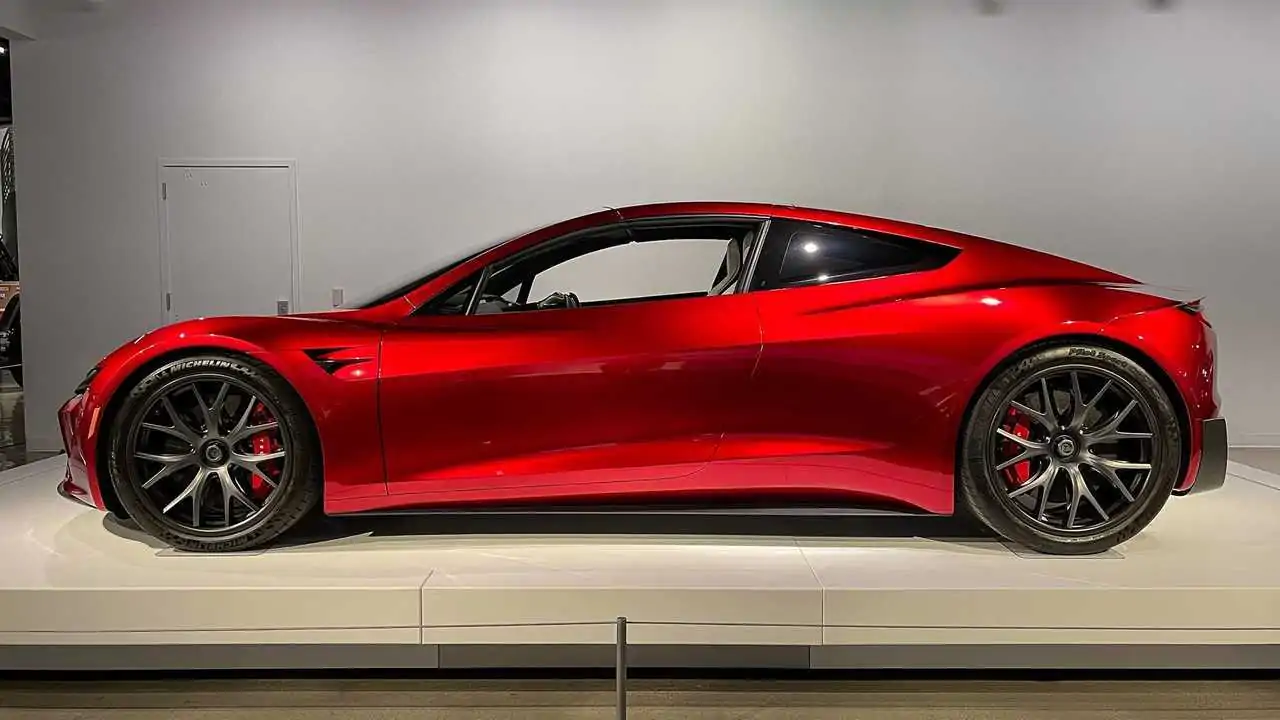
The live event footage is the best source for the actual stunt. The images below are clearly identified as earlier Roadster imagery; they should not be mistaken for stills from the October 15 demonstration.


What the event did not prove
- It is not yet an ordinary flying car. A brief, controlled jump is not the same as sustained flight or practical aerial transport.
- Public-road legality is unresolved. Thrusters, suction hardware, noise, safety systems and local vehicle regulations all need answers before buyers can assume the features are road-legal.
- Production timing is still a target. Tesla said production is planned for 2028; past delays mean the date should not be treated as a guaranteed delivery promise.
- Performance claims need independent testing. Launch-stage demonstrations are controlled by the company and do not replace repeatable third-party tests.
What versions and reservation costs have been reported?
Reuters reported a “Performance” version with a $50,000 reservation deposit, a “Thrust” version requiring a $250,000 deposit, and an invite-only “Rocket” configuration described as a single-seat model with a full flight system. A deposit is not the same as a final vehicle price, and prospective buyers should review Tesla’s current terms before making a payment. Availability, final specifications and legal status may change.
For the company’s latest official information, visit Tesla’s Roadster page. For independent event coverage, consult Reuters and TechCrunch.
Frequently asked questions
Can the Tesla Roadster really hover?
The demonstration showed a prototype briefly leaving the ground and maneuvering with thrusters. It does not establish sustained hovering or aircraft-like flight in normal use.
How does the Roadster jump over cars?
Reports describe compressed-air thrusters that provide short bursts of force and help rotate the vehicle during a controlled stunt. Tesla has not publicly established that the maneuver is suitable for public roads.
When will the new Tesla Roadster go into production?
Tesla said production is planned for 2028. Given the model’s history of delays, that remains a target rather than a guaranteed delivery date.
Is the flying Roadster street legal?
The demonstration did not settle the question. Buyers should wait for final specifications, certification details and applicable regulatory approvals.
What is the Roadster reservation deposit?
Reuters reported deposits of $50,000 for Performance and $250,000 for Thrust, while the Rocket version was described as invite-only. These deposits are not final purchase prices; check Tesla’s current terms before reserving.
By Shivam Das | Updated October 15, 2026. This report distinguishes event footage from company claims and archival images. Details may change as Tesla releases specifications and production information.






