

Quick answer: Kim You-jung and Park Jinyoung’s pairing in 100 Days of Deception is drawing attention because their characters begin with suspicion, competing secrets, and sharply different ways of reading a room. Lee Ga-kyung survives by improvising; Kim Tae-woong, also known as Sato Hideo, keeps his intentions close. Their chemistry comes from the gap between what they say and what they may actually mean.
Updated October 12, 2026. This is an analysis of the first two episodes and reported coverage. “Best chemistry of 2026” is a subjective fan-style opinion, not an official ranking.
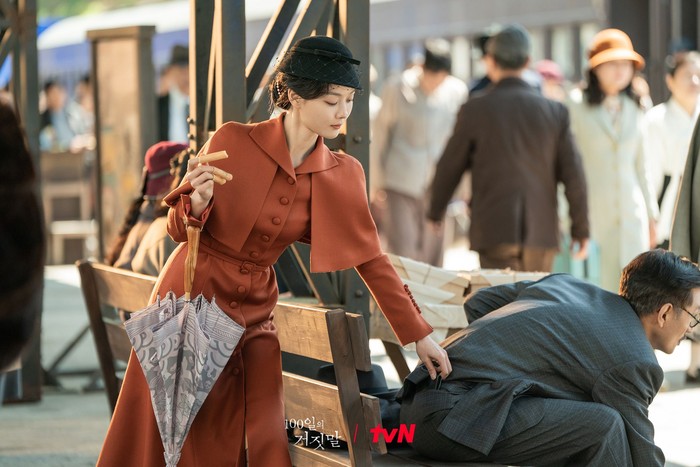
Why their chemistry feels different from a conventional romance
Many romances build attraction through immediate warmth: a rescue, a confession, or a moment of vulnerability. 100 Days of Deception takes a more guarded route. Ga-kyung is a skilled pickpocket who has learned to read people quickly. Hideo works as an interpreter within the Japanese colonial administration, while the story hints at a more complicated personal identity. Neither can safely take the other at face value.
That creates two layers in each exchange: what the characters say and what each is trying to discover. A polite gesture can be strategic. A teasing remark can be a test. A pause can reveal that one character has noticed something the other hoped to hide. The romance is compelling because trust would be dangerous at this stage.

Kim You-jung makes observation part of the performance
Ga-kyung is not a conventional innocent caught in a dangerous plot. Her work has trained her to notice details, improvise explanations, and escape when a situation turns. Kim You-jung’s performance is most interesting when alertness appears before dialogue: a look that measures the room, a quick shift from confidence to caution, or a smile that may hide a calculation.
Those choices matter in a story where characters perform identities. Ga-kyung can be funny and resourceful, but her skill carries a cost: she has reasons to distrust people and little room for an honest mistake. Viewers can enjoy her audacity while understanding why she rarely relaxes.
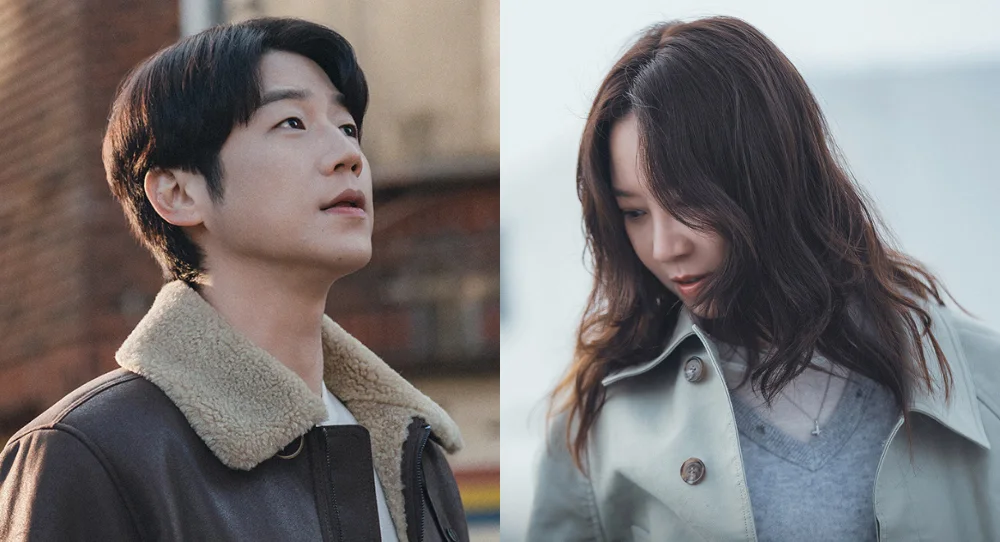
Park Jinyoung’s restraint gives the cat-and-mouse dynamic room to breathe
Hideo is intriguing because his position does not make his loyalties simple. He works as an interpreter within the Government-General, yet the series frames his identity and history as sources of conflict. Park Jinyoung plays him with a controlled exterior that makes it difficult to know whether a courteous response is sincere, tactical, or both.
That restraint counterbalances Ga-kyung’s quick reactions. If both characters were constantly expressive, their scenes would have fewer layers. Instead, the audience is invited to read the distance between words and intentions. Their chemistry is less about instant compatibility than two perceptive people trying to work each other out.
The “Got you, pickpocket” moment: flirtation, threat, or both?
Episode 2’s pawnshop reunion brings the dynamic into focus. Hideo catches Ga-kyung as she tries to escape and calls her a pickpocket, revealing that he recognises her. The moment combines physical proximity with a shift in control: Ga-kyung has been trying to stay one step ahead, but Hideo has shown he is a more attentive opponent than she expected.
It is easy to read the scene as romantic because the staging brings the characters close together. Its narrative function, however, is more interesting than straightforward flirtation. Hideo has reason to question Ga-kyung’s identity, and she now knows she cannot simply disappear. Attraction, if it develops, will have to coexist with risk.
That double meaning gives the scene the ingredients of a memorable drama moment: a quotable line, a reversal of power, a visible reaction, and consequences that can carry into later episodes. Whether it becomes the defining scene of the series depends on how the writers follow through.

The story gives the romance stakes beyond attraction
The series is set in Japanese-occupied Gyeongseong in 1932. Ga-kyung becomes involved with the Korean independence movement, while Hideo’s role within the colonial administration complicates any easy reading of his allegiance. Their choices unfold against a setting shaped by surveillance, coercion, and resistance.
This historical frame matters. If the relationship were only a contest of clever remarks, the tension could become repetitive. The wider plot asks what each character is willing to risk, whom they protect, and whether trust can survive when their immediate goals conflict. The romance has more weight when those decisions affect something larger than the couple.

What the early ratings do—and do not—tell us
Episode 1 reportedly opened with a 5.3% nationwide average, while Episode 2 rose to about 7.6% nationwide. Sports Chosun reported an 8.3% metropolitan-area average and a 9.4% metropolitan-area peak for Episode 2. Those figures indicate a strong early increase in the reported television audience, but they do not prove chemistry alone caused the rise.
Ratings can reflect several factors: word of mouth after the premiere, a compelling cliffhanger, the cast’s existing audience, scheduling, promotion, and viewers deciding to sample a new series. The careful conclusion is that the show has made a promising start and the relationship is one of several reasons viewers may continue.
Sources: Sports Chosun’s Episode 2 report and Soompi’s premiere ratings coverage.
Watch official drama material
tvN’s official drama account has released previews featuring the leads’ early encounters. You can read the related coverage and follow the original social post here: Soompi’s report on the official preview. The source page embeds the original tvN post; this avoids inventing an unverified social-post URL.
Video source: Wikimedia Commons documentation of the press-conference video.
What to watch for next
- Whether suspicion turns into cooperation: Their relationship will change meaningfully only if each has a reason to rely on the other.
- Hideo’s identity conflict: His official role and personal history create the potential for difficult choices.
- Ga-kyung’s independence: Being recognised may force her to adapt without surrendering her agency.
- The resistance plot: Their chemistry will have more weight if it grows through decisions with real consequences.
Frequently asked questions
Are Kim You-jung and Park Jinyoung the leads of 100 Days of Deception?
Yes. Kim You-jung plays Lee Ga-kyung, and Park Jinyoung plays Kim Tae-woong, also known as Sato Hideo. The series combines historical drama, espionage, and romance.
Why are viewers talking about their chemistry?
Their characters meet through secrecy and suspicion, so their scenes combine banter, observation, and competing motives rather than immediate trust. That adversarial setup gives the relationship room to develop.
What happens in the “Got you, pickpocket” scene?
In Episode 2, Hideo catches Ga-kyung during their pawnshop reunion and calls her a pickpocket, revealing that he recognises her. The moment shifts the balance between them and raises the stakes of their next encounter.
Did Episode 2 reach a 9.4% rating?
Sports Chosun reported a 9.4% peak in the Seoul metropolitan area, alongside an 8.3% metropolitan-area average and a 7.6% nationwide average. Peak and average ratings measure different things.
Is this officially the best K-drama chemistry of 2026?
No official ranking establishes that. “Best chemistry” is subjective; the pairing is attracting attention because both characters have secrets, agency, and reasons to challenge each other.
Final verdict
Kim You-jung and Park Jinyoung’s strongest early asset is not simply that they look convincing together; it is that their characters have good reasons to remain wary. Ga-kyung’s quick instincts and Hideo’s controlled watchfulness make even a short exchange feel like a contest. If the series continues to connect that tension to its espionage and historical stakes, the pairing has room to become one of the season’s most talked-about drama relationships. For now, the first two episodes offer a promising setup—not proof that the story has already reached its peak.
Further reading: Netflix series page · Soompi preview coverage · Sports Chosun Episode 2 report.


