

The Japanese Government-General Building in Gyeongseong was more than a backdrop: it was a physical expression of colonial power. In 100 Days of Deception, the drama’s 1932 setting makes architecture part of the story’s tension. The building helps viewers understand why entering a government office could mean stepping into the heart of an occupying system—not simply walking into another workplace.

Why the building matters in 100 Days of Deception
Netflix describes 100 Days of Deception as a 2026 Korean period drama in which a skilled pickpocket infiltrates the Japanese colonial government to steal secrets, then falls for her target’s son. The series stars Kim You-jung, Park Jin-young and Kim Hyun-joo. That premise turns a government building into a natural pressure point: it is where authority, surveillance, identity and secrecy meet.
In the story, Lee Ga-kyung’s undercover mission depends on passing through spaces controlled by the colonial administration. A grand facade can communicate power before a character says a word. Corridors, gates, reception rooms and guarded entrances can also make every movement feel observed. Those are storytelling choices, but they draw force from the real history of the institution the building represented.
Official series information: Netflix’s 100 Days of Deception page.
The real history behind the Government-General building

Japan formally annexed Korea in 1910. The colonial administration first operated from an earlier headquarters in the Namsan area, then pursued a much larger headquarters within the grounds of Gyeongbokgung, the principal royal palace of the Joseon dynasty. Construction began in 1916, and the new Government-General building was completed in 1926.
The placement was politically significant. The building stood between major parts of the palace complex, disrupting historic sightlines and changing how people experienced the royal grounds. The colonial government also reorganized nearby roads and urban space around its administrative center. The result was not merely a new office block; it was an architectural statement about who held power and whose history was being pushed aside.
The National Institute of Korean History explains the building’s construction, location and effect on the palace layout in its Photo Collection of Modern Korea. The Korea Times’ coverage of the drama also notes the production’s attention to the difficulty of recreating this historical period.
What viewers should notice about the palace and the colonial office
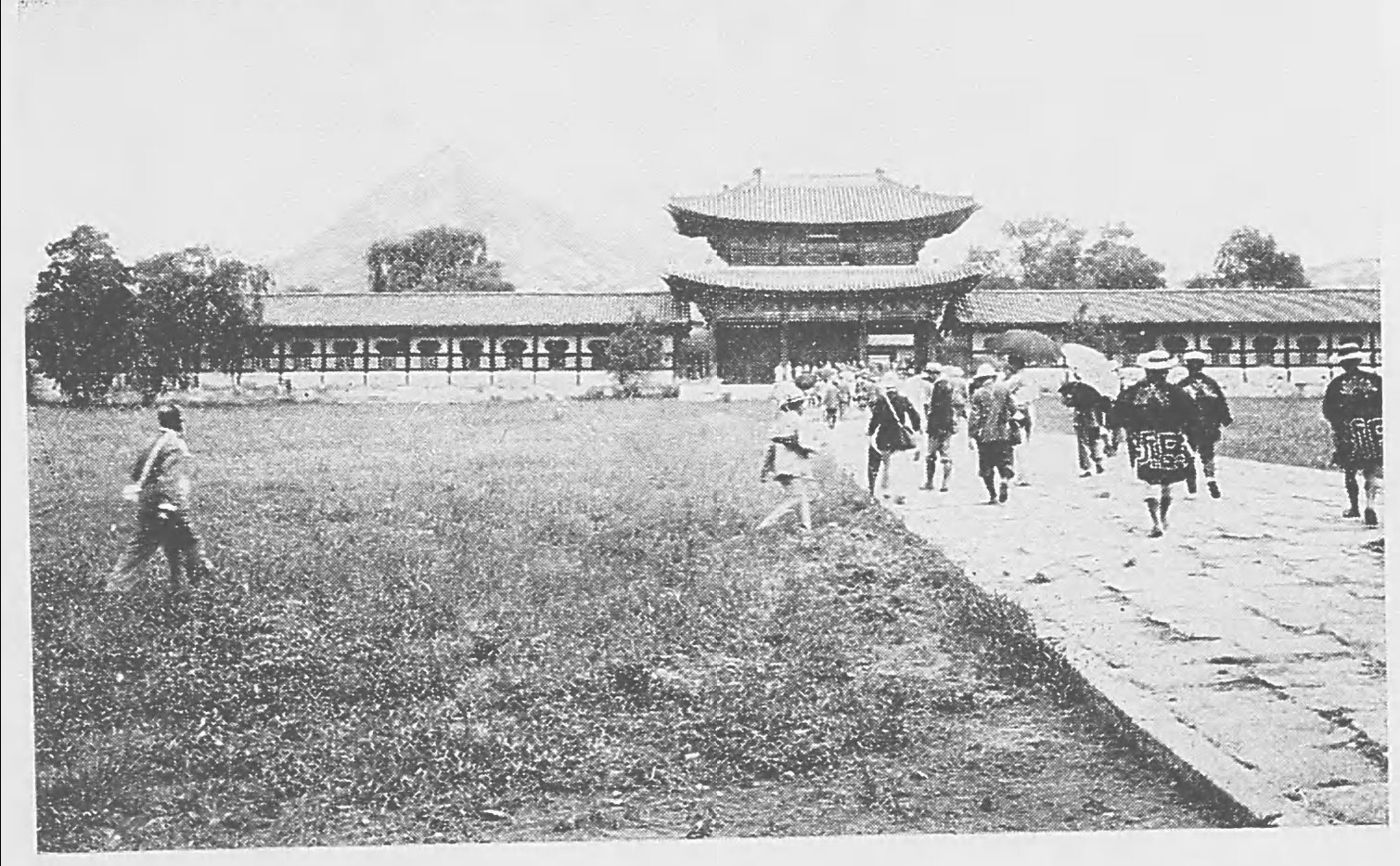
One of the most revealing contrasts is between the palace’s traditional Korean architecture and the government building’s imposing, Western-influenced design. The contrast should not be reduced to a simple contest of architectural styles. In context, the new building’s position and scale were tied to a colonial system that sought to reorganize public space and display administrative authority.
For a period thriller, that contrast can make the setting feel like an active character. A palace gate may evoke a cultural memory that predates the occupation, while the office building signals the machinery of colonial rule. When characters cross between those spaces, the audience can read the movement as more than a change of location.
From colonial headquarters to a contested historical symbol

Japan’s colonial rule ended in 1945, but the building remained part of Seoul’s public life for decades. It was used by postwar institutions, including the National Museum of Korea, before being demolished in 1995 during efforts to restore the historic setting of Gyeongbokgung. Its later uses did not erase the political arguments attached to it. For many Koreans, the structure remained a visible reminder of colonial rule and the damage done to the palace landscape.
That history gives the building a complicated legacy: it was an administrative center, a postwar government site, a museum and ultimately a demolished symbol. Its story shows how architecture can outlast the regime that built it—and how a society may later decide that preserving a structure is less important than repairing the historic space it altered.
How the drama’s setting differs from a history lesson
100 Days of Deception is a fictional spy romance set against real historical circumstances. Its characters, missions and dramatic encounters should not be treated as direct evidence of particular historical events. The building’s real significance lies in the broader context: colonial authority was exercised through institutions, policing, bureaucracy and control of public space. The series uses espionage and romance to make those pressures legible through individual choices.
That distinction matters for viewers who want to learn more after an episode. Use the drama as a starting point, then compare its visual world with archival records and historical scholarship. A scene may capture the atmosphere of a period without reproducing a specific event or exact interior.
Frequently asked questions
Was the Japanese Government-General building in 100 Days of Deception real?
Yes. The historical Government-General building stood in front of Gyeongbokgung Palace in Seoul, then commonly known as Gyeongseong during the colonial period. The series is fictional, so individual scenes and interior details should not automatically be read as documentary reconstruction.
When was the Government-General building constructed?
Construction began in 1916, and the main headquarters was completed in 1926, according to the National Institute of Korean History’s historical photo collection.
Why was its location controversial?
It was built within the grounds of Gyeongbokgung Palace, disrupting the palace’s historic spatial arrangement and sightlines. Its position also helped make the colonial administration the dominant presence in the surrounding urban landscape.
What happened to the building after Korea’s liberation?
After 1945, it continued to be used for government and cultural purposes, including as the National Museum of Korea. It was demolished in 1995 as part of efforts to restore the palace’s historic setting.
Where can I watch 100 Days of Deception?
Check the show’s official Netflix page for availability in your country.
Sources and further reading
- Netflix: 100 Days of Deception — official series synopsis and cast.
- National Institute of Korean History: The Government-General Building — historical context and archival photographs.
- The Korea Times: 100 Days of Deception brings colonial-era espionage romance to life.
- Wikimedia Commons: Government-General of Chōsen Building — archival images and individual licensing notes.
Author: Shivam Das


