
By Shivam Das | October 16, 2026
Tesla’s new Roadster has turned a familiar electric-supercar launch into an aerospace-style spectacle. At its October 15 demonstration in Texas, the prototype used a combination of fans, a suction-based system and SpaceX-linked cold-gas thrusters to travel up an inverted ramp, rotate and return to the ground. The striking footage raises a practical question: what do cold-gas thrusters actually do, and how far does the demonstration take the idea of a “flying car”?
Quick answer: A cold-gas thruster releases stored, pressurized gas through a nozzle. The escaping gas creates force in the opposite direction, allowing a vehicle to make brief changes in motion or orientation. Tesla’s demonstration showed a controlled, short maneuver—not sustained aircraft-style flight. The company has said production is targeted for 2028, but final specifications, testing and regulatory details still matter.

What is a cold-gas thruster?
A cold-gas thruster is a comparatively simple propulsion device: gas is stored under pressure and released through a nozzle. As the gas rushes outward, the vehicle experiences a reaction force in the opposite direction. “Cold” distinguishes the system from a conventional chemical rocket engine, which burns propellant to create hot exhaust. A cold-gas unit does not need combustion in the nozzle, but it still needs pressure vessels, valves, piping, actuators and a control system.
The concept is well established in spacecraft, where small thrusters help adjust orientation and position. In a car, the challenge is different. A road vehicle is heavy, operates close to people and buildings, and has limited room for tanks and hardware. The amount of thrust and the time it can be used depend on factors such as gas pressure, nozzle design, vehicle mass and the amount of gas carried. Without complete engineering data, a short demonstration cannot tell the public how often the system could be used or how much control it would provide in different conditions.
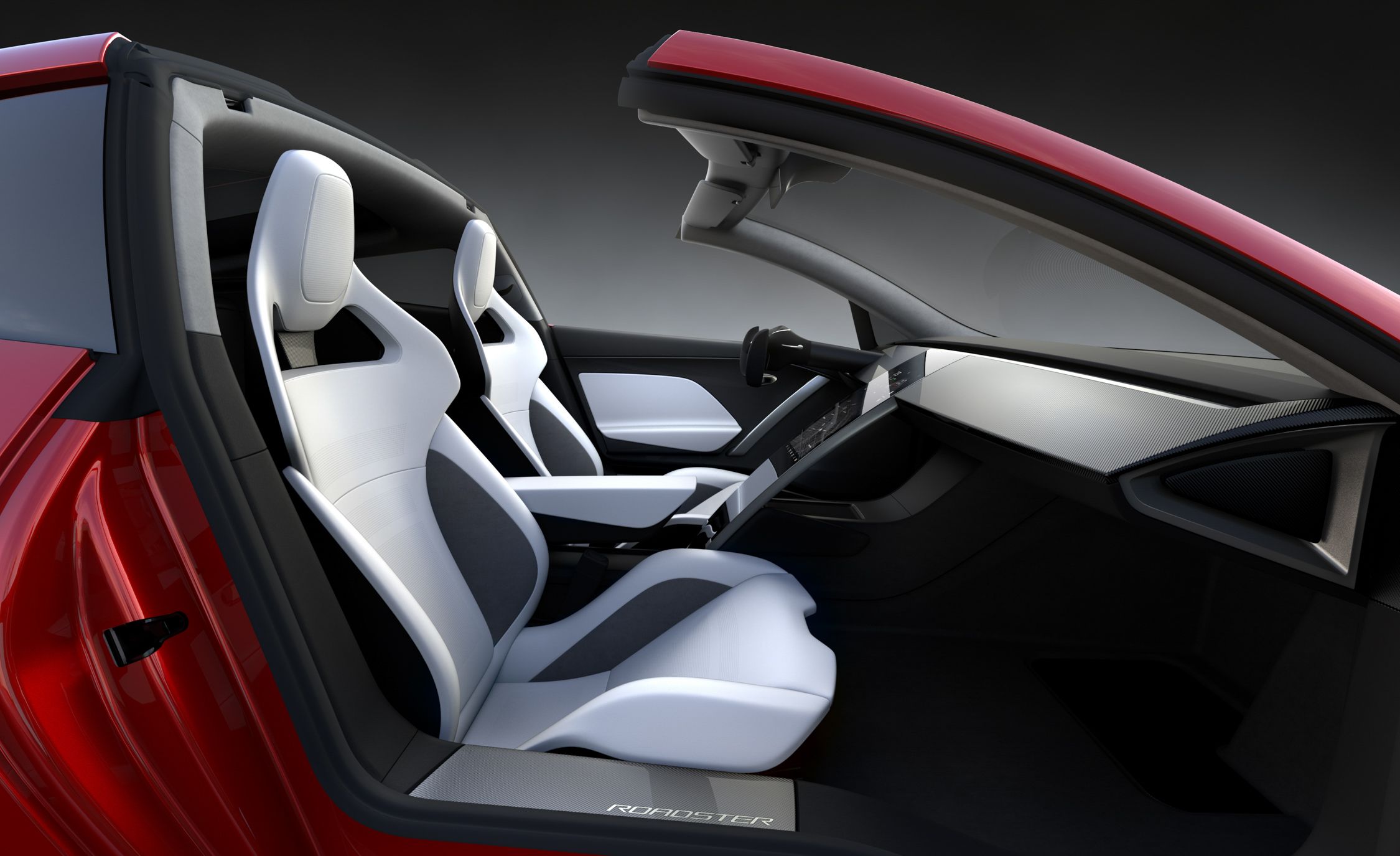
Thrusters and suction do different jobs
The Texas demonstration combined two ideas that are easy to confuse. A fan-and-sealing system can create suction beneath a vehicle, increasing the force that holds it against a prepared surface. That can help explain how a car could travel along an inverted section of a specially designed ramp. Thrusters, by contrast, push gas through nozzles and can change the vehicle’s movement once it is no longer supported by the surface.
That distinction matters because neither system automatically turns a sports car into an aircraft. Suction requires a suitable surface and a system that maintains the pressure difference. Thrusters require stored gas and precise control; pressure, mechanical reliability and the exhaust plume still require careful safety planning. The Roadster’s public demonstration was a controlled event, not evidence that the car can take off from an ordinary street or fly freely through city air.
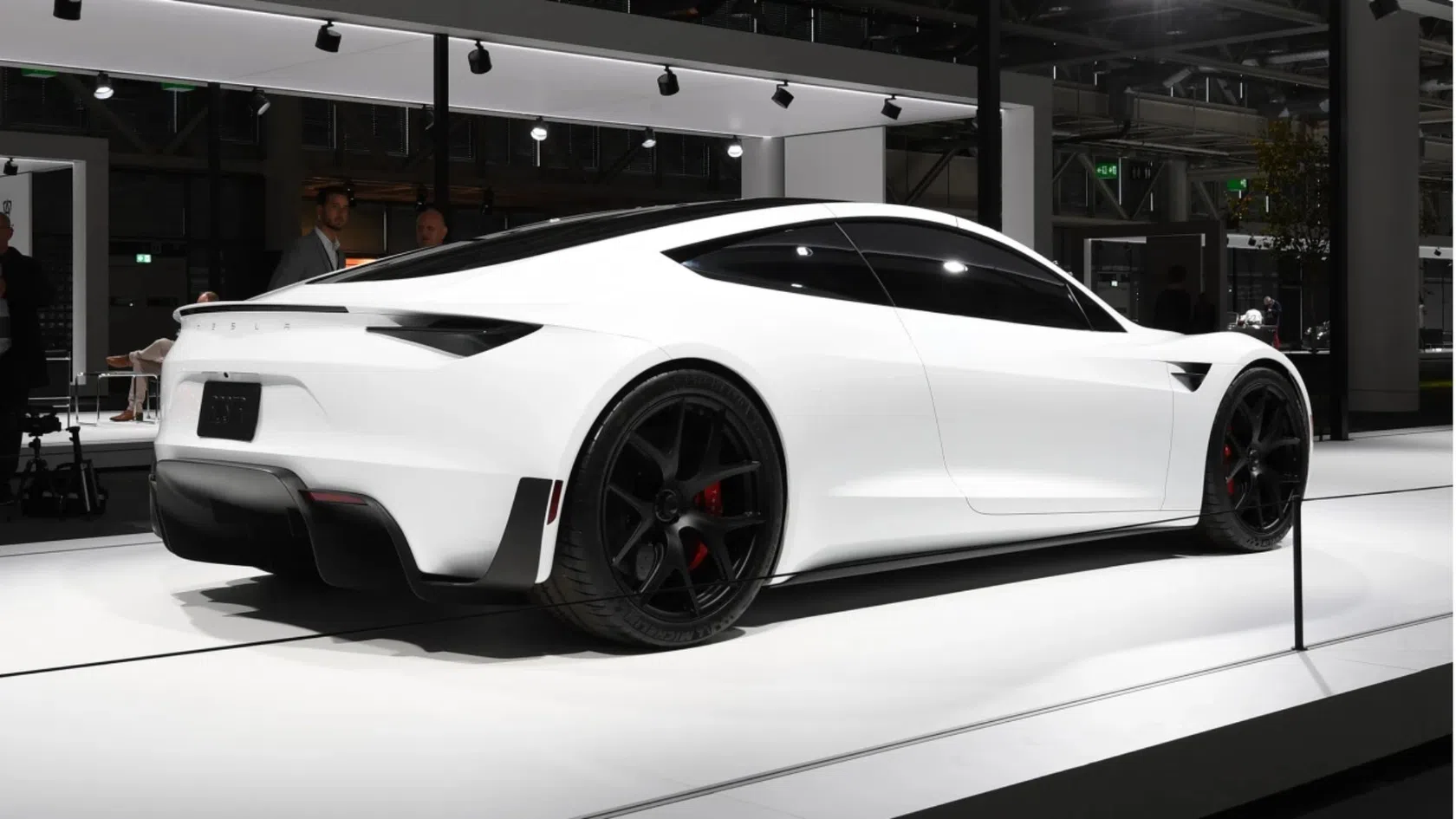
What the October demo did—and did not—show
- It showed a brief, controlled maneuver: the prototype used a ramp, fans and thrusters during a staged demonstration.
- It showed a possible use for directed thrust: a thruster system can change motion and orientation for a short period.
- It did not establish sustained flight: a jump or short airborne movement is not the same as aircraft-like cruising, navigation and landing.
- It did not establish normal road legality: approval depends on the exact configuration and the rules that apply in each jurisdiction.
- It did not verify production-car performance: company demonstration figures should be separated from repeatable independent tests of a customer vehicle.
Reporting from The Verge and TechCrunch describes the ramp maneuver and the collaboration between Tesla and SpaceX engineers. The most useful way to interpret the footage is as a technology demonstration: it shows what the prototype did in that setting, while leaving unanswered how the system would perform across repeated tests, different weather, component failures and normal ownership.
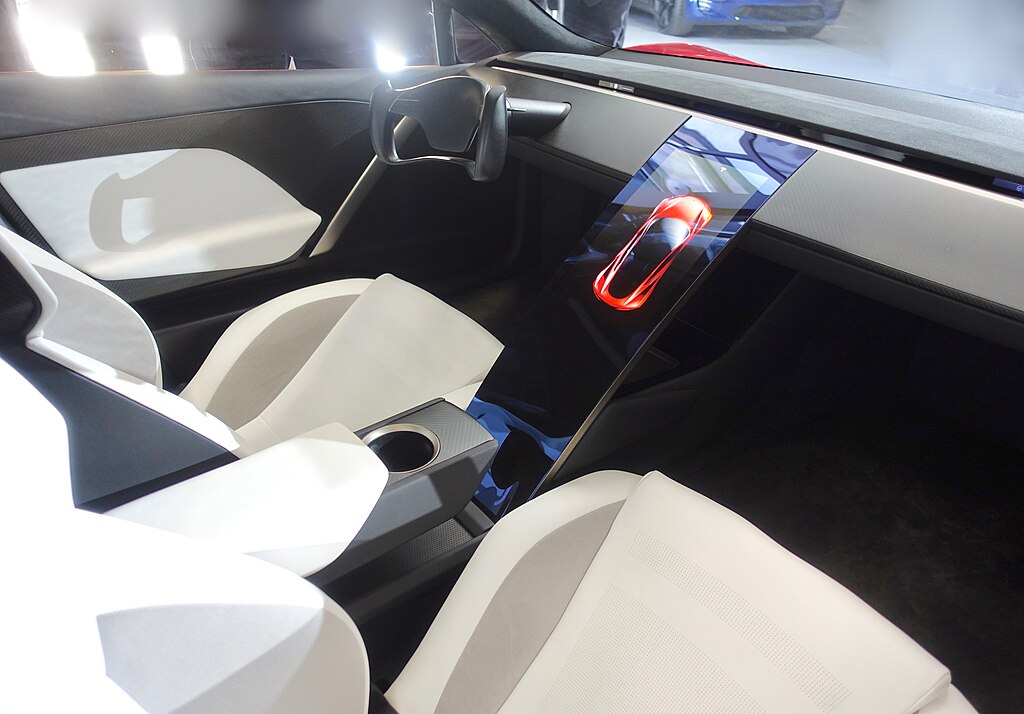
The engineering trade-offs: mass, control and safety
Every propulsion system has trade-offs. A cold-gas package needs pressure vessels and hardware that add mass and occupy space. The gas supply is finite, so the available thrust time is limited by the amount stored and the rate at which it is released. Control software and sensors must coordinate the nozzles quickly enough to prevent an unwanted rotation or unstable movement. Those requirements are especially demanding in a car designed around passenger comfort and road use.
There is also a safety question beyond the vehicle itself. A system capable of releasing high-pressure gas and moving a car off the ground needs controlled operating zones, emergency procedures and clear rules about where it may be activated. At the event, the vehicle was shown in a managed test environment. Until Tesla publishes detailed operating limits and independent test results, readers should not assume that the same stunt could safely be repeated in a driveway, on a public road or near bystanders.

What buyers should know about timing and claims
Tesla has pointed to 2028 for production, but a target is not a guaranteed delivery date. The Roadster’s history includes years of shifting timelines, and the latest prototype may not match every final production detail. Performance claims such as sub-one-second acceleration should be treated as reported demonstration figures until they are supported by repeatable, independently documented testing with a defined configuration and test conditions.
Potential buyers should also distinguish between versions. Reporting has described different Roadster configurations, including a specialized version with the more extreme thruster capability. A feature shown on a prototype or a limited configuration should not be assumed to be standard on every model. Before paying a deposit, readers should check Tesla’s current official information, the terms for the specific version, refund conditions and any restrictions on use.
The larger story is not simply whether a car can briefly leave the ground. It is whether the technology can be made predictable, maintainable, legally usable and safe enough for its intended customers. Until those questions are answered with published specifications and independent testing, the Roadster’s airborne sequence is best understood as an extraordinary demonstration—not proof that everyday flying cars have arrived.
Watch and verify the original coverage
See the latest reporting and Tesla’s own Roadster updates before sharing clips. A repost may omit context, edit the sequence or misidentify a prototype image.
Tesla Roadster demonstration and design updates.
View Tesla’s official X account
For more detail, read Tesla’s official Roadster page, The Verge’s demonstration report and TechCrunch’s Roadster coverage.
Frequently asked questions
What are cold-gas thrusters on the Tesla Roadster?
They are devices that release stored pressurized gas through nozzles to create force. In the Roadster demonstration, the system was used for brief movement and orientation changes.
Can the Tesla Roadster hover like a drone?
The demonstration showed a short controlled airborne maneuver. It does not establish sustained hovering, aircraft-style flight or unrestricted operation in everyday environments.
How is a thruster different from a fan-based suction system?
A suction system pulls a vehicle toward a prepared surface by reducing pressure underneath it. A thruster expels gas to create force in the opposite direction. They serve different purposes.
Is the thruster-equipped Roadster street legal?
The demonstration alone does not establish road legality. The status depends on the specific version and applicable vehicle regulations; check Tesla’s latest official disclosures.
When is the new Tesla Roadster expected to enter production?
Tesla has pointed to 2028, but that remains a target rather than a guarantee of customer deliveries.
Sources
- The Verge: Tesla Roadster demonstration and thruster system
- TechCrunch: Tesla reveals SpaceX-powered Roadster
- Reuters: Roadster launch and 2028 production target
- Tesla official Roadster page
Editorial note: Several photographs in this article are older concept or archive images, clearly labeled as such. They are not represented as images of the October 2026 demonstration. Image rights should be checked with each original publisher before commercial reuse.






