

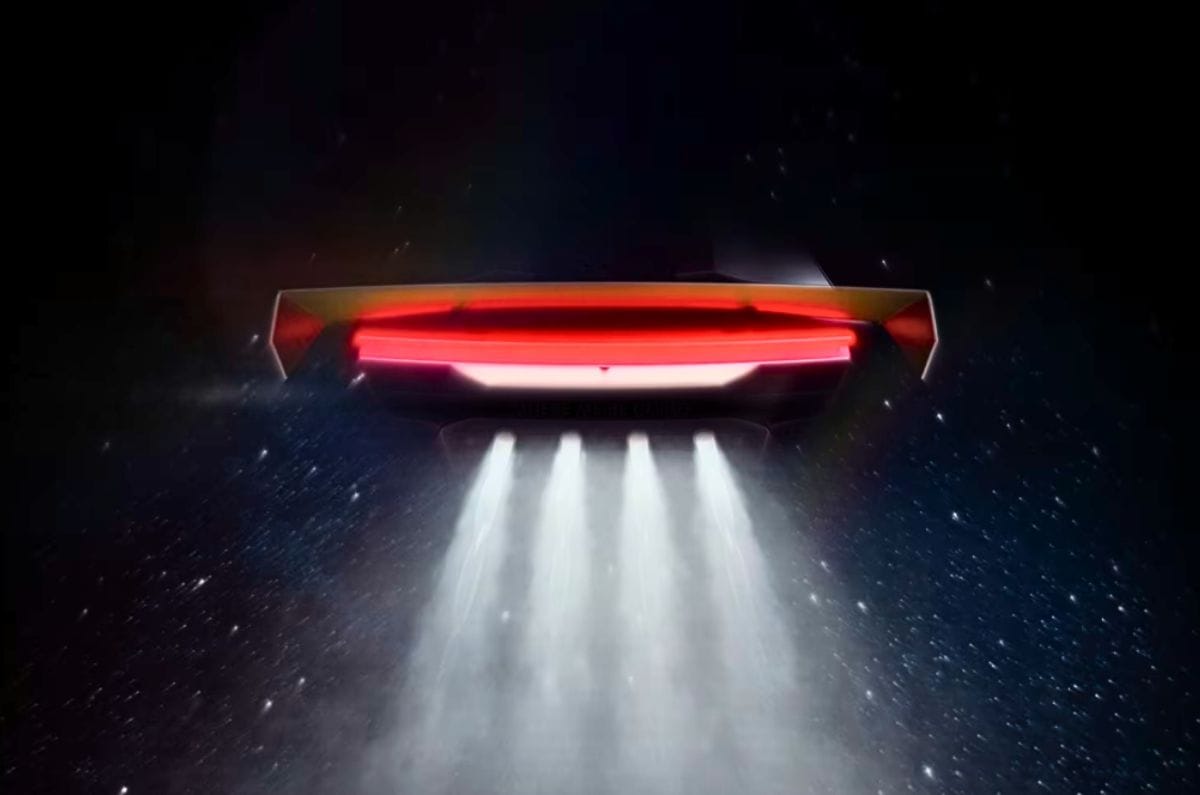
Can a car really fly? Tesla’s October 15, 2026 Roadster demonstration has made the question feel less like science fiction. Reports from the event near McGregor, Texas, describe a prototype using a combination of fans and SpaceX-developed cold-gas thrusters for brief airborne maneuvers. But a staged demonstration is not the same as a practical flying car—and that distinction matters.
By Shivam Das | October 15, 2026
Quick answer: Is the Tesla Roadster a flying car?
Not in the everyday aviation sense. The demonstration reportedly showed a specially equipped Roadster prototype lifting or moving briefly through the air under controlled conditions. It does not establish that an ordinary production Roadster can take off, travel long distances in flight, or operate safely in public airspace.
What the demonstration showed
Coverage of the October 15 event described a redesigned second-generation Roadster performing unusual maneuvers, including traveling along an inverted ramp and making a brief airborne move before landing. The system combines the vehicle’s electric drivetrain with specialized hardware associated with SpaceX. Because the demo was conducted at a controlled test site, it should not be treated as evidence that these maneuvers are suitable for public roads.

How cold-gas thrusters work
A cold-gas thruster releases stored pressurized gas through a nozzle. The gas moves in one direction and creates a reaction force in the opposite direction. Unlike a combustion rocket, a cold-gas system does not burn fuel inside the nozzle. It is mechanically simpler, but the gas supply is finite: once the pressure vessel runs down, thrust is limited until the system can be recharged.
For a vehicle, the engineering challenge is substantial. Engineers must control thrust direction and timing, manage the mass and pressure of tanks, keep the car stable, and protect people nearby from noise, gas flow and debris. A brief stunt can demonstrate that a mechanism works in one setup; it cannot by itself prove everyday reliability or safety.

What the demo does not prove
- Road legality: briefly lifting off does not mean a vehicle is approved to fly over public roads or neighborhoods.
- Practical range: a short demonstration does not show how long a thruster system could sustain useful lift.
- Safety certification: flight, road and passenger-safety requirements are separate questions requiring regulatory review.
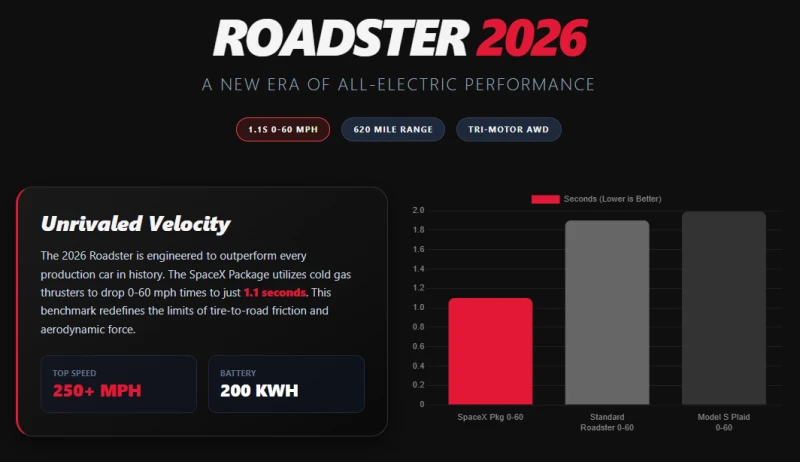
- Production readiness: a prototype demonstration is not a guarantee that every advertised feature will reach customer vehicles.
Can flying cars become practical?
Vehicles that fly face constraints beyond those of high-performance electric cars: lift, controllability, emergency procedures, noise, and safe operation around buildings, aircraft and people. Electric vertical-takeoff aircraft use dedicated rotors or fans and face their own certification and infrastructure challenges. A road car that briefly uses thrusters is not automatically an alternative to those designs.

What happens next?
The key questions are whether Tesla publishes detailed technical specifications, clarifies which version includes flight-capable hardware, provides a realistic production schedule, and explains road-use restrictions. The second-generation Roadster has been discussed for years, so buyers should distinguish a compelling demonstration from a firm delivery commitment.
For official product information, consult Tesla’s Roadster page. For independent reporting on the October 15 reveal, read Reuters and TechCrunch.
Frequently asked questions
Can the Tesla Roadster fly like an aircraft?
The reported demonstration showed brief, controlled airborne maneuvers. It does not prove the Roadster can function as a conventional aircraft or fly long distances.
How do cold-gas thrusters work?
They expel stored pressurized gas through nozzles to generate thrust without combustion in the nozzle.
Can the flying feature be used on public roads?
Do not assume so. Road approval and permission for airborne operation are different matters; check current official specifications and applicable regulations.
Does the demo mean the Roadster is ready for delivery?
No. A prototype demo does not guarantee production timing, final specifications, certification or customer delivery.
Who wrote this article?
Shivam Das. This article distinguishes reported event details from engineering context and claims that still require official confirmation.






