

Kelly Clarkson’s dispute with Brooklyn curiosity shop Art of Play has produced plenty of confident claims about a brief shopping trip. But one question deserves a more careful answer: did Clarkson genuinely want to buy Molly, the singing mechanical bird at the center of the story, or was she asking about an item that staff considered part of the store’s display?
The public record supports a narrower conclusion than either side’s strongest version. Clarkson has said she asked whether the bird was for sale and felt the employee treated her as though she could not afford it. Art of Play says Molly is a delicate fixture used in its magic shows, while a similar bird could potentially be obtained from the artist. The released security video shows a short interaction, but it has no audio. It cannot tell viewers the exact words spoken or what either person intended.
That distinction matters. Asking about a price is not the same as agreeing to buy an item, and asking whether something is available does not prove a customer was ready to complete a purchase. Here is what the available evidence does—and does not—show.
What Kelly Clarkson has said about wanting the bird
In posts about her October visit, Clarkson said she had driven to Brooklyn to check out Art of Play and had “a few things in mind to buy.” She described asking about the singing bird and said an employee responded by mentioning its $15,000 price and offering to find something comparable. Clarkson interpreted the exchange as condescending and compared the experience to the shopping scene in Pretty Woman.
Her account indicates that she was interested enough to ask about buying the bird. It does not, by itself, establish that she had decided to purchase that exact piece at that price, that she had reached an agreement with the shop, or that a sale was imminent. Clarkson has not publicly supplied a receipt, order, or completed transaction—and none is required to ask a store about an item.
Clarkson also disputed the shop’s subsequent explanation, saying a $15,000 price tag was visible beside the bird and accusing the store of misrepresenting their conversation. Her account is a first-person description of how the interaction felt to her. The central point of disagreement remains what was said and what the displayed price meant.
What Art of Play says about Molly
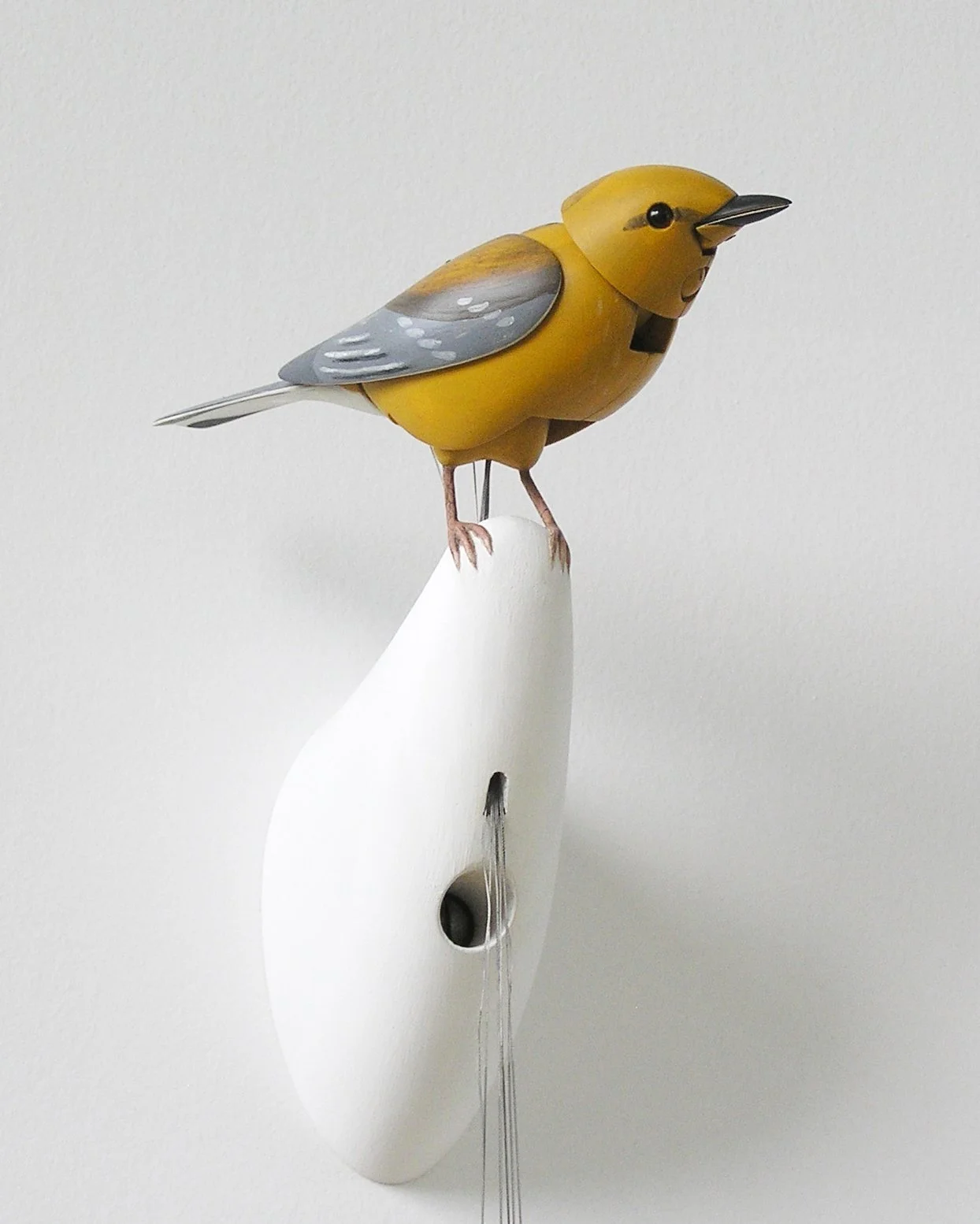
Art of Play’s public statements draw a distinction between Molly, the bird displayed on the shop’s wall, and a similar automaton that could potentially be obtained from its creator. The store says Molly is permanently attached to the wall, serves as a shop mascot, and plays a role in its close-up magic shows. According to the shop, staff explained that the artist had a nearly identical piece that could be made available for $15,000.
The shop also says it offered to show Clarkson a different singing-bird automaton priced at about $2,000, which she could have taken home that day. That account is disputed: Clarkson says the conversation was not as the store later described it. The shop’s version is relevant evidence, but it should not be presented as an independently proven transcript of the exchange.
In a later interview, co-owner Adam Rubin said the conversation did not go the way Clarkson wanted and characterized the dispute as a misunderstanding. He has also said she would be welcome to return to the store. Those comments show the shop’s current position; they do not resolve exactly what each person said during the original encounter.
What the security footage can prove—and what it cannot
Footage released by journalist and podcaster Pablo Torre shows Clarkson browsing, approaching the bird, speaking with a staff member, and later talking to another worker near the entrance before leaving. Reports describe the visit as lasting roughly five minutes. The footage provides visual context for the sequence of events, but the recording has no sound.
Without audio, viewers cannot hear whether the employee mentioned a price, how the offer of an alternative was phrased, or whether either person’s tone was dismissive. Gestures and facial expressions can be interpreted in different ways, particularly when viewers already know the competing accounts. The video does not prove that Clarkson did or did not intend to buy Molly, and it does not settle the disagreement about the price tag.
That is why descriptions such as “the footage proves she was refused” or “the footage proves she never wanted the bird” go beyond what the recording establishes. It documents a brief visit, not the full conversation or a customer’s private intentions.
Does the $15,000 price tag answer the question?
Not on its own. Clarkson shared an image that she said showed a $15,000 tag beside the bird. The shop has argued that the displayed Molly was not for sale as a take-home item and that the price referred to a similar work obtainable through the artist. Other coverage has examined the possibility that the label’s context may have been unclear. Without a verified record showing exactly where and when the tag was displayed and what it referred to, the photograph is important context but not a complete answer.
The artist’s website describes the Singing Bird on Wall as a handcrafted automaton with seven movements. The mechanism uses wooden gears, levers, cables, and bellows to make the bird move and produce a simple birdsong. The artist’s broader page says similar wooden automata may be available to order depending on his schedule, with listed prices across the range of $4,000 to $12,000. That general information does not establish the terms of the specific offer reportedly discussed at Art of Play.
Rubin later said the store had raised Molly’s headline price to $15 million amid the publicity. That figure has been presented as a publicity-driven asking price, not as evidence of a completed sale or an independent appraisal of the object’s market value.
So, did Kelly actually want to buy Molly?
The fairest answer is that Clarkson says she was interested in purchasing the bird and asked whether it was for sale. The shop acknowledges that she inquired about Molly, but says the exact bird on the wall was not available for purchase and that staff explained alternatives. Those statements are consistent with a customer who wanted to explore buying the piece; they do not establish that a final purchase was agreed or that the shop could sell that specific display item.
There is also a difference between wanting to buy something and being ready to complete the transaction. The public evidence does not reveal how far Clarkson intended to go, whether she would have accepted a made-to-order version, or whether a clearer explanation would have changed her decision. Those are unanswered questions, not facts that can be filled in by speculation.
Why this detail matters beyond celebrity gossip
The disagreement has become a broader argument about customer service, celebrity influence, and how quickly a small business can be swept into an online storm. Clarkson’s large audience means a public complaint can bring intense attention to a shop in minutes. At the same time, customers can reasonably expect staff to explain prices and availability without making assumptions about what they can afford.
Both points can be true without deciding the disputed conversation from a silent clip. The shop has described receiving abusive messages and threats after the story spread; those reports should not be treated as a legitimate response to a customer-service complaint. Criticism of a business is different from harassment of its workers, owners, neighbors, or customers.
The most useful lesson may be less dramatic than the viral framing: a clear explanation of whether an item is for sale, whether a price is for the displayed piece or a commissioned equivalent, and what alternatives are available can prevent confusion. But the public still does not have a recording of the words exchanged at Art of Play.
Frequently asked questions
Did Kelly Clarkson say she wanted to buy Molly?
Clarkson said she asked whether the bird was for sale and had come to the store intending to buy several things. That supports her stated interest, but it does not establish that she had agreed to purchase the specific display bird.
Was Molly actually for sale for $15,000?
That remains disputed. Clarkson pointed to a $15,000 price tag, while Art of Play says Molly is a fixed display piece and a similar automaton could be obtained from the artist. The available public evidence does not conclusively resolve what the tag referred to at the time of her visit.
Does the security footage settle who was right?
No. The video shows a brief interaction but has no audio. It cannot confirm the exact words, tone, or intention of either party.
Was a different bird offered to Clarkson?
Art of Play says staff offered to show her a different automaton costing about $2,000. Clarkson disputes the shop’s account of the exchange, so that detail should remain attributed to the store rather than described as independently confirmed.
What is confirmed about the $15 million price?
The shop’s co-owner said the asking price had been raised to $15 million after the bird went viral. That is a reported asking price, not proof that anyone paid that amount or that an independent valuation supports it.
Sources and further reading
- PEOPLE: Art of Play owner says Clarkson is welcome back
- Entertainment Weekly: What the security footage shows
- TMZ: Newly released footage of the store visit
- Bliss Kolb: Singing Bird on Wall design details
Reporting note: This article distinguishes Clarkson’s account, the store’s account, and what can be seen in the silent footage. The central conversation has not been independently verified from an audio recording.
By Shivam Das


