

The giant sea creature in Netflix’s Below may be the stuff of nightmare fuel, but the science behind it has a real expert: Dr. Annie Mercier, a marine biologist at Memorial University of Newfoundland’s Ocean Sciences Centre. According to Netflix Tudum, creator Jesse McKeown turned to Mercier to fact-check scripts for the six-episode thriller. She also helped inspire the character of Fonda Howander, the marine researcher played by Mackenzie Davis.

Mercier’s role is important because Below is not simply asking viewers to believe in a monster. Its story imagines a giant cephalopod whose behavior is tied to its offspring and a changing ocean. Scientific consultation gives the fictional creature a biological foundation—even when the series takes dramatic liberties for horror.
Who is Dr. Annie Mercier?
Mercier is a marine biologist based at the Ocean Sciences Centre of Memorial University in Newfoundland, Canada. Her research spans marine ecology, reproduction, larval development, species interactions, and how marine organisms respond to environmental stress. Her laboratory studies several groups of ocean animals and also works with species from deep-sea and polar environments.
That background makes her a useful scientific sounding board for a story built around a mysterious animal from the North Atlantic. Netflix’s official Tudum explainer says Mercier received scripts to fact-check. It also identifies her as an inspiration for Fonda Howander, the show’s marine researcher. That is more precise than saying Mercier personally designed every detail of the creature: her documented contribution was scientific consultation and helping ground the character in real expertise.

How real is Below’s giant squid?
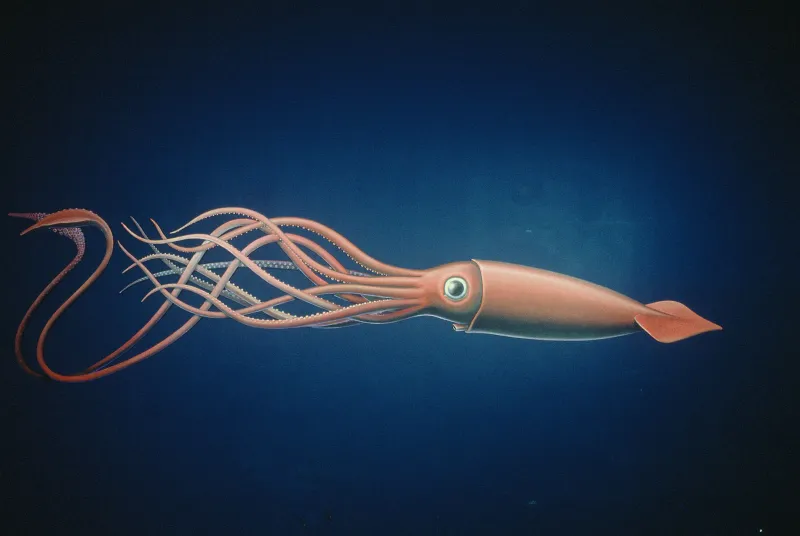
Giant squid are real animals, not folklore. Mercier tells Tudum that they average around 33 feet in length, and their enormous eyes are among the largest in the animal kingdom. They live deep underwater and are notoriously difficult for scientists to observe directly. Researchers have learned more about them through rare encounters, remains, and indirect evidence—including studies involving their predators, sperm whales.
But the creature in Below, known as Mudder, is a fictional horror creation. Netflix’s explainer says it is very improbable that a giant squid would leave its deep-water environment to attack people on land or at the surface in the way the show depicts. The real animals are elusive, and much about their lives remains difficult to study; that mystery offers writers room to imagine a terrifying encounter without making the fictional events a literal account of squid behavior.
The biological detail that makes Mudder more than a monster
Spoilers ahead for the series. One of the show’s central ideas is that Mudder’s violence is connected to protecting her egg sac. In the story, the eggs struggle to survive as the water warms, turning the creature into a tragic presence rather than a one-dimensional predator.
There is a real biological idea underneath that plot. Netflix’s interview with Mercier explains that some cephalopods guard and tend their egg masses for extended periods. In certain species, the parent may stop feeding while protecting and maintaining the eggs, eventually dying after the reproductive effort. The exact details vary across species, so this should not be treated as a universal rule for every squid or octopus—but parental investment is a genuine part of cephalopod biology.
The series stretches that behavior into a dramatic creature story. A real giant squid has not been shown to behave like Mudder, and there is no scientific evidence that a squid of this kind would attack a Newfoundland town to protect its young. The point is not that the plot could happen exactly as shown; it is that the writers built an emotional motive around recognizable questions of animal behavior and survival.

Why climate change matters to the creature’s story
Below also connects the creature’s fate to warming water. That theme has a scientific basis, although the series’ particular chain of events is invented. Climate change affects ocean temperature, chemistry, oxygen availability, and the distribution of marine species. Those changes can place pressure on animals and habitats, and they complicate the work of scientists trying to understand ecosystems that are already hard to observe.
Mercier tells Tudum that warmer water can make oxygen availability more difficult for marine life and that ocean chemistry is changing as the climate changes. She also stresses how much remains unknown: scientists can lose species before they have had the opportunity to study them. The broader message is that the ocean is not an empty, unknowable backdrop. It is a complex living system that helps regulate Earth’s climate and supports a vast range of life.

Where science ends and horror begins
Scientific consultation does not make Below a documentary, and it does not mean every scene is biologically accurate. Instead, the best use of an expert is to give a fictional story credible details: how researchers think, what is known about an animal, what remains uncertain, and which environmental pressures are plausible.
That distinction makes the show’s creature more interesting. Mudder is not a scientifically documented monster; she is an invented character shaped by real questions about cephalopod intelligence, reproduction, and the vulnerability of ocean life. The scientific foundation gives the horror a point of connection to the world outside the screen, while the show’s attacks and supernatural scale remain fiction.
Frequently asked questions
Who was the science expert on Netflix’s Below?
Dr. Annie Mercier, a marine biologist at Memorial University’s Ocean Sciences Centre in Newfoundland, fact-checked scripts for the series, according to Netflix Tudum.
Did Annie Mercier create the giant squid in Below?
Netflix identifies Mercier as the show’s scientific fact-checker and says she inspired marine researcher Fonda Howander. The giant squid, Mudder, is a fictional creature created for the story; the available reporting does not say Mercier designed every aspect of it.
Are giant squid real, and how big do they get?
Yes. Mercier tells Netflix Tudum that giant squid average around 33 feet long. They live deep underwater and are difficult to study, so scientists still have much to learn about them.
Could a real giant squid attack a town like it does in Below?
There is no evidence for the kind of town-threatening attacks shown in the series. Mercier says it is very improbable that giant squid would leave their deep-water environment to harm people in the way depicted.
Does Below’s climate-change storyline reflect real science?
The series’ specific monster plot is fictional, but ocean warming and changing water chemistry can affect marine organisms and ecosystems. The show uses those real concerns as part of its horror premise.
Watch the official trailer
For a look at the fictional world shaped by this real scientific consultation, watch the official Netflix teaser below.
Read Netflix Tudum’s official Below guide and see more first-look photos.
Sources
- Netflix Tudum: “Could the Sea Creature in Below Really Exist?”
- Mercier Lab, Memorial University’s Ocean Sciences Centre
- Netflix Tudum: Below cast, plot, and production details
- Netflix Media Center: Below
By Shivam Das


