Spoilers and historical context ahead.
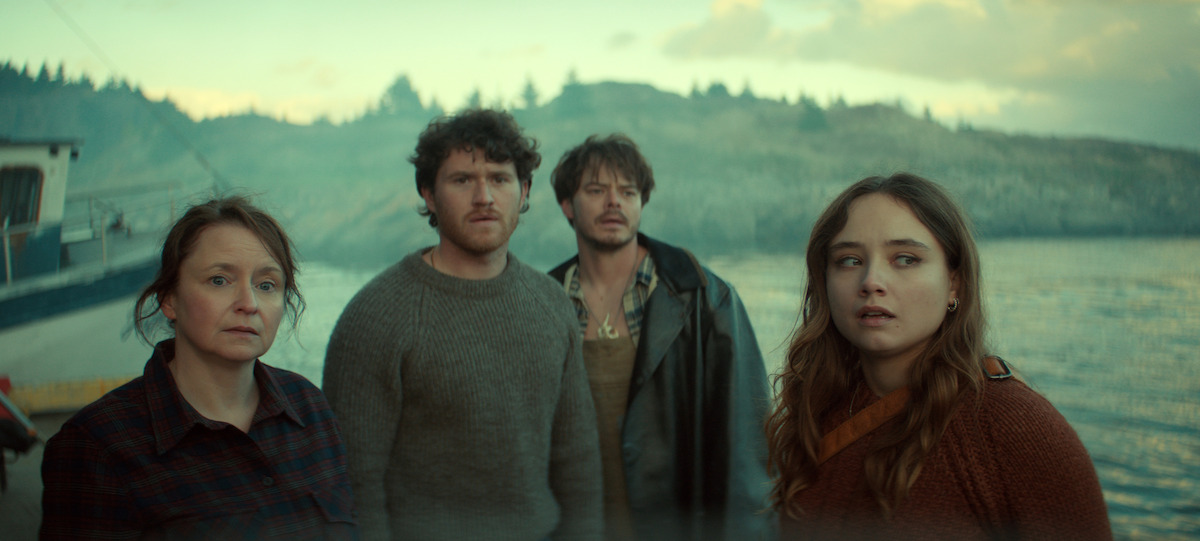
The title “Sir John Franklin” gives Episode 3 of Netflix’s Below an immediate historical chill. Netflix’s official episode guide says Calvin and Wade encounter mysterious newcomers while Fonda warns residents about a nautical threat. The synopsis does not describe a literal reenactment of Franklin’s shipwreck, so the series’ fictional danger should be distinguished from the documented expedition. That distinction does not weaken the atmosphere; it makes the historical echo more interesting.
In a coastal thriller, the sea is never just scenery. It is a livelihood, a route between communities, and a force that can erase evidence. The Franklin name brings a real story of isolation and unanswered questions into that setting, encouraging viewers to wonder what the water hides—and how much people can know before danger reaches shore.

Why the Franklin name changes the mood
In 1845, Sir John Franklin led two Royal Navy ships, HMS Erebus and HMS Terror, on an expedition to find a Northwest Passage through the Arctic. The ships became trapped in ice in 1846. A message later found on King William Island recorded Franklin’s death in 1847 and the surviving crew’s decision to abandon the ships in April 1848. No one from the expedition returned, and the mystery endured for generations.
The real expedition was not simply a sudden sinking witnessed by rescuers; it was a long crisis of entrapment, deteriorating conditions, and incomplete information. Families and searchers had to live with uncertainty while clues emerged slowly. The name Franklin can therefore make a maritime story feel larger than one frightening encounter.
The real disaster: ice, isolation and a missing crew
In 1859, a search party found a written record describing the ships’ entrapment and the deaths already suffered. Parks Canada and its partners located HMS Erebus in 2014 and HMS Terror in 2016. The discoveries depended on underwater archaeology, modern technology, and Inuit knowledge and oral testimony.
That last detail matters. Inuit knowledge helped searchers understand where to look and how to interpret the evidence. The Arctic is a homeland with deep Inuit history, not an empty stage for European exploration. A responsible comparison between fiction and Franklin’s expedition should keep that context in view.

How the episode turns the sea into a threat
Netflix’s official description says Fonda warns residents about a nautical threat while Calvin and Wade encounter newcomers. A warning only helps if people believe it; newcomers may bring answers, but they can also unsettle fragile trust. An offshore danger is difficult to measure or confront on familiar ground.
This is where the Franklin comparison works best—as a thematic parallel, not an assertion that the show documents the expedition. Both stories evoke the limits of human control in a harsh marine environment. In Below, the audience weighs incomplete clues alongside the characters. The tension lives in the gap between hearing a warning and understanding what it means.

What the real wrecks tell us today
The discovery of Erebus and Terror did not close every chapter; it gave researchers new questions. Parks Canada and Inuit partners continue to document the wrecks and artifacts. The underwater footage below shows the real archaeological work behind the story and offers a useful counterpoint to television’s suspenseful imagery.

Watch real footage of the Franklin shipwreck research
Parks Canada has published video showing its underwater archaeology team exploring HMS Erebus and examining artifacts. This is real wreck research, not footage from Below.
Is the Sir John Franklin episode based on the real ship disaster?
The official synopsis does not confirm a literal reenactment. Netflix lists Episode 3 as “Sir John Franklin” and describes a nautical warning and the arrival of newcomers, but it does not say the episode recreates the historical expedition or its shipwreck. The title invites a historical comparison; specific scene-by-scene claims should be checked against the episode itself.
Why this may be Below’s most unsettling maritime chapter
The Franklin name carries a story of ships lost in ice, a crew that never came home, and evidence that surfaced long after the disappearance. Set beside Below’s fictional coastal threat, that history adds isolation and dread. The series does not need to be a factual account of Franklin’s final voyage for the comparison to work: maritime horror becomes more affecting when it echoes real human uncertainty.
Frequently asked questions
What episode of Below is “Sir John Franklin”?
It is Episode 3 of Netflix’s six-episode series Below, according to Netflix’s official episode listing.
What happened to Sir John Franklin’s ships?
HMS Erebus and HMS Terror became trapped in Arctic ice during the 1845 expedition. The surviving crew abandoned the ships in 1848, and the wrecks were discovered in 2014 and 2016.
Does Below recreate the Franklin expedition?
Netflix’s public synopsis does not confirm a literal reenactment. The episode title invokes Franklin, but viewers should distinguish the series’ fictional story from the documented historical expedition.
Where can I see real footage of the wreck?
Parks Canada published underwater footage of HMS Erebus and its archaeological work. The video embedded above is from Parks Canada’s official YouTube channel.
Why is Inuit knowledge important to the Franklin story?
Inuit knowledge and oral testimony helped guide searchers toward the wreck locations and remain essential to understanding the expedition’s history and Arctic context.
Sources and further reading
- Netflix: Below — official episode guide
- Parks Canada: The Wrecks of HMS Erebus and HMS Terror
- Parks Canada: History of the Franklin Expedition
- Parks Canada: Underwater archaeology video
Author: Shivam Das