

Spoiler warning: This article discusses major plot points from Netflix’s Below, including the finale.
The most terrifying moment in Below may not be a giant creature lunging from the water. The deeper horror arrives when Snook’s Arm realizes its drinking water, homes, and future are vulnerable to forces the residents cannot easily see or control. The Newfoundland-set thriller becomes more than a monster story: it explores environmental disruption and the people who treat a community’s crisis as an opportunity.
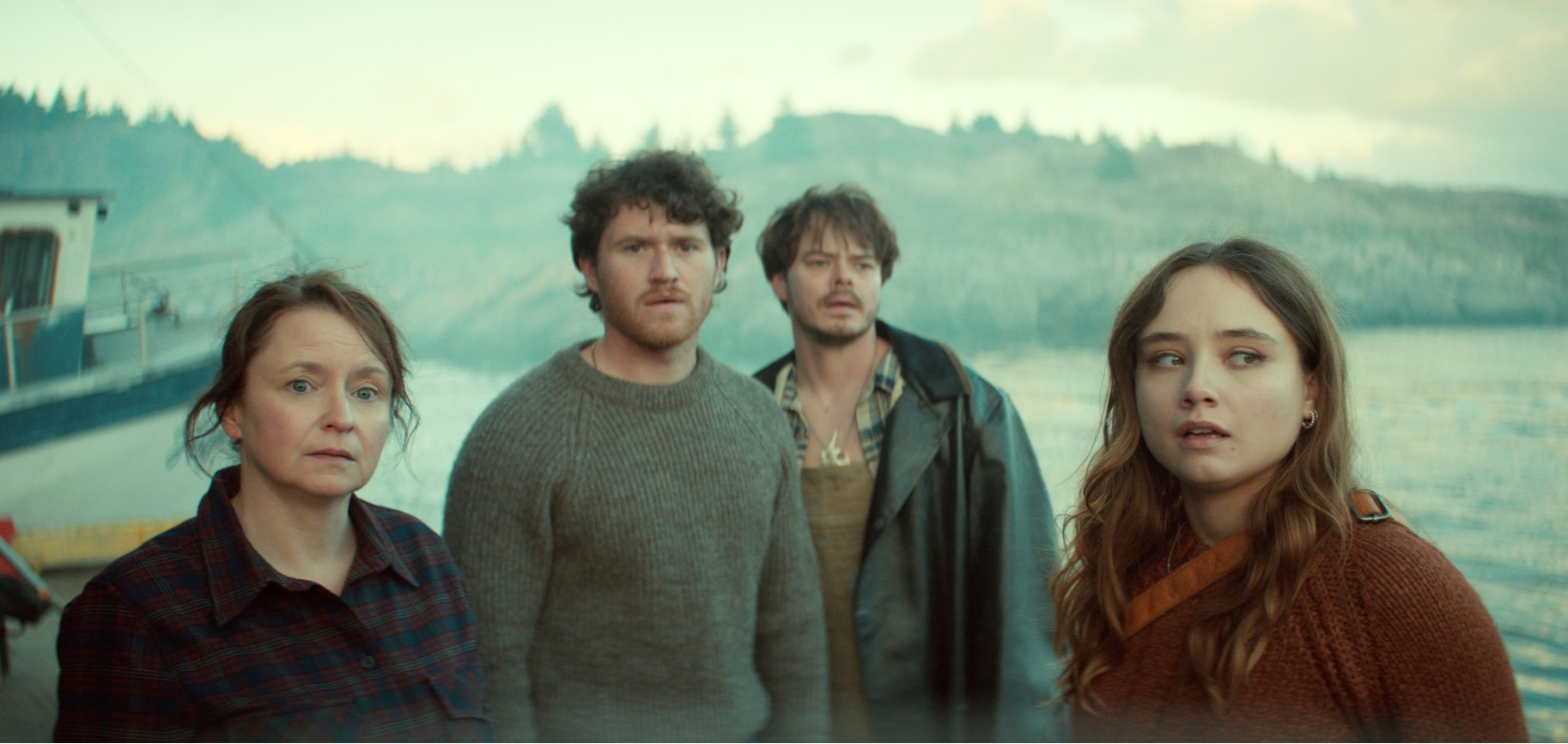
The scariest threat hides behind a promise of safety
At first, the attacks suggest a familiar creature feature: something unknown is hunting near the harbor. But the show complicates that assumption. The creature, known locally as Mudder, is protecting an egg sac trapped in an iceberg. Its behavior is dangerous, but it is not simply killing for pleasure; it is responding to a crisis of its own.
Meanwhile, the Crocker family is pushing Snook’s Arm to accept a buyout and leave. An evacuation and proposed military strike can be presented as safety measures, yet Calvin suspects destroying the harbor would also clear the way for the Crockers to exploit the land’s mineral wealth. The residents risk losing their home under the language of protection.
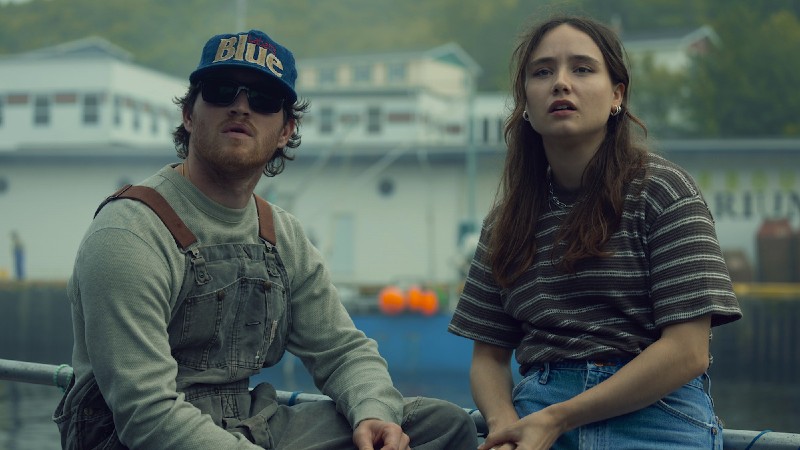
When the water itself becomes frightening
Mudder’s secretions contaminate iceberg ice, which melts into the local water supply. People develop an uncontrollable thirst and an urge to head toward the ocean. Suddenly, an everyday necessity—drinking water—feels unsafe. A monster attack is dramatic and visible; contaminated water is harder to identify and avoid. The residents cannot simply lock their doors and wait for the danger to pass.
The environmental connection matters. In the story, warming conditions and melting ice help bring Mudder into conflict with the town. Her young cannot survive in water that is too warm, and her aggression grows from that desperate situation. Climate change is not just background scenery; it changes the choices available to every character.
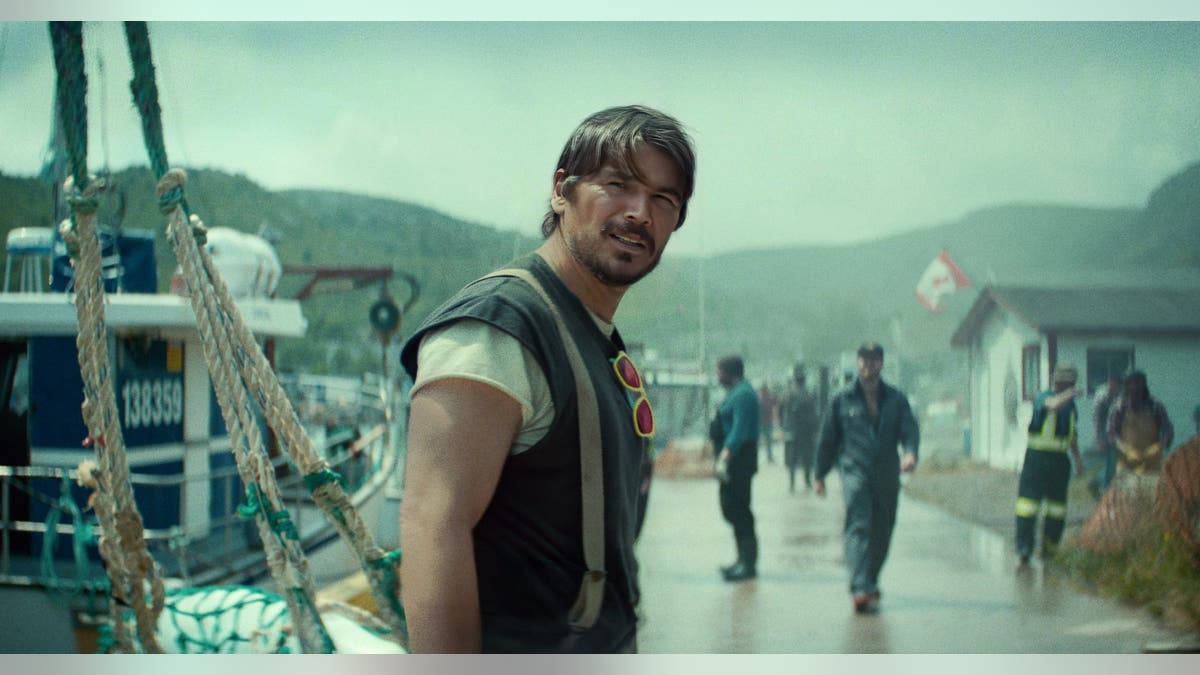
Calvin’s guilt makes the danger personal
Calvin’s childhood memory of his father disappearing when an unseen force dragged the family’s house toward the sea gives the mystery its emotional weight. Calvin cut the rope to save the rest of his family, but he has carried the trauma and uncertainty ever since. That history explains why his first instinct is to fight what is beneath the water.
His eventual decision to save Mudder rather than destroy her is more than a clever solution. Calvin begins to see the creature as another parent trying to protect its young. He cannot undo his father’s death, but he can choose not to repeat a cycle of fear and violence.
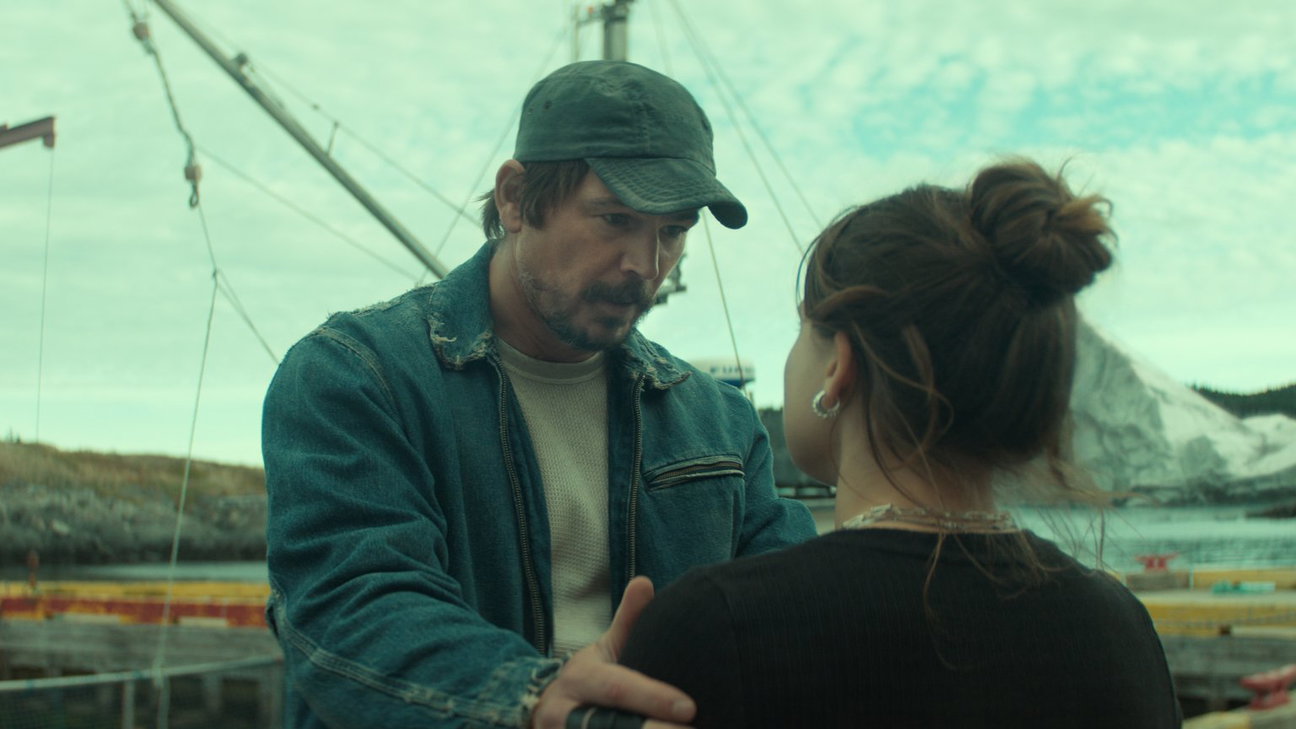
Fonda turns a monster hunt into a rescue
Marine researcher Fonda Howander, played by Mackenzie Davis, helps reframe the crisis. Once she understands that Mudder’s egg sac is trapped in the iceberg, she argues that the creature should be studied rather than bombed. She is not claiming the animal is harmless; she is arguing that destroying it would be a disastrous response to a problem humans helped create.
The finale’s risky plan—to break the iceberg into smaller pieces and tow the section containing the egg sac toward deeper, colder water—replaces a simple showdown with a rescue attempt. Calvin and his family work against the clock as the military threat and the Crockers’ pressure close in.
What the final icebergs mean
Calvin succeeds in moving Mudder to deeper water, and the immediate crisis eases. But the final image of more icebergs on the horizon prevents the ending from feeling safe. The question is not only whether another creature may be waiting below; the icebergs suggest that the conditions that brought this crisis to Snook’s Arm have not gone away.
The town may have survived this emergency, but it cannot control a changing environment or guarantee that powerful outsiders will stop trying to take its land. A beautiful sight on the horizon can carry consequences no one is ready to face.
The verdict: human choices are the real source of dread
The monster attacks are visually intense, but the most frightening scenes are the quieter ones in which the community is pushed toward decisions that could cost it everything. Mudder is dangerous, yet her motives become understandable. The Crockers are more chilling because they treat a living community as an obstacle to profit.
Below asks not only how to survive the thing in the water, but how to respond when fear, profit, and environmental damage collide. Its answer is clear: understanding the threat matters, and so does refusing to let panic decide who deserves to be saved.
Quick answer: What is the most terrifying scene in Below?
Arguably, it is the realization that the town’s water has been contaminated and that the evacuation may also serve the Crockers’ financial interests. These revelations show that Snook’s Arm is threatened not only by Mudder, but by environmental disruption and human exploitation.
Frequently asked questions
Is the sea creature in Below evil?
Not in a simple human sense. Mudder is dangerous, but the finale reveals that she is protecting her young in an environment that threatens their survival.
Why are people in Snook’s Arm becoming sick?
The series links their symptoms to the creature’s secretions spreading through melting iceberg ice and entering the local water supply.
Who is the real villain in Below?
The Crockers’ willingness to exploit the crisis for land and mineral interests makes them a major human threat.
Does Calvin kill Mudder?
No. Calvin helps tow the iceberg section containing Mudder’s egg sac toward deeper water instead of allowing the creature to be destroyed in a military strike.
Will Below have a season 2?
Netflix has presented Below as a limited series, and no second season has been officially confirmed. The final icebergs leave the story open-ended, but that is not confirmation of a renewal.
Sources and further reading
- Netflix Tudum: Below ending explained
- Netflix Media Center: Below series synopsis
- Reuters: The Newfoundland community behind Below
Written by Shivam Das.


